Miyawaki forests are a Japanese technique that plants dense native species to create urban forests. These forests can restore biodiversity and help mitigate climate change.
The ancient city of Khammam in Telangana welcomes this sustainable solution to urban environmental challenges. We're happy to share how this method nurtures natural growth patterns while creating wonderful spaces for communities to enjoy.
What Makes Miyawaki Forest in Khammam Special
The Miyawaki method recreates natural forest ecosystems by planting native species in dense configurations. This technique mimics how forests naturally regenerate after disturbances.
✅ Dense plantation with 3-5 trees per square meter
✅ Native species selection based on local soil conditions
✅ Multi-layered canopy structure supporting diverse wildlife
✅ Rapid growth rate creating mature forests quickly
Our team ensures each Miyawaki Forest in Khammam follows these proven principles. The United Nations Environment Programme emphasizes that native forest restoration is crucial for biodiversity conservation and climate resilience.
Environmental Benefits for Khammam's Urban Landscape
Miyawaki forests act as carbon sinks and improve air quality.
The forests also enhance local water cycles through improved groundwater recharge. Native trees develop deep root systems that prevent soil erosion and flooding. We provide comprehensive solutions that address multiple environmental challenges simultaneously.
⭐ Air purification removing harmful pollutants naturally
⭐ Temperature regulation creating cooling microclimates
⭐ Water conservation through enhanced infiltration
⭐ Biodiversity restoration attracting native wildlife
According to the United Nations Climate Change initiative, urban forests play a vital role in achieving global emission reduction targets and building climate-resilient cities.
Native Species Selection for Khammam Region
Successful Miyawaki Forest in Khammam requires careful selection of indigenous plant species. Our experts analyze local soil conditions, rainfall patterns, and historical vegetation data. We love working with native species that naturally thrive in Telangana's semi-arid climate.
The multi-layered approach includes canopy trees, sub-canopy species, shrubs, and ground cover plants. Each layer serves specific ecological functions while creating habitat diversity. This natural structure ensures long-term forest sustainability without human intervention.
Recommended Native Species for Khammam
- Canopy Layer: Banyan (Ficus benghalensis), Neem (Azadirachta indica), Peepal (Ficus religiosa)
- Sub-Canopy: Jamun (Syzygium cumini), Tamarind (Tamarindus indica), Mango (Mangifera indica)
- Shrub Layer: Ixora (Ixora coccinea), Hibiscus (Hibiscus rosa-sinensis), Oleander (Nerium oleander)
- Ground Cover: Durva grass (Cynodon dactylon), Parthenium alternatives
Our hands-on approach ensures proper species matching with local growing conditions. We guarantee authentic native selections that support regional ecosystem restoration goals.
Implementation Process and Timeline
Creating a Miyawaki Forest in Khammam follows a systematic approach developed through years of practical experience. The process begins with comprehensive site analysis and soil preparation. Our team conducts detailed surveys to understand existing conditions and design optimal planting layouts.
💡 Site Preparation (Month 1): Soil testing, organic matter addition, and terrain preparation
💡 Species Planning (Month 1-2): Native plant selection and procurement
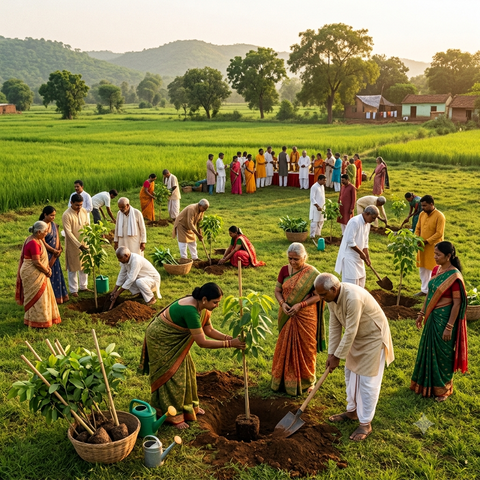
💡 Plantation Phase (Month 2-3): Dense planting following Miyawaki principles
💡 Maintenance Period (Years 1-3): Regular watering, weeding, and monitoring
We ensure each project receives our signature 2-3ft Tree Planting + 3 Years Care + GeoTag service package. This comprehensive approach guarantees forest establishment success and provides transparency through technology integration.
Cost-Effective Urban Transformation
Miyawaki Forest in Khammam offers remarkable value compared to traditional landscaping approaches. The initial investment creates permanent green infrastructure that requires minimal maintenance after three years. Our proven model demonstrates how communities can achieve maximum environmental impact within budget constraints.
The Plant a tree in your Name program makes forest creation accessible to individuals and organizations. At just ₹299 per tree, participants contribute to building sustainable urban forests while receiving personalized certificates and tracking capabilities.
Organizations pursuing Net Zero Targets find Miyawaki forests particularly valuable for carbon offset programs. These dense forests sequester carbon efficiently while providing measurable environmental benefits for corporate sustainability reporting.
Community Impact and Social Benefits
Miyawaki forests create wonderful gathering spaces that bring communities together around environmental stewardship. These green oases provide natural recreation areas where families can enjoy cleaner air and peaceful surroundings. We're glad to see how these projects inspire environmental consciousness among residents.
Schools and organizations can use Miyawaki forests for environmental learning programs. Students learn about ecosystem functions and natural systems.
The forests also provide economic benefits through improved property values and reduced cooling costs. Local businesses near Miyawaki forests report increased foot traffic and customer satisfaction. These natural spaces enhance quality of life while supporting economic development.
Technology Integration and Monitoring
Modern Miyawaki Forest in Khammam projects incorporate advanced monitoring technologies for transparency and accountability. Our GeoTag system allows stakeholders to track individual trees and monitor forest development progress. This technology integration ensures authentic impact measurement and builds trust with participants.
Satellite imagery and drone surveys provide comprehensive forest health assessments. We use data analytics to optimize maintenance schedules and identify areas requiring attention. This scientific approach maximizes forest establishment success rates.
⚠️ Regular monitoring ensures early detection of potential issues like pest infestations or nutrient deficiencies. Our proactive approach prevents problems before they impact forest development.
Corporate Partnerships and Scalability
Businesses across India partner with us to create Miyawaki forests as part of their environmental responsibility programs. These collaborations support Combating Climate Change Through Collective Action while demonstrating corporate commitment to sustainability. We provide customized solutions that align with specific organizational goals.
Scalable implementation allows organizations to expand their environmental impact progressively. Companies can start with pilot projects and gradually develop larger forest networks. This flexible approach accommodates various budget levels and timeline requirements.
The World Wildlife Fund's forest conservation initiatives highlight how corporate partnerships accelerate global reforestation efforts and biodiversity protection.
Success Stories and Results
Our Miyawaki forest projects across India demonstrate consistent success in urban transformation. Cities like Mumbai, Bangalore, and Delhi have witnessed remarkable ecosystem restoration through these dense plantations. We're thrilled to expand this proven approach to Khammam and surrounding regions.
Miyawaki forests create habitat for local wildlife like birds and insects due to the dense native planting.
Community feedback consistently highlights improved air quality, reduced noise pollution, and enhanced neighborhood aesthetics. Residents report greater connection to nature and increased environmental awareness following forest establishment.
Getting Started with Your Miyawaki Forest Project
Creating a Miyawaki Forest in Khammam begins with a simple consultation to assess your site and objectives. Our experts provide customized recommendations based on available space, soil conditions, and desired outcomes. We make the process straightforward and accessible for all stakeholders.
Whether you're an individual wanting to Plant a tree in your Name or an organization pursuing comprehensive environmental restoration, we have solutions that fit your needs. Our proven track record and commitment to excellence ensure successful project outcomes.
→ Site Assessment: Professional evaluation of location and conditions
→ Custom Design: Species selection and layout planning
→ Implementation: Professional plantation and setup
→ Ongoing Care: Three years of maintenance and monitoring
Frequently Asked Questions
How much space is needed for a Miyawaki Forest in Khammam?
Miyawaki forests can be created in spaces as small as 100 square meters. The dense planting method maximizes biodiversity even in compact urban areas. Larger spaces allow for more complex ecosystem development and greater environmental impact.
What is the survival rate of trees in Miyawaki forests?
Across our programmes, 85% of trees survive through careful species selection and maintenance. Dense planting creates mutual support that enhances individual tree survival. A three-year care program supports establishment.
How long does it take to see results from a Miyawaki Forest?
Miyawaki forests grow faster than conventional plantations and become self-sustaining as they mature.
Can Miyawaki forests survive Khammam's climate conditions?
Yes, Miyawaki forests thrive in Khammam's semi-arid climate when planted with appropriate native species. The method's focus on indigenous plants ensures natural adaptation to local rainfall and temperature patterns. Proper soil preparation further enhances climate resilience.
What maintenance is required for Miyawaki forests?
Initial maintenance includes regular watering, weeding, and organic fertilizer application for three years. After establishment, the forests become self-maintaining ecosystems requiring minimal intervention. Our maintenance package covers all essential care activities during the critical establishment period.
How do Miyawaki forests help achieve Net Zero targets?
Miyawaki forests act as carbon sinks, absorbing and storing carbon dioxide as they grow.
Can individuals participate in Miyawaki forest creation?
Absolutely! Our Plant a tree in your Name program allows individuals to contribute ₹299 per tree toward community Miyawaki forests. Participants receive certificates and GeoTag tracking for their sponsored trees. This makes urban forest creation accessible to everyone.
What wildlife benefits do Miyawaki forests provide?
The multi-layered structure attracts diverse bird species, butterflies, and beneficial insects within 2-3 years. Native plant selection provides food sources and nesting habitats for local wildlife. These forests become biodiversity hotspots that support urban ecological balance.
Transform Khammam's Future Today
Miyawaki Forest in Khammam represents more than environmental restoration—it's an investment in sustainable urban development and community well-being. These natural solutions address climate change while creating beautiful spaces for future generations to enjoy. Our commitment to excellence ensures every project contributes meaningfully to the goal of planting 100 crore trees across India.
The time for action is now. Climate challenges require immediate, effective responses that deliver measurable results. Miyawaki forests provide proven solutions that transform urban landscapes while supporting biodiversity conservation and carbon sequestration goals.
Ready to create your own urban forest? Discover how Grow Billion Trees can help you establish a thriving Miyawaki Forest in Khammam. Together, we can build a greener, more sustainable future for our communities and planet.
Plan a Miyawaki forest with Grow Billion Trees
We design, plant and care for Miyawaki forests for companies, campuses and cities, with native species chosen for the site and three years of care. Every tree is geo-tagged and tracked on GreenTrack, and 85% of trees survive across our programmes.
- Miyawaki forest programme
- What a Miyawaki forest costs
- Miyawaki forests across India
- Projects across India
- CSR rules for tree plantation
Talk to our team about a programme for your company.