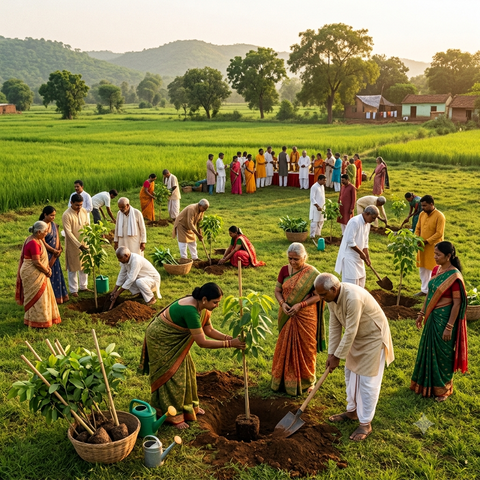
The Miyawaki method uses dense planting and native species for urban reforestation. It's designed for faster forest development than conventional plantations.
This Japanese technique, pioneered by botanist Akira Miyawaki, creates self-sustaining forests that thrive in urban environments. We've witnessed firsthand how these compact forests transform barren land into thriving ecosystems within just three years. The capital city's commitment to green infrastructure makes it an ideal location for this revolutionary approach.
What Makes Miyawaki Forests Special in Thiruvananthapuram? ✅
Miyawaki forests in Thiruvananthapuram offer unique advantages over traditional tree planting methods. These dense forests require minimal maintenance after the initial three-year care period. Our team has observed remarkable results across multiple sites in the region.
The methodology involves planting native species at high density - typically 3-5 saplings per square meter. This creates a natural competition that accelerates growth rates significantly. According to the United Nations Environment Programme on forests, native forest restoration plays a crucial role in combating climate change and preserving biodiversity.
Key benefits include improved air quality, reduced urban heat island effect, and enhanced groundwater recharge. Our partners in Thiruvananthapuram report temperature reductions of 2-3 degrees Celsius in areas surrounding these forests. Moreover, these green spaces provide habitat for local wildlife and create natural carbon sinks.
Native Species Perfect for Thiruvananthapuram's Climate 🌿
Native species suited to Kerala's coastal environment support Miyawaki forests. These include fast-growing pioneers, intermediate species, and canopy trees.
Popular choices include Ficus benghalensis, Artocarpus heterophyllus, and Terminalia bellirica. Shrub layer species like Ixora coccinea and Murraya koenigii provide understory diversity. We ensure each forest contains 15-20 different native species to maximize ecological benefits.
The selection process considers soil conditions, rainfall patterns, and local wildlife requirements. Our team works closely with local botanists to identify species that historically grew in the region. This approach guarantees long-term forest sustainability and ecological authenticity.
Environmental Impact and Benefits ⭐
Miyawaki forests create dense ecosystems with varied canopy layers. These support biodiversity through multiple native species.
Forest restoration contributes to climate and environmental goals. The United Nations climate change initiatives recognize forest restoration as important for achieving environmental objectives.
Water conservation benefits include reduced surface runoff and improved groundwater recharge. These forests act as natural sponges, absorbing rainfall and preventing urban flooding. Additionally, they create microclimates that support local fauna and provide natural corridors for wildlife movement.
Implementation Process and Timeline 💡
Creating a successful Miyawaki forest in Thiruvananthapuram follows a proven methodology that we've refined through years of hands-on experience. The process begins with comprehensive soil analysis and site preparation. Our team ensures optimal growing conditions before any planting begins.
Site preparation involves soil conditioning with organic matter and mycorrhizal fungi. This creates the ideal foundation for rapid root development. The planting phase requires careful spacing and species arrangement to mimic natural forest succession patterns.
Timeline breakdown:
- ➡️ Month 1-2: Site analysis and soil preparation
- ➡️ Month 3: Species selection and sapling procurement
- ➡️ Month 4: Planting and initial care setup
- ➡️ Years 1-3: Intensive maintenance and monitoring
- ➡️ Year 4 onwards: Self-sustaining forest ecosystem
Our comprehensive 2-3ft Tree Planting + 3 Years Care + GeoTag service ensures each forest receives professional attention during the critical establishment period. This guarantee provides peace of mind for organizations investing in environmental restoration.
Success Stories from Thiruvananthapuram 🏆
Several remarkable Miyawaki forest projects in Thiruvananthapuram demonstrate the technique's effectiveness in urban settings. The Technopark campus forest, established in 2024, now supports over 50 bird species and countless insects. We're proud to have contributed to this transformation.
Educational institutions across the city have embraced this methodology for campus greening. The University of Kerala's Miyawaki forest serves as a living laboratory for environmental studies. Students and researchers study ecosystem development in real-time, contributing valuable data to forest science.
Corporate partnerships have accelerated forest creation throughout the metropolitan area. Companies pursuing Net Zero Targets find Miyawaki forests provide measurable carbon offset benefits. Our collaboration with local businesses has resulted in over 25 forest patches across the city.
Cost-Effectiveness and ROI
Miyawaki forests require significant initial investment. The method focuses intensive effort on establishing self-sustaining forests.
The Plant a tree in your Name program makes participation accessible at just ₹299 per tree. This includes professional planting, three years of guaranteed care, and GeoTag tracking technology. Corporate clients benefit from bulk pricing and comprehensive project management services.
Economic benefits extend beyond direct costs to include property value increases, reduced cooling expenses, and improved employee well-being. Companies report enhanced corporate reputation and stakeholder engagement through visible environmental commitments.
Technology Integration and Monitoring
Modern technology enhances Miyawaki forest management in Thiruvananthapuram through innovative monitoring systems. Our GeoTag technology allows stakeholders to track individual trees and overall forest development. This transparency builds trust and demonstrates measurable impact.
Satellite imagery and drone surveys provide regular forest health assessments. We monitor growth rates, species survival, and biodiversity indicators using advanced data collection methods. This information guides adaptive management strategies and ensures optimal outcomes.
Mobile applications enable community engagement and citizen science participation. Residents can report observations, track carbon savings, and celebrate forest milestones. Technology bridges the gap between environmental action and community involvement.
Community Engagement and Education
Community participation and environmental education support Miyawaki forest success. Local involvement helps ensure long-term forest protection.
School partnerships introduce students to hands-on environmental restoration. Children participate in planting activities and monitor forest development throughout their academic years. This creates lasting connections between young people and nature conservation.
Neighborhood committees adopt forest patches and organize maintenance activities. Community ownership fosters pride and ensures continued care beyond professional maintenance periods. The World Wildlife Fund's forest conservation initiatives emphasize the importance of local community engagement in successful restoration projects.
Overcoming Urban Challenges
Implementing Miyawaki forests in Thiruvananthapuram's urban environment requires addressing specific challenges unique to city settings. Space constraints demand creative solutions and careful site selection. Our team identifies underutilized areas perfect for forest development.
Soil contamination issues require remediation before planting can begin. We use organic amendments and bioremediation techniques to restore soil health. This ensures saplings have the best possible growing conditions from day one.
Urban wildlife conflicts are minimized through thoughtful species selection and forest design. We create spaces that welcome beneficial wildlife while avoiding species that might create human-wildlife conflicts. This balanced approach ensures community acceptance and long-term success.
Future Expansion Plans
The success of existing Miyawaki forests in Thiruvananthapuram paves the way for ambitious expansion plans throughout Kerala's capital region. Our vision includes creating forest corridors that connect existing green spaces and support wildlife movement. This network approach maximizes ecological benefits.
Government partnerships enable large-scale implementation across public lands and infrastructure projects. Road medians, park areas, and institutional campuses offer numerous opportunities for forest development. We're working toward the goal of planting 100 crore trees across India by 2030.
Climate adaptation strategies incorporate Miyawaki forests as essential infrastructure for urban resilience. These green spaces provide natural cooling, flood management, and air purification services. Future planning integrates forests into comprehensive urban development strategies.
Frequently Asked Questions
How long does it take for a Miyawaki forest in Thiruvananthapuram to become self-sustaining?
Miyawaki forests are designed to become self-sustaining through intensive initial care and dense planting.
What is the minimum space required for a Miyawaki forest?
Miyawaki forests can be established in spaces as small as 100 square meters. However, we recommend minimum areas of 300-500 square meters for optimal ecosystem development. Larger spaces support greater biodiversity and provide more significant environmental benefits.
How much does it cost to establish a Miyawaki forest in Thiruvananthapuram?
Our Plant a tree in your Name program offers individual tree planting for ₹299, including 2-3ft Tree Planting + 3 Years Care + GeoTag tracking. Larger forest projects are priced based on size and specific requirements, with bulk discounts available for corporate and institutional clients.
Which native species work best for Miyawaki forests in Thiruvananthapuram?
Native Kerala species like Ficus benghalensis, Artocarpus heterophyllus, Terminalia bellirica, and Syzygium cumini perform exceptionally well. We select 15-20 species for each forest to ensure biodiversity and ecological stability. Our team provides expert species selection based on site conditions.
Can Miyawaki forests survive Kerala's monsoon seasons?
Yes, Miyawaki forests are designed to thrive in Kerala's monsoon climate. The dense planting and native species selection ensure excellent water management and storm resistance. Our forests actually benefit from monsoon rains, showing accelerated growth during these periods.
How do Miyawaki forests help achieve corporate Net Zero Targets?
Miyawaki forests provide verified carbon sequestration that companies can count toward their Net Zero Targets. Our monitoring and reporting systems track carbon absorption rates and provide documentation for sustainability reporting. These forests offer measurable environmental impact for corporate responsibility programs.
What maintenance is required after the initial three-year period?
After three years, Miyawaki forests require minimal maintenance - primarily occasional debris removal and monitoring for invasive species. The mature forest ecosystem becomes self-regulating, with natural processes maintaining health and growth. This low-maintenance characteristic makes them ideal for urban settings.
How can communities get involved in Miyawaki forest projects?
Communities can participate through our educational programs, volunteer planting events, and adoption schemes. We welcome schools, neighborhood groups, and organizations to engage with forest development. Contact us to explore partnership opportunities and community involvement options.
Transform Thiruvananthapuram Through Forest Restoration
The Miyawaki forest movement in Thiruvananthapuram represents hope for sustainable urban development and environmental restoration. These remarkable ecosystems prove that small spaces can deliver tremendous environmental benefits. Our commitment to Combating Climate Change Through Collective Action drives every forest we create.
Join thousands of environmentally conscious individuals and organizations who have already planted trees through our programs. Together, we're building a greener, more sustainable future for Kerala's capital and contributing to our mission of planting 100 crore trees across India.
Ready to create your own piece of paradise? Discover how you can plant a tree in your name and become part of Thiruvananthapuram's green revolution today. Let's grow a billion trees together and transform our planet, one forest at a time.
Plan a Miyawaki forest with Grow Billion Trees
We design, plant and care for Miyawaki forests for companies, campuses and cities, with native species chosen for the site and three years of care. Every tree is geo-tagged and tracked on GreenTrack, and 85% of trees survive across our programmes.
- Miyawaki forest programme
- What a Miyawaki forest costs
- Miyawaki forests across India
- Projects across India
- CSR rules for tree plantation
Talk to our team about a programme for your company.