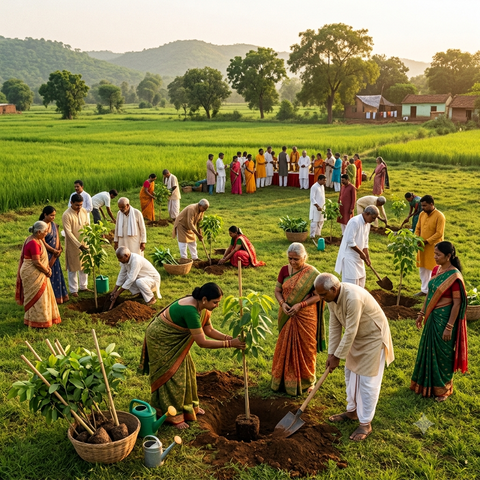
The Miyawaki Forest in Pimpri-Chinchwad is an urban reforestation approach that transforms barren spaces into dense native forests. These forests become self-sustaining ecosystems that support local biodiversity.
Pimpri-Chinchwad, a bustling twin city in Maharashtra, has embraced this revolutionary forest creation method to combat climate change and improve air quality. Our team at Grow Billion Trees has witnessed firsthand how these compact forests transform urban landscapes within just three years.
✅ What Makes Miyawaki Forests Special
The Miyawaki method, developed by Japanese botanist Akira Miyawaki, creates dense forests using native species in multiple layers. These forests require minimal maintenance after the first three years and become self-sustaining ecosystems that support local biodiversity.
In Pimpri-Chinchwad, we've found that Miyawaki forests grow particularly well due to the region's favorable climate. The technique uses only native plant species that naturally thrive in Maharashtra's soil conditions. This ensures maximum survival rates and ecological benefits.
According to the United Nations Sustainable Development Goals, urban forests play a crucial role in creating sustainable cities and communities. These green spaces directly contribute to achieving multiple environmental targets by 2030.
⭐ Benefits of Miyawaki Forest in Pimpri-Chinchwad
Miyawaki forests use dense native vegetation that supports biodiversity. The canopy structure provides environmental benefits in urban areas through carbon sequestration and improved microclimate.
Dense Miyawaki forests filter pollutants and improve air quality in industrial areas. The canopy structure can reduce noise pollution, creating healthier conditions for local communities.
Water conservation becomes effortless with Miyawaki forests. The multilayered vegetation structure captures rainwater effectively, reducing urban flooding risks. These forests also prevent soil erosion and create natural groundwater recharge zones.
🌱 Native Species for Pimpri-Chinchwad Miyawaki Forests
Selecting appropriate native species ensures the long-term success of any Miyawaki forest project. In Pimpri-Chinchwad, we plant indigenous trees like Banyan, Peepal, and Neem in the canopy layer. These species provide excellent shade and support local wildlife.
The shrub layer includes plants like Karanda and Ixora that attract butterflies and birds. Ground cover plants such as Durva grass and native ferns complete the forest structure. This diverse plant community creates a balanced ecosystem that thrives without human intervention.
Our partners at various nurseries ensure we source only healthy, disease-free saplings for plantation. Each plant receives careful attention during the initial establishment phase to guarantee optimal growth rates.
💡 Implementation Process and Timeline
Creating a successful Miyawaki Forest in Pimpri-Chinchwad follows a systematic approach that begins with detailed soil analysis. We test pH levels, nutrient content, and drainage capacity to determine the best planting strategy. Soil preparation typically takes 2-3 weeks before plantation begins.
The plantation phase involves planting 3-5 saplings per square meter in a carefully planned pattern. Different species are positioned according to their mature size and growth requirements. Our team ensures proper spacing to minimize competition while maximizing density.
Post-plantation care includes regular watering for the first two years and periodic weeding. The United Nations Environment Programme's forest initiatives emphasize the importance of proper maintenance during the establishment phase.
📍 Successful Miyawaki Projects in Pimpri-Chinchwad
Several successful Miyawaki forest installations across Pimpri-Chinchwad demonstrate the method's effectiveness in urban environments. The PCMC has partnered with environmental organizations to create multiple green spaces using this technique. These projects serve as living examples of sustainable urban planning.
Corporate offices and residential complexes have also adopted Miyawaki forests for their premises. These installations not only provide environmental benefits but also enhance property values. Residents report improved well-being and increased biodiversity in their neighborhoods.
Educational institutions in the area use Miyawaki forests as outdoor classrooms for environmental education. Students learn about native ecosystems while participating in forest maintenance activities. This hands-on approach nurtures environmental consciousness among young minds.
🎯 Cost and Investment Considerations
Miyawaki forests are priced per tree, and quotes depend on site size, species selection, and local conditions. Installation typically includes soil preparation, saplings, organic fertilizers, and initial maintenance.
However, the long-term benefits far outweigh the initial expenses. These forests require minimal maintenance after three years, making them cost-effective green solutions. Property owners save on landscaping costs while enjoying increased property values.
At Grow Billion Trees, we offer comprehensive Miyawaki forest packages that include 2-3ft Tree Planting + 3 Years Care + GeoTag technology. Our transparent pricing of ₹299 per tree makes urban forest creation accessible to everyone interested in environmental restoration.
🌍 Climate Change Impact and Carbon Sequestration
Miyawaki forests serve as powerful weapons against climate change in urban areas like Pimpri-Chinchwad. These dense forests sequester carbon at accelerated rates compared to traditional plantations. A single square meter of Miyawaki forest can absorb up to 25 kg of CO2 annually.
The United Nations climate change initiatives recognize urban forests as essential tools for achieving Net Zero Targets. Cities worldwide are adopting similar approaches to reduce their carbon footprints effectively.
Dense Miyawaki forests filter harmful particulates and improve air quality. The vegetation structure helps create healthier living conditions for local residents.
🦋 Biodiversity and Wildlife Support
The multi-layered structure of Miyawaki forests creates diverse habitats that support various wildlife species. In Pimpri-Chinchwad, these forests attract numerous bird species, butterflies, and beneficial insects. The native plant selection ensures food sources for local fauna throughout the year.
Small mammals like squirrels and mongooses find shelter in these dense urban forests. The diverse plant community supports different species at various forest levels. This biodiversity enhancement contributes to ecological balance in urban environments.
Pollinator populations benefit significantly from Miyawaki forests. Native flowering plants provide nectar sources for bees and butterflies throughout different seasons. This supports agricultural productivity in surrounding areas while maintaining ecological connections.
🏢 Corporate and Community Involvement
Many corporations in Pimpri-Chinchwad have embraced Miyawaki forests as part of their sustainability initiatives. These projects help companies achieve their environmental goals while demonstrating corporate social responsibility. Employee engagement in forest creation activities boosts morale and environmental awareness.
Community involvement ensures the long-term success of Miyawaki forest projects. Local residents take pride in maintaining these green spaces and protecting them from damage. This collective ownership creates lasting environmental improvements.
Schools and colleges organize tree plantation drives using the Miyawaki method. Students learn practical environmental conservation skills while contributing to their community's green cover. These educational programs inspire future environmental leaders.
Frequently Asked Questions
How long does a Miyawaki Forest take to establish in Pimpri-Chinchwad?
A Miyawaki Forest typically takes 2-3 years to become fully established. During this period, the forest requires regular watering and minimal maintenance. After three years, the ecosystem becomes self-sustaining and requires no human intervention.
What is the minimum area required for a Miyawaki Forest?
The minimum recommended area for a Miyawaki Forest is 100 square meters. However, even smaller spaces of 20-30 square meters can support mini-forests. The key is maintaining proper plant density and species diversity regardless of size.
Can Miyawaki Forests survive Pimpri-Chinchwad's climate conditions?
Yes, Miyawaki Forests thrive in Pimpri-Chinchwad's climate when planted with appropriate native species. The region's monsoon pattern and temperature range are ideal for most indigenous Maharashtra plants. Proper soil preparation ensures optimal growing conditions.
How much maintenance do Miyawaki Forests require?
Miyawaki Forests require intensive care only during the first two years. This includes regular watering, weeding, and monitoring plant health. After establishment, these forests become completely self-sustaining and require no maintenance.
What makes Miyawaki method different from traditional tree plantation?
The Miyawaki method uses native species in a multi-layered structure that mimics natural forests. This creates dense, self-sustaining ecosystems rather than simple tree plantations.
Can individuals create Miyawaki Forests on private property?
Absolutely! Individuals can create Miyawaki Forests on private properties of any size. Many homeowners in Pimpri-Chinchwad have successfully established mini-forests in their gardens. Professional guidance ensures proper species selection and planting techniques.
What is the survival rate of plants in Miyawaki Forests?
Miyawaki forests typically achieve high plant survival rates when properly implemented. The dense planting creates favorable microclimatic conditions that support plant growth and native species adaptation.
How do Miyawaki Forests help achieve Net Zero Targets?
Miyawaki forests sequester carbon through their dense structure and growth. This captures atmospheric CO2 and can help organizations and cities reduce their carbon footprints.
🌟 Future of Urban Forestry in Pimpri-Chinchwad
The success of Miyawaki forests in Pimpri-Chinchwad paves the way for expanded urban forestry initiatives. City planners are incorporating these green spaces into new development projects. The goal is to create a network of interconnected urban forests throughout the twin cities.
Technology integration enhances forest monitoring and maintenance efficiency. GeoTag systems track individual tree growth and health status. This data-driven approach ensures optimal forest management and demonstrates environmental impact to stakeholders.
As part of our mission to Plant a tree in your Name and achieve 100 crore trees across India, we're expanding Miyawaki forest programs. These initiatives contribute directly to Combating Climate Change Through Collective Action while creating lasting environmental benefits.
The future looks wonderfully green for Pimpri-Chinchwad as more communities embrace sustainable urban development. Together, we're transforming concrete landscapes into thriving ecosystems that support both human well-being and environmental health. Discover how you can Plant a tree in your Name and join this remarkable urban forest revolution today!
Plan a Miyawaki forest with Grow Billion Trees
We design, plant and care for Miyawaki forests for companies, campuses and cities, with native species chosen for the site and three years of care. Every tree is geo-tagged and tracked on GreenTrack, and 85% of trees survive across our programmes.
- Miyawaki forest programme
- What a Miyawaki forest costs
- Miyawaki forests across India
- Projects across India
- CSR rules for tree plantation
Talk to our team about a programme for your company.