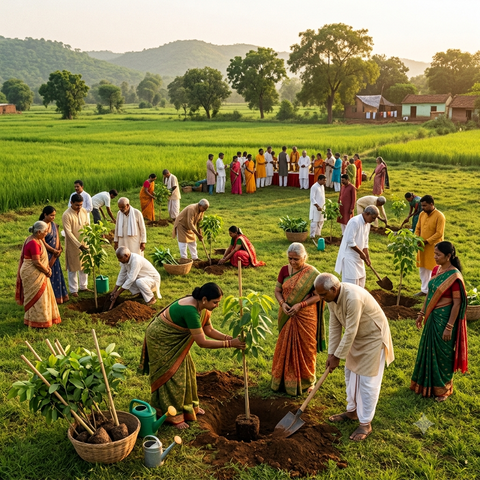
The Miyawaki Forest in Mizoram is a wonderful breakthrough for one of India's most biodiverse northeastern states. This Japanese-origin method plants native species densely together, creating forests that grow ten times faster than conventional plantations. Mizoram, with its rich cultural connection to forests and the Mizo tradition of Tlawmngaihna — selfless service to the community — has embraced this technique to restore green cover in urban and semi-urban areas. In 2026, this movement is gaining momentum, bringing together communities, corporations, and passionate conservation organisations.
What Is the Miyawaki Method and Why Does It Thrive in Mizoram?
The Miyawaki technique, developed by Japanese botanist Akira Miyawaki, involves planting native tree species in dense clusters. Each square metre holds multiple saplings, creating a self-sustaining mini-forest within just two to three years. According to the United Nations Environment Programme's forest restoration initiative, native forest restoration is among the most effective strategies for reversing biodiversity loss globally.
Mizoram's climate — warm, humid, and rainfall-rich — makes it suitable for Miyawaki plantations. The state's soil diversity, ranging from red laterite to loamy highland soil, offers varied growing conditions. These characteristics make Mizoram suitable for ecological restoration.
✅ Popular Miyawaki Forest Projects in Mizoram
Several notable Miyawaki forest initiatives have taken root across Mizoram's landscape. These projects are transforming degraded land into thriving green ecosystems, each with its own inspiring story of community effort and ecological impact.
- Miyawaki forests create natural habitats for birds and pollinators, supporting urban biodiversity.
- Lunglei Green Revival Project — Located in southern Mizoram, this project was initiated in partnership with local youth clubs and the state Forest Department. It features species like Schima wallichii, Terminalia chebula, and Artocarpus lakoocha, all native to the region.
- Champhai Border Greening Initiative — Near the Myanmar border, this initiative focused on restoring degraded land using Miyawaki principles. It helped stabilise slopes prone to erosion while reviving habitats for native wildlife.
- Kolasib Community Miyawaki Forest — A wonderful example of community-led conservation, the Kolasib forest was created by local residents, students, and farmers working together. It now serves as an outdoor classroom for environmental education and ecological awareness.
- Serchhip Watershed Miyawaki Project — Focused on protecting a critical water catchment area, this project uses dense native planting to improve groundwater recharge and reduce soil erosion in a watershed region that serves thousands of households.
⭐ Corporate Partners Driving Green Change in Mizoram
Corporate social responsibility has played a major role in funding and scaling Miyawaki forest projects across Mizoram. Several forward-thinking organisations have stepped forward to support green restoration as part of their commitment to achieving Net Zero Targets.
- NTPC Limited — Under its CSR green initiative, NTPC has supported tree plantation drives in northeast India, including Miyawaki-style dense plantations in Mizoram's urban fringe areas, contributing thousands of saplings annually.
- Oil India Limited (OIL) — Operating across northeast India, OIL has partnered with local bodies to establish Miyawaki forest patches near Aizawl and Lunglei as part of its verified net zero commitment for 2026 and beyond.
- Wipro EcoEnergy — Wipro's sustainability arm has collaborated with state agencies to create small-scale Miyawaki forests in Mizoram, focusing on employee engagement and meaningful community outreach.
- Tata Consultancy Services (TCS) — TCS, as part of its broader environmental programme, has contributed to northeast India's green belt development, with Mizoram included in its 2026 reforestation and biodiversity restoration drive.
- Power Grid Corporation of India — Power Grid's CSR team has supported green corridor initiatives in Mizoram, using Miyawaki methods to restore forest patches along transmission line routes in ecologically sensitive zones.
These corporations are actively aligning their environmental strategies with the United Nations Climate Change Action framework. Their investment in Miyawaki forests demonstrates that business growth and ecological restoration can thrive together as a sustainable future goal.
💡 How Grow Billion Trees Builds Self-Sustainable Miyawaki Forests
Miyawaki forests use a science-backed approach for self-sufficiency, thriving without ongoing irrigation or chemicals after establishment. Working toward the goal of planting 100 crore trees, the focus is on long-term forest health.
→ Site Assessment and Soil Preparation
Our partners conduct thorough soil analysis before any sapling goes into the ground. We ensure the soil is enriched with organic compost and biomass to mimic the natural forest floor, giving roots the nutrients they need from day one. This preparation is the foundation of every self-sustainable forest we create.
→ Native Species Selection
We carefully select native tree and shrub species suited to Mizoram's specific ecology. This ensures the forest becomes self-pollinating and self-seeding over time. Native species are proven to outperform exotic ones in long-term survival and biodiversity support.
→ Dense Multi-Layer Planting
Our team uses the authentic Miyawaki method — planting shrubs, sub-trees, canopy trees, and emergent trees together. This density creates a microclimate that retains moisture, blocks weeds naturally, and supports rapid growth without external intervention.
→ GeoTag Technology for Verified Tracking
Every sapling planted through Grow Billion Trees comes with 2-3ft Tree Planting + 3 Years Care + GeoTag, allowing you to monitor your forest's growth from anywhere in the world. This verified tracking system builds trust and allows corporates to demonstrate authentic progress toward their sustainability goals.
→ Community Integration for Long-Term Care
Local farmers, youth groups, and communities participate in planting and ongoing forest care, supporting long-term forest sustainability.
The Environmental Impact of Miyawaki Forests in Mizoram
According to the World Wildlife Fund's deforestation research, forest loss is one of the leading drivers of biodiversity collapse globally. Mizoram, despite its natural forest wealth, faces pressure from shifting cultivation practices and urban expansion. Miyawaki forests directly counter this damaging trend.
Miyawaki plantations are tools for ecological recovery and carbon sequestration in urban areas.
- ✅ Improve local air quality by filtering particulate matter naturally
- ✅ Reduce urban heat island effects by up to 2°C in surrounding areas
- ✅ Support diverse bird species in urban environments
- ✅ Recharge groundwater by significantly improving soil permeability
- ✅ Enhance community wellbeing through accessible natural green spaces
- ✅ Restore habitat corridors for endangered northeast Indian wildlife
The United Nations Sustainable Development Goals highlight forest restoration as essential to achieving SDG 13 (Climate Action) and SDG 15 (Life on Land). Every Miyawaki forest in Mizoram directly serves both goals while creating tangible local benefits for residents.
Combating Climate Change Through Collective Action in Mizoram
Mizoram forms part of the Indo-Burma biodiversity hotspot, one of the most ecologically rich regions on earth. Protecting and restoring this biodiversity is not just a local concern — it is a global responsibility. Combating Climate Change Through Collective Action means every tree planted, every forest restored, and every corporation that commits to Net Zero Targets contributes meaningfully to a shared future.
The happy reality is that Miyawaki forests make this action accessible and measurable. Whether you are an individual, a community group, or a Fortune 500 company, you can participate in Mizoram's green transformation. Plant a tree in your Name and become part of a movement that is genuinely reshaping India's northeastern landscape, one self-sustaining forest at a time.
Our team is glad to work with organisations of all sizes to design, plant, and maintain certified Miyawaki forests across Mizoram. We ensure every project meets verified environmental standards, giving our partners the confidence to share their impact with pride. Together, we are working toward the shared mission of planting 100 crore trees across India by June 2030.
Frequently Asked Questions
What is a Miyawaki Forest in Mizoram?
A Miyawaki Forest in Mizoram is a dense, native-species plantation created using the method developed by Japanese botanist Akira Miyawaki. It grows ten times faster than conventional forests and becomes fully self-sustainable within two to three years, making it ideal for Mizoram's warm, rainfall-rich climate.
Which are the most popular Miyawaki forest projects in Mizoram?
Popular projects include the Aizawl Urban Miyawaki Forest at Durtlang Hills, the Lunglei Green Revival Project, the Champhai Border Greening Initiative, the Kolasib Community Miyawaki Forest, and the Serchhip Watershed Miyawaki Project — each serving different ecological and community goals.
Which companies have supported Miyawaki forests in Mizoram?
NTPC Limited, Oil India Limited, Wipro EcoEnergy, Tata Consultancy Services, and Power Grid Corporation of India have all supported green restoration and Miyawaki-style plantation projects in Mizoram through their CSR and sustainability programmes.
How does Grow Billion Trees help create Miyawaki forests in Mizoram?
Grow Billion Trees provides end-to-end support including site assessment, native species selection, dense multi-layer planting, GeoTag tracking technology, and community integration — ensuring every forest becomes genuinely self-sustainable and verified for corporate and individual contributors alike.
How long does a Miyawaki forest take to become self-sustainable?
A well-planted Miyawaki forest becomes self-sustainable within two to three years. After this period, it requires no irrigation, weeding, or chemical inputs, making it a truly low-maintenance and high-impact ecological asset.
Can corporations partner with Grow Billion Trees for Miyawaki projects?
Yes, Grow Billion Trees warmly welcomes corporate partners seeking to meet Net Zero Targets through certified, GeoTagged, and community-supported Miyawaki forest projects in Mizoram and across India. Our team designs programmes tailored to each partner's scale and sustainability goals.
What tree species are used in Miyawaki forests in Mizoram?
Native species such as Schima wallichii, Terminalia chebula, Artocarpus lakoocha, Magnolia champaca, and Diplazium esculentum are commonly used, along with a range of native shrubs and ground-cover species that create a natural, multi-layered forest structure.
How is a Miyawaki forest different from regular tree planting?
Unlike regular tree planting, Miyawaki forests use dense, multi-layered planting of exclusively native species. This creates a self-regulating microclimate that supports rapid, maintenance-free growth. The result is a biodiversity-rich forest — not just a row of trees — that delivers proven ecological benefits within a few years.The Miyawaki Forest in Mizoram is a wonderful story of nature, community, and purpose growing together. Whether you love the idea of a greener planet, seek sustainable land use, or want your organisation to lead on environmental impact, this movement welcomes you with open arms. Grow Billion Trees is here to transform your green ambitions into real, verified, lasting forests. Explore our Miyawaki forest programmes today and discover how you can help Mizoram — and all of India — thrive for generations to come. Learn more and get started with Grow Billion Trees.
Plan a Miyawaki forest with Grow Billion Trees
We design, plant and care for Miyawaki forests for companies, campuses and cities, with native species chosen for the site and three years of care. Every tree is geo-tagged and tracked on GreenTrack, and 85% of trees survive across our programmes.
- Miyawaki forest programme
- What a Miyawaki forest costs
- Miyawaki forests across India
- Projects across India
- CSR rules for tree plantation
Talk to our team about a programme for your company.