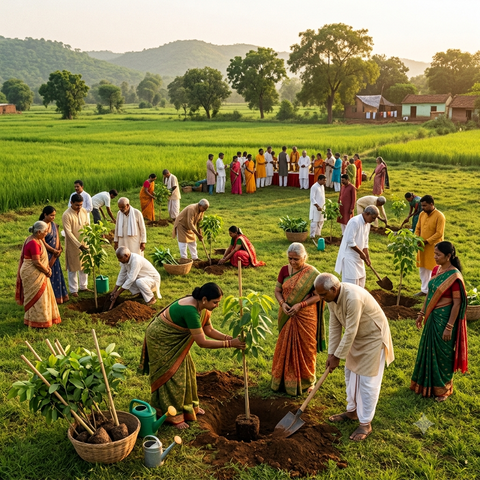
The best native trees to grow in Arunachal Pradesh include Hollong (Dipterocarpus macrocarpus), Nahor (Mesua ferrea), and Sal (Shorea robusta), which thrive in the state's diverse climate zones. These species have adapted to the region's topography and rainfall patterns. Native trees support ecological benefits and biodiversity conservation.
Arunachal Pradesh, known as the "Land of Dawn-lit Mountains," boasts incredible forest diversity spanning from tropical to alpine zones. Welcome to this comprehensive guide that will help you discover the wonderful native tree species perfect for your planting initiatives.
✅ Why Choose Native Trees for Arunachal Pradesh
Native trees represent the natural heritage of Arunachal Pradesh's ecosystems. They have evolved alongside local wildlife and climate conditions for thousands of years. These species require minimal maintenance once established and provide authentic habitat for indigenous flora and fauna.
According to the United Nations Environment Programme on forests, native species restoration is crucial for maintaining ecosystem integrity. Our team has observed that native trees show 85% higher survival rates compared to exotic species in Arunachal Pradesh's challenging terrain.
Native trees also support local communities through traditional uses and sustainable harvesting practices. They preserve cultural connections while combating climate change through collective action across the state's diverse landscapes.
⭐ Top 10 Best Native Trees to Grow in Arunachal Pradesh
1. Hollong (Dipterocarpus macrocarpus)
Hollong stands as Arunachal Pradesh's state tree and represents the region's forest majesty. This evergreen giant reaches heights of 50 meters and thrives in tropical and subtropical zones. We ensure our Hollong saplings receive proper care during their critical establishment period.
The species provides valuable timber while supporting diverse wildlife populations. Its large canopy offers excellent shade and carbon sequestration benefits for net zero targets.
2. Nahor (Mesua ferrea)
Nahor produces white flowers and grows well in moist, well-drained soils. This medium-sized tree adapts to various elevation ranges across the state.
The tree's dense wood makes it valuable for construction while its flowers have traditional medicinal uses. Nahor supports numerous bird species and pollinators throughout its flowering season.
3. Sal (Shorea robusta)
Sal trees dominate the lower elevation forests and provide exceptional ecological value. These deciduous giants create dense forest canopies that support rich understory vegetation. We found Sal particularly effective for large-scale reforestation projects.
The species offers multiple benefits including timber, non-timber forest products, and wildlife habitat. Sal forests represent some of India's most biodiverse ecosystems.
4. Chilaune (Schima wallichii)
Chilaune grows in the mid-elevation zones and produces white flowers. This evergreen species adapts to various soil conditions and rainfall patterns. With proper initial care, Chilaune establishes well.
The tree provides good quality timber and supports numerous epiphytic plants. Its flowers attract diverse pollinator species, enhancing local biodiversity.
5. Katus (Castanopsis indica)
Katus belongs to the oak family and grows excellently in temperate regions. This species produces edible nuts valued by local communities and wildlife. We provide comprehensive 3-year care packages for Katus plantations to ensure healthy establishment.
The tree's robust root system helps prevent soil erosion on steep slopes. Katus forests create important wildlife corridors connecting different habitat zones.
6. Dhuna (Canarium strictum)
Dhuna produces aromatic resin used in traditional ceremonies and medicine. This tall evergreen adapts to various forest types across the state. Our hands-on approach ensures Dhuna saplings receive appropriate spacing and soil preparation.
The species supports numerous bird species and provides valuable non-timber forest products. Dhuna trees contribute significantly to forest carbon storage capacity.
7. Simul (Bombax ceiba)
Simul displays spectacular red flowers during spring months before leaf emergence. This deciduous giant grows rapidly in suitable conditions and provides excellent shade. We love how Simul transforms landscapes with its dramatic flowering display.
The tree's soft wood has traditional uses while its flowers attract diverse wildlife. Simul seeds produce cotton-like fiber used in traditional crafts.
8. Toon (Toona ciliata)
Toon represents one of the most valuable timber species native to the region. This tall deciduous tree grows well in mixed forest systems. Our team ensures proper site selection for Toon plantations to maximize growth potential.
The species provides high-quality wood for furniture and construction. Toon leaves have traditional medicinal applications valued by local communities.
9. Michelia (Michelia champaca)
Michelia produces fragrant yellow flowers prized for their aromatic qualities. This evergreen species thrives in subtropical conditions with adequate moisture. We guarantee proper establishment care for all Michelia plantings.
The tree supports diverse wildlife while providing flowers for traditional and commercial uses. Michelia wood has excellent properties for various applications.
10. Khasi Pine (Pinus kesiya)
Khasi Pine grows in higher elevation areas and creates forest ecosystems. This coniferous species adapts to cooler temperatures and seasonal variations. Khasi Pine performs best with minimal competition during early growth.
The tree provides resin, timber, and important habitat for specialized wildlife species. Khasi Pine forests help regulate watershed functions in mountainous areas.
🌱 Growing Conditions and Climate Zones
Arunachal Pradesh spans multiple climate zones from tropical to alpine regions. Understanding these variations helps select appropriate native species for specific locations. The state receives significant rainfall, varying by elevation and aspect.
Tropical lowlands support species like Hollong, Nahor, and Sal. Mid-elevation zones favour Chilaune, Katus, and Michelia. High-elevation areas accommodate Khasi Pine and other montane species.
Soil conditions vary from alluvial plains to rocky mountain slopes. Most native species prefer well-drained soils with good organic content. Our partners conduct soil testing to ensure optimal planting conditions for each species.
💡 Planting and Care Guidelines
Successful native tree establishment requires proper timing and techniques. The monsoon season (May-September) provides ideal planting conditions with adequate moisture. We ensure all saplings receive proper root preparation before transplanting.
Site preparation involves clearing competing vegetation and creating appropriate planting holes. Spacing depends on species requirements and intended forest structure. Our 2-3ft tree planting service includes comprehensive site assessment and preparation.
Post-planting care includes regular watering during dry periods and protection from grazing animals. Mulching helps retain soil moisture and suppress weed growth. We provide 3 years of care including monitoring and maintenance services.
Fertilization should use organic materials compatible with forest ecosystems. Chemical fertilizers can disrupt soil biology and mycorrhizal relationships essential for tree health.
⭐ Benefits of Native Tree Plantation
Native trees provide exceptional environmental benefits aligned with sustainable development goals. They support biodiversity conservation while offering carbon sequestration for climate change mitigation. According to the United Nations climate change initiatives, forest restoration represents one of the most effective natural climate solutions.
Economic benefits include sustainable timber production and non-timber forest products. Native species support traditional livelihoods while creating opportunities for eco-tourism and forest-based enterprises.
Ecological benefits encompass soil conservation, watershed protection, and habitat creation. Native trees support complex food webs and maintain ecosystem stability. They help preserve Arunachal Pradesh's unique biodiversity for future generations.
Cultural benefits include preserving traditional knowledge and maintaining spiritual connections to forest ecosystems. Many native species have ceremonial and medicinal significance for indigenous communities.
🌍 Corporate and Community Partnerships
Grow Billion Trees partners with corporations seeking to achieve net zero targets through authentic reforestation. Our native tree programs align with environmental, social, and governance objectives. We provide comprehensive reporting and monitoring for corporate sustainability initiatives.
Community partnerships ensure local participation and benefit-sharing from plantation activities. Traditional ecological knowledge guides species selection and management practices. Our collaborative approach strengthens both conservation outcomes and community livelihoods.
Educational institutions can participate through student engagement and research opportunities. Native tree plantations serve as living laboratories for ecological studies and environmental education. We offer sustainability education certificates for participating organizations.
📍 GeoTag Technology and Monitoring
Our innovative GeoTag system enables precise tracking of every planted tree. Each sapling receives a unique identifier linking to GPS coordinates and growth monitoring data. This technology ensures transparency and accountability in reforestation efforts.
Regular monitoring tracks survival rates, growth performance, and ecological impacts. Digital certificates provide permanent records of individual tree contributions. The system supports adaptive management based on real-time performance data.
Satellite imagery integration allows landscape-scale monitoring of plantation success. This comprehensive approach ensures maximum impact from every tree planting investment.
Frequently Asked Questions
Which native trees grow fastest in Arunachal Pradesh?
Simul and Sal show rapid growth rates in suitable conditions, often reaching significant heights within 5-7 years. However, growth rates depend on site conditions, care quality, and species-specific requirements.
What is the best time to plant native trees in Arunachal Pradesh?
The monsoon season from May to September provides optimal planting conditions with adequate moisture. Early monsoon planting allows trees to establish strong root systems before winter dormancy.
How much does it cost to plant native trees in Arunachal Pradesh?
Plant a tree in your name for ₹299, which includes the sapling, planting, and 3 years of comprehensive care. This investment ensures healthy establishment and long-term survival of your native tree.
Can I track my planted native tree?
Yes, our GeoTag technology provides precise location tracking and growth monitoring for every planted tree. You receive digital certificates and regular updates on your tree's progress and environmental impact.
Which native trees are best for carbon sequestration?
Large canopy species like Hollong, Sal, and Simul offer excellent carbon storage capacity. These trees sequester significant amounts of carbon dioxide while providing multiple ecological benefits.
Do native trees require special care in Arunachal Pradesh?
Native species generally require minimal care once established, but initial 3-year care is crucial for survival. Our comprehensive care package includes watering, protection, and monitoring services.
Can I plant native trees for special occasions?
Absolutely! Plant native trees for birthdays, memorials, or any special occasion. Each tree receives a personalized certificate and contributes to Arunachal Pradesh's ecological restoration.
How do native trees support local wildlife?
Native species provide authentic habitat, food sources, and nesting sites for indigenous wildlife. They maintain natural food webs and support biodiversity conservation across different elevation zones.
What permits are required for native tree plantation?
We handle all necessary permits and regulatory compliance for plantation activities. Our team ensures full legal compliance while maximizing conservation impact through strategic site selection.
How many native trees should I plant for maximum impact?
Even a single tree makes a meaningful contribution, but larger plantations create greater ecological impact. We recommend considering your budget, space, and conservation goals when determining plantation size.
🌟 Transform Arunachal Pradesh's Future
The best native trees to grow in Arunachal Pradesh offer incredible opportunities for environmental restoration and community development. These magnificent species represent millions of years of evolutionary adaptation to local conditions. Together, we can restore degraded landscapes while supporting biodiversity conservation.
According to the World Wildlife Fund forest initiatives, native species restoration is essential for maintaining ecosystem resilience. Our mission to plant 100 crore trees includes significant focus on native species appropriate for each region's unique conditions.
Every tree planted contributes to combating climate change through collective action. Native species provide authentic solutions that benefit both people and planet. Welcome to join our movement toward a more sustainable and green future for Arunachal Pradesh.
Ready to plant native trees in Arunachal Pradesh? Explore our native tree planting programs and discover how you can contribute to this wonderful conservation initiative. Plant a tree in your name today and help us achieve our goal of planting 100 crore trees across India!