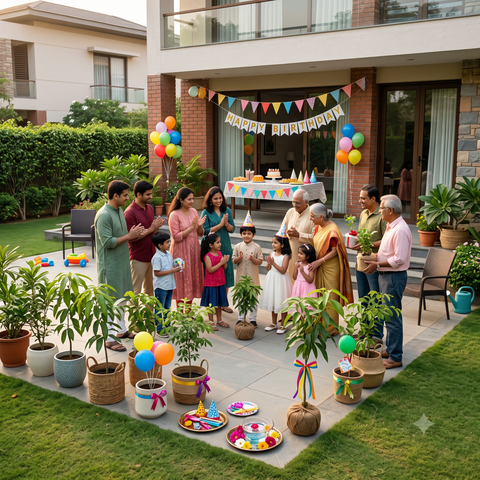
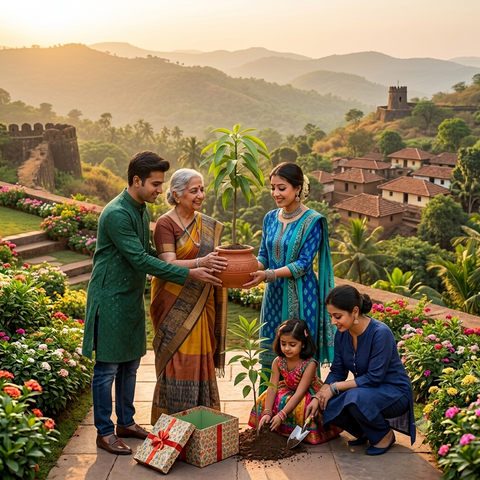
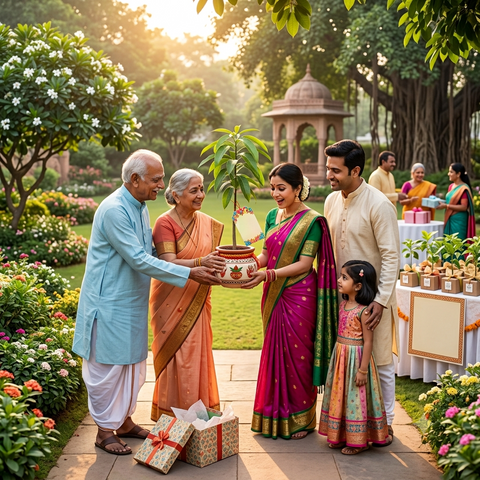
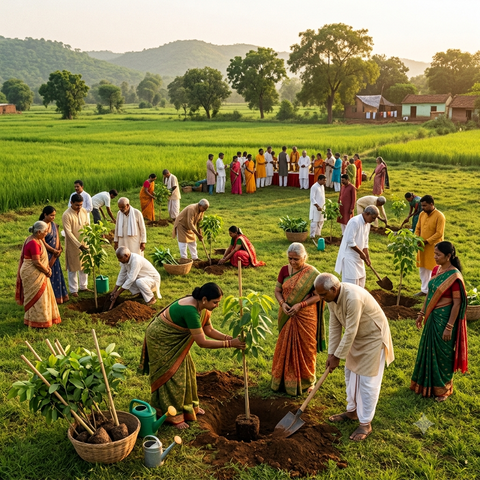
The best native trees to grow near Hubli-Dharwad include Neem, Teak, Indian Rosewood, Peepal, Tamarind, Arjuna, Amla, and Flame of the Forest — all proven to thrive in the region's semi-arid Deccan climate. These species don't just survive; they transform barren land into vibrant, living ecosystems. Choosing native trees is the most eco-friendly, sustainable decision you can make for local biodiversity. Welcome to a greener future — we love helping communities across Karnataka discover the power of planting local species.
Hubli-Dharwad sits on the Deccan Plateau at roughly 700 metres above sea level. The twin-city region receives 700–800 mm of annual rainfall, mostly during the southwest monsoon between June and September. Summers are harsh, regularly reaching 40°C. Native trees are naturally adapted to these conditions, making them easy to establish and resilient through drought.
Why Choose Native Trees in Hubli-Dharwad? ✅
For background, see United Nations Environment Programme on Forests. Planting local species creates authentic habitat for birds, insects, and soil organisms.
Native trees require far less water and maintenance once established compared to exotic species. Well-chosen indigenous trees can survive on natural rainfall alone after the first two years. They also nurture soil health, sequester carbon, and support India's mission to plant 100 crore trees.
The World Wildlife Fund on Deforestation and Forest Degradation warns that India loses thousands of hectares of native forest every year. Replanting with indigenous species is the most natural, proven solution to reverse this trend. However, it requires conscious choices by individuals, communities, and corporations. Every tree planted near Hubli-Dharwad adds to our collective green future on this earth.
Top 8 Best Native Trees to Grow Near Hubli-Dharwad 🌿
1. Neem (Azadirachta indica)
Neem is one of the most versatile and eco-friendly trees native to the Indian subcontinent. It grows vigorously in Hubli-Dharwad's dry climate, reaching 15–20 metres in height. Our team has found that Neem trees planted in open areas establish within 6–8 months with minimal watering. The tree offers dense shade, medicinal bark, and natural pest-repellent leaves that benefit surrounding crops.
Neem improves air quality by absorbing CO₂ and releasing clean oxygen year-round. A single mature Neem tree sequesters approximately 22 kg of carbon annually. It hosts over 50 species of insects, birds, and small mammals. Neem is a wonderful, organic choice for both urban streets and farmland boundaries across the Dharwad district.
2. Teak (Tectona grandis)
Teak is a premium native timber tree that thrives in Karnataka's climate and soil. It grows to 30–40 metres and has a lifespan exceeding 100 years. Our partners in agroforestry programs across Dharwad district report excellent growth rates — up to 1.5 metres per year in fertile, well-drained soil. Teak is a great long-term investment for farmers seeking both ecological and financial returns.
Teak leaf litter decomposes into rich humus, naturally improving organic soil fertility over time. The tree supports significant biodiversity and provides valuable canopy cover for intercropped plants.
3. Indian Rosewood (Dalbergia latifolia)
Indian Rosewood, locally known as Beete or Shisham, is a magnificent native hardwood tree. It grows well in the black cotton soils common around Dharwad and reaches 25–30 metres at maturity. We provide Indian Rosewood saplings through our agroforestry program, helping farmers nurture this high-value species. Its dense canopy creates a cool, shaded microclimate that is ideal for intercropping food plants.
Indian Rosewood is certified as a high-priority conservation species by the Karnataka Forest Department. Its flowers attract pollinators throughout the blooming season, boosting farm biodiversity. The tree sequesters significant carbon and directly supports corporate Net Zero Targets. It is a wonderful tree for farm boundaries, urban parks, and degraded dryland restoration.
4. Peepal (Ficus religiosa)
Peepal is one of India's most sacred and ecologically important native trees. It produces oxygen 24 hours a day — a rare trait — and acts as a powerful natural air purifier. Our hands-on experience planting Peepal in urban Hubli shows it establishes quickly in roadside and park settings. The tree lives for hundreds of years, creating a lasting green legacy for future generations.
Peepal supports over 100 species of wildlife, including fig wasps, birds, and small mammals. Its broad canopy reduces surface temperatures by up to 4°C during the intense Hubli-Dharwad summer. The tree is deeply connected to India's cultural and spiritual heritage. Happy communities across Hubli-Dharwad have embraced Peepal as a cornerstone of urban greening.
5. Tamarind (Tamarindus indica)
Tamarind is a long-lived, drought-tolerant native tree perfectly suited to Hubli-Dharwad's climate. It provides shade, edible fruit, and rich habitat for birds, squirrels, and insects. Mature Tamarind trees live 200–300 years, making them a great investment in long-term green infrastructure. We ensure every Tamarind sapling we supply is raised from authentic, locally sourced seed stock.
Tamarind fruit is a valuable source of nutrition and steady income for rural families. Its hardwood is used in traditional crafts and tools, boosting rural livelihoods. It represents mindful planting at its best — combining ecological, nutritional, and economic value in one tree. Tamarind has been a staple of traditional Karnataka landscapes for centuries, and for very good reason.
6. Arjuna (Terminalia arjuna)
Arjuna is a fast-growing, riverine native tree that thrives near water bodies and degraded soils. It reaches 20–25 metres and provides a dense, layered canopy ideal for shade and shelter.
Arjuna bark has well-documented medicinal properties, used in Ayurvedic practice for over a thousand years. It supports rich birdlife and serves as a host plant for several butterfly species. Planting Arjuna near water bodies is a proven strategy to improve water retention and reduce soil erosion. It naturally boosts biodiversity along riparian corridors throughout northern Karnataka.
7. Indian Gooseberry / Amla (Phyllanthus emblica)
Amla is a compact, multipurpose native tree that grows to about 8–10 metres — ideal for home gardens and agroforestry plots. It is one of the richest natural sources of Vitamin C in the world and has significant commercial value. Our team has planted Amla successfully in agroforestry settings across northern Karnataka, and the results are wonderful. It thrives in Hubli-Dharwad's climate with minimal inputs and organic soil preparation.
Amla improves soil organic content and supports a range of pollinators during its flowering phase. A single mature tree yields 50–70 kg of fruit per year, boosting household and farmer income naturally. The tree is easy to grow from certified nursery stock and requires minimal care after establishment. It is a natural powerhouse that combines food security with genuine environmental restoration.
8. Flame of the Forest (Butea monosperma)
Flame of the Forest, known as Palash, lights up Hubli-Dharwad's landscape with brilliant orange-red blossoms every spring. It grows to 12–15 metres and is deeply resistant to drought and poor soils. Our partners in dryland restoration programs love this tree for its stunning visual impact and its ecological value to pollinators. It is a perfect choice for reforesting rocky, degraded lands across the Dharwad district.
Palash flowers are a vital nectar source for sunbirds, bees, and other pollinators throughout the blooming season. The tree's leaf litter enriches soil and supports natural forest regeneration over time. It is one of the few native trees that thrives in nutrient-poor, laterite soils common in this region. In 2026, Flame of the Forest remains a top choice for eco-restoration programs in Karnataka.
How Grow Billion Trees Supports Hubli-Dharwad 💡
Welcome to a mission that is changing India's landscape — at Grow Billion Trees, we are dedicated to Combating Climate Change Through Collective Action. We offer 2-3ft Tree Planting + 3 Years Care + GeoTag technology so you can track your tree's growth from anywhere on the planet. Every tree you Plant in your Name contributes to our goal of planting 100 crore trees across India by June 2030. You can begin for just ₹299 — a small, easy investment with a great, lasting impact on the earth.
We provide verified, certified saplings of native species ideally suited to the Hubli-Dharwad region. Our certified plantation partners ensure each tree receives proper care for three full years after planting. We also offer corporate programs to help businesses achieve their Net Zero Targets through large-scale native tree planting drives. Explore our programs today and discover how simple it is to make a meaningful difference for the planet.
According to the United Nations Climate Change Action framework, restoring native forests is one of the most cost-effective and impactful climate solutions available globally. Our hands-on programs in Karnataka are directly aligned with these global sustainability goals. We ensure every plantation is documented, geotagged, and transparently reported for full accountability. Trust our secure, verified planting process to deliver real, measurable environmental impact you can be proud of.
✅ Key Benefits of Planting Native Trees Near Hubli-Dharwad
- Save water: Native species need less irrigation than exotic alternatives once established.
- Boost biodiversity: Support local birds, insects, and soil organisms in a natural, organic way.
- Improve air quality: Each tree absorbs CO₂, releases oxygen, and reduces urban heat island effects.
- Transform degraded land: Native trees restore fertility to poor, eroded soils across Dharwad's farmlands.
- Earn sustainable income: Teak, Amla, and Tamarind provide long-term economic value for farmers.
- Nurture cultural heritage: Many native trees carry centuries of local meaning, tradition, and identity.
Frequently Asked Questions
Which is the fastest-growing native tree near Hubli-Dharwad?
Teak and Arjuna are among the fastest-growing native trees in the Hubli-Dharwad region. Teak can grow up to 1.5 metres per year in fertile, well-drained soil. Arjuna is ideal for riverine areas and establishes rapidly during the monsoon. Both are wonderful choices for achieving quick, sustainable green cover.
Can I plant native trees in my urban home garden in Hubli?
Yes, native trees like Amla, Neem, and Peepal are well suited to home gardens and urban spaces. Amla grows to a manageable 8–10 metres and is great for smaller, compact plots. Neem provides dense shade and medicinal benefits in urban settings. Our team is glad to help you choose the right species for your specific space.
What is the best time to plant native trees near Hubli-Dharwad?
The best time to plant trees near Hubli-Dharwad is during the monsoon season, from June to August. Natural rainfall supports root establishment, reducing the need for artificial irrigation. However, with proper watering, planting can succeed in other seasons too. We provide detailed care guidelines with every sapling to ensure your tree thrives.
Are native trees better than exotic species for Hubli-Dharwad's climate?
Native trees are suited to Hubli-Dharwad's semi-arid climate. They are naturally adapted to local rainfall patterns, soil types, and temperature extremes. Native trees survive droughts better and require far less ongoing care. They also provide greater ecological benefits to local wildlife and soil ecosystems.
How does Grow Billion Trees ensure my planted tree survives?
Grow Billion Trees provides 2-3ft Tree Planting + 3 Years Care + GeoTag tracking with every tree planted. Our certified partners monitor and maintain your tree for three full years after planting. You receive a verified certificate and can track your tree's growth progress via GeoTag technology. We guarantee authentic, transparent planting with real, measurable environmental impact you can observe.
How can corporates near Hubli-Dharwad achieve Net Zero through tree planting?
Corporates can partner with Grow Billion Trees to plant large volumes of native trees across Karnataka. Our corporate programs are designed to align with Net Zero Targets and CSR sustainability commitments. We provide verified carbon data, plantation reports, and employee engagement opportunities. Explore our corporate green programs to discover how your business can deliver a proven, measurable environmental impact.
What native trees are best for agroforestry near Dharwad?
Teak, Indian Rosewood, Amla, and Tamarind are the best native trees for agroforestry near Dharwad. These species combine timber, fruit, and medicinal value with strong ecological benefits. Our agroforestry program provides farmers with certified saplings and hands-on planting and care support. They naturally improve organic soil fertility and help boost farm income in a sustainable way.
Where can I plant a tree in my name near Hubli-Dharwad?
You can Plant a tree in your Name near Hubli-Dharwad through Grow Billion Trees for just ₹299. We plant native species at verified sites across Karnataka, including in and around Hubli-Dharwad. Each tree comes with GeoTag tracking and a personalized, certified planting certificate. Visit growbilliontrees.com to start your green journey today.
Grow a Greener Hubli-Dharwad Together 🌱
The best native trees to grow near Hubli-Dharwad — from Neem and Teak to Amla and Flame of the Forest — offer proven ecological, economic, and cultural value for this region. Planting these trees is a mindful, sustainable act that helps restore Karnataka's natural heritage for future generations. Together, we can transform Hubli-Dharwad into a thriving, green landscape that the whole community can enjoy. Every tree you plant today is a conscious gift to the planet and to the people who call this city home.
Join Grow Billion Trees and be part of Combating Climate Change Through Collective Action. Plant a tree in your Name for just ₹299 and enjoy knowing your tree is growing, geotagged, and cared for across three full years. Explore our native tree planting programs today and help us reach our goal of 100 crore trees by 2030. Learn more and plant your tree now — because a greener earth begins with a single, wonderful tree.