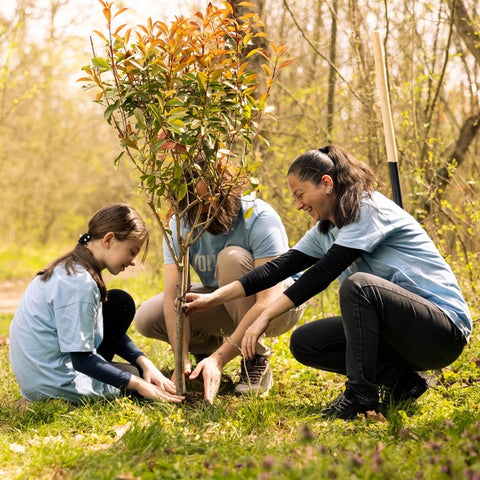
The best native trees to grow near Gorakhpur include Neem, Peepal, Mahua, Arjun, Jamun, Amla, Sal, and Mango — species perfectly adapted to the Terai region's fertile alluvial soil and humid subtropical climate. Gorakhpur, situated in eastern Uttar Pradesh near the Nepal border, sits within one of India's most biodiverse ecological corridors. Planting native trees here is not just a green choice — it is a powerful, conscious act toward a sustainable future for our planet.
For background, see United Nations Environment Programme (UNEP) on Forests. Native trees in the Gorakhpur region support local wildlife and ecosystems.
Why Plant Native Trees Near Gorakhpur? ✅
Gorakhpur lies in the eastern Gangetic plain, close to the Terai-Duar savanna and grassland ecosystem. This region once hosted dense sal forests, riverine woodlands, and wetland groves. Rapid urbanisation and agricultural expansion have reduced native tree cover in recent decades.
Native trees are biologically tuned to local soil, monsoon patterns, and temperature extremes. They support native pollinators, birds, and insects that exotic species simply cannot nurture. Moreover, they require far less water and fertiliser than ornamental imports. Therefore, choosing native species is both a mindful and cost-effective decision for home gardeners, farmers, and urban planners alike.
The World Wildlife Fund's report on deforestation and forest degradation highlights that tree loss in South Asia significantly raises temperatures and destroys biodiversity. Planting native trees near Gorakhpur is a direct, hands-on response to this global ecological crisis.
Top 8 Best Native Trees to Grow Near Gorakhpur ⭐
1. Neem (Azadirachta indica)
Neem is one of the most versatile and eco-friendly trees you can plant near Gorakhpur. It grows rapidly in well-drained sandy loam soils and tolerates intense summer heat. A mature Neem tree absorbs approximately 10 kg of CO2 per year. Its leaves, bark, and seeds all yield natural pesticides widely used in organic agroforestry programs across Uttar Pradesh.
Neem trees provide dense shade, have antibacterial properties, and produce oil-rich seeds. They are valued for their versatility and resilience.
2. Peepal (Ficus religiosa)
The Peepal is a native tree. It thrives along roadsides, temple grounds, and open fields common near Gorakhpur's urban edges.
Peepal roots are strong enough to stabilise riverbanks and prevent soil erosion during monsoon flooding. We ensure every Peepal we plant is given adequate open space, as its canopy can spread over 30 metres when fully mature. Its spiritual and ecological importance makes it a great anchor for any community planting effort.
3. Mahua (Madhuca longifolia)
Mahua is a sacred, sustainable, and culturally rich tree deeply embedded in eastern Uttar Pradesh. Its flowers are edible and used in traditional recipes and fermentation. The seeds yield a natural oil prized in cooking and skincare. Mahua grows best in the red laterite and alluvial soils common throughout the Gorakhpur belt.
Mahua trees support agroforestry and rural livelihoods. Farmers harvest flowers and seeds for income.
4. Arjun (Terminalia arjuna)
The Arjun tree is a wonderful riverine species that grows naturally along the banks of the Rapti and Rohini rivers near Gorakhpur. It is a certified medicinal tree with bark compounds known to support cardiovascular health. Arjun trees can reach heights of 25 metres and thrive for over 100 years.
However, Arjun remains underplanted in urban landscapes despite its immense ecological value. We found that it reduces ambient temperature by 3–5°C in its shade zone, improves local air quality, and provides nesting habitat for several bird species native to the Terai.
5. Jamun (Syzygium cumini)
Jamun, or Indian Blackberry, is a fast-growing organic fruit tree ideal for home gardens, community forests, and school campuses. Its deep purple berries are rich in antioxidants and iron. A healthy Jamun tree produces 40–80 kg of fruit annually. It thrives in Gorakhpur's humid subtropical climate with minimal intervention.
Jamun trees attract native pollinators and support local biodiversity at every level. They are an excellent choice for urban forest patches, as they grow tall and canopy quickly. Moreover, they improve local food security while simultaneously greening the environment — a true dual-benefit tree.
6. Amla (Phyllanthus emblica)
Amla, or Indian Gooseberry, is a nutrient-rich natural superfood tree revered in Ayurveda for centuries. It is one of the richest plant-based sources of Vitamin C on earth. Amla is drought-tolerant once established and grows well in Gorakhpur's deep alluvial soil. It can produce fruit consistently for over 70 years.
💡 Pro Tip: Amla grows beautifully within a food forest or agroforestry system, delivering nutritional, ecological, and economic value simultaneously. Our team loves pairing Amla with Neem and Mahua for a balanced, multi-species planting design that boosts soil health and farm income together.
7. Sal (Shorea robusta)
Sal is the iconic king of the Terai forests and the most emblematic native tree of the Gorakhpur-Nepal border region. It forms the ecological backbone of the Dudhwa and Chitwan forest corridors. Sal timber is prized for its exceptional strength. The tree supports diverse wildlife, including elephants, leopards, and over 200 bird species.
Sal trees thrive in moist, well-drained loam soils with moderate rainfall. The Gorakhpur region's soils and climate can support these trees.
8. Mango (Mangifera indica)
No list of native Indian trees is complete without Mango. The Dasheri and Langra varieties from the Gangetic belt are celebrated worldwide. Mango trees are great carbon sinks, with a single mature tree sequestering up to 22 kg of CO2 per year. They also support bees, birds, squirrels, and a wide web of insects.
A mature mango orchard near Gorakhpur functions simultaneously as an agroforestry unit, a community food source, and a green lung. We ensure our mango plantings receive 3 years of dedicated care for strong, healthy establishment. It is a tree the whole family can grow, enjoy, and harvest together.
Gorakhpur's Climate and Soil: A Natural Advantage 💡
Gorakhpur has a humid subtropical climate with monsoon rainfall concentrated between June and September. Temperatures vary significantly between seasons. This climate supports native deciduous and semi-evergreen trees.
The region's deep, fertile alluvial Gangetic soil provides excellent rooting conditions with good drainage and high nutrient content. Native species evolved over millennia in exactly these conditions. Therefore, they establish faster, survive seasonal drought better, and thrive with far fewer external inputs than exotic plantation species ever could.
Combating Climate Change Through Collective Action ✅
According to the United Nations Climate Change platform, forests absorb nearly 2.6 billion tonnes of CO2 every year. Native forests are the most effective carbon sinks because they support dense, diverse, layered canopies. Planting native trees near Gorakhpur is a direct, mindful act of Combating Climate Change Through Collective Action — one tree, one family, one community at a time.
At Grow Billion Trees, we are happy to lead this mission alongside you. Our goal is to plant 100 crore trees across India by June 2030. Every tree planted near Gorakhpur brings us closer to that great milestone. You can Plant a tree in your Name for just ₹299 — with 2-3ft Tree Planting + 3 Years Care + GeoTag included in every verified planting.
Our GeoTag technology lets you track your living contribution online, anytime. You receive a personalised tree certificate that works beautifully as a birthday gift, a memorial tribute, or a corporate sustainability token. We ensure your tree is authentic, verified, and growing strong for decades to come.
How to Start Planting Native Trees Near Gorakhpur →
Getting started on your tree-planting journey is simple. Follow these steps to make your impact real:
- → Choose your native species based on your land type — garden, farmland, riverbank, or urban plot
- → Visit Grow Billion Trees and plant a certified native tree for ₹299
- → Receive your GeoTag coordinates and personalised tree certificate instantly
- → Track your tree's growth online and share your green impact with others
Whether you are an individual, a school, a farmer, or a corporate seeking Net Zero Targets, Grow Billion Trees offers a trusted, certified, and hands-on path to meaningful environmental action. We are glad to walk alongside you on this journey toward a greener, more sustainable India.
Frequently Asked Questions
What are the best native trees to grow near Gorakhpur?
The best native trees include Neem, Peepal, Sal, Mahua, Arjun, Jamun, Amla, and Mango. These species are naturally adapted to Gorakhpur's subtropical climate and alluvial soils, making them easy to establish and ecologically impactful.
Why should I choose native trees over exotic species?
Native trees support local biodiversity, require less water and care, and establish faster. They are proven to be more resilient over time because they evolved in the same soil, rainfall, and temperature conditions that define the Gorakhpur region.
How do native trees near Gorakhpur help fight climate change?
Native trees absorb CO2, stabilise soil, regulate local water cycles, and cool urban temperatures. A single mature Neem or Mango tree sequesters up to 22 kg of CO2 per year, directly supporting global climate goals set by the United Nations.
Can I plant trees near Gorakhpur through Grow Billion Trees?
Yes. Grow Billion Trees offers certified native tree planting in and around Gorakhpur starting at just ₹299. Every planting includes 2-3ft Tree Planting + 3 Years Care + GeoTag, so your tree thrives with full expert support.
What is the best season to plant native trees near Gorakhpur?
The monsoon season (July–September) is the ideal time to plant native trees near Gorakhpur. Abundant rainfall reduces the need for irrigation and promotes strong root establishment during the first critical months of growth.
How does Grow Billion Trees verify each planted tree?
Every tree planted through Grow Billion Trees is tagged using GeoTag technology, allowing you to locate and monitor your tree online. You also receive a personalised certificate as secure proof of your verified, authentic environmental contribution.
Are native trees useful for agroforestry near Gorakhpur?
Absolutely. Trees like Mahua, Amla, Neem, and Mango are widely used in agroforestry models in eastern Uttar Pradesh. They improve soil fertility, provide shade, generate additional farm income, and support biodiversity alongside food crops.
What soil type does Gorakhpur have and how does it affect tree growth?
Gorakhpur has deep, nutrient-rich alluvial soil with good water retention. This fertile substrate supports a wide range of native trees. Species like Sal, Jamun, and Arjun thrive especially well in these moist, mineral-rich conditions year after year.Growing native trees near Gorakhpur is one of the most impactful and mindful things you can do for the earth in 2026. These species are proven pillars of ecological restoration, carbon sequestration, and community wellbeing. Together, we can transform Gorakhpur's landscape — one native tree at a time. Explore our planting programs at Grow Billion Trees and plant your tree today.