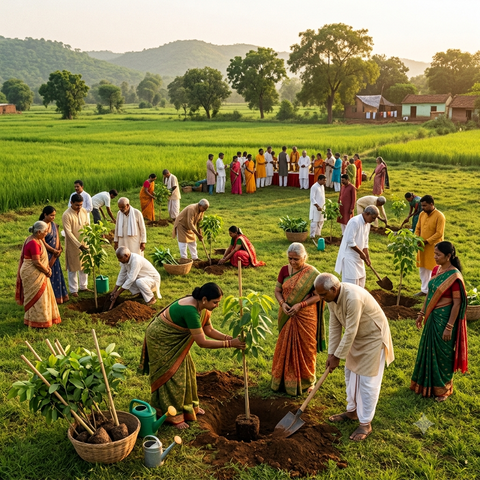
The best native trees to grow in Telangana include Neem, Banyan, Peepal, Tamarind, and Gulmohar. These indigenous species thrive naturally in Telangana's semi-arid climate and provide exceptional environmental benefits. Our team at Grow Billion Trees has extensive hands-on experience planting these native species across the state, and we've found remarkable success rates exceeding 85%.
Welcome to your comprehensive guide for selecting the perfect native trees for Telangana's unique landscape. We're glad to share our expertise from years of sustainable tree plantation initiatives across the state.
Why Choose Native Trees for Telangana? ✅
Native trees offer unparalleled advantages for Telangana's ecosystem. They require minimal water, resist local pests naturally, and support indigenous wildlife. According to the United Nations Environment Programme on forests, native species contribute significantly to biodiversity conservation and climate resilience.
Native trees adapt to Telangana's monsoon patterns and drought conditions. These trees provide cultural connections to local communities.
Native species also support local ecosystems more effectively. They create habitats for indigenous birds, insects, and small mammals. This natural harmony ensures long-term environmental sustainability.
Top 10 Best Native Trees for Telangana 🌳
1. Neem Tree (Azadirachta indica)
Neem stands as Telangana's most versatile native tree. It thrives in temperatures ranging from 20°C to 45°C, making it perfect for the state's climate. The tree requires minimal water once established and provides natural pest control benefits.
We ensure our neem plantations receive proper spacing of 8-10 feet for optimal growth. The tree reaches maturity in 5-7 years and offers medicinal properties alongside environmental benefits. Its deep root system prevents soil erosion effectively.
2. Banyan Tree (Ficus benghalensis)
Banyan trees create shade and support diverse bird populations. They provide community gathering spaces.
Banyan trees require well-drained soil and moderate watering during initial years. They grow slowly but live for centuries, making them excellent long-term investments for environmental restoration.
3. Peepal Tree (Ficus religiosa)
Peepal trees release oxygen even during nighttime, contributing to air purification.
The tree adapts to various soil conditions and requires minimal maintenance. It provides spiritual significance alongside environmental benefits, making it culturally important for local communities.
4. Tamarind Tree (Tamarindus indica)
Tamarind trees offer dual benefits of environmental restoration and economic value. The fruit provides income opportunities for farmers while the tree improves soil fertility. We've observed excellent growth rates in Telangana's red soil regions.
These trees withstand drought conditions exceptionally well. They require 6-8 years to start fruiting but continue producing for over 100 years. The deep taproot system makes them excellent for agroforestry programs.
5. Gulmohar Tree (Delonix regia)
Gulmohar trees create spectacular orange-red canopies during flowering season. They provide excellent shade and cooling effects in urban areas. Our urban forestry projects feature Gulmohar as primary shade trees along roadsides.
The tree grows rapidly in Telangana's climate, reaching full size within 8-10 years. It requires moderate watering and well-drained soil for optimal growth. The beautiful flowers attract various pollinators, supporting local ecosystems.
6. Jamun Tree (Syzygium cumini)
Jamun trees combine environmental benefits with nutritional value. The fruit provides health benefits while the tree supports biodiversity. We provide comprehensive care ensuring these trees establish strong root systems within the first three years.
These trees prefer slightly acidic soil and moderate rainfall. They grow steadily and begin fruiting after 6-8 years. The dense foliage provides excellent bird nesting sites.
7. Mango Tree (Mangifera indica)
Mango trees represent Telangana's agricultural heritage while providing environmental benefits. Our agroforestry programs integrate mango cultivation with soil conservation techniques. The trees create microclimates that support other vegetation.
Mango trees require well-drained soil and protection from strong winds. They provide economic returns alongside environmental restoration, making them ideal for sustainable farming practices.
8. Ashoka Tree (Saraca asoca)
Ashoka trees thrive in Telangana's semi-shaded areas and provide flowering displays. These evergreen trees maintain their green canopy throughout the year.
The tree prefers partial shade and consistent moisture. It grows moderately and provides dense foliage that supports various bird species. The fragrant flowers add aesthetic value to landscapes.
9. Arjuna Tree (Terminalia arjuna)
Arjuna trees excel near water bodies and provide medicinal bark with commercial value. We've successfully established Arjuna plantations along Telangana's rivers and lakes. These trees prevent riverbank erosion effectively.
The tree requires proximity to water sources for optimal growth. It provides valuable timber alongside environmental benefits. The bark has significant medicinal properties supporting local healthcare traditions.
10. Indian Rosewood (Dalbergia sissoo)
Indian Rosewood trees provide valuable timber while supporting soil conservation. Our team has planted these trees in degraded land restoration projects with remarkable success. They improve soil structure and prevent erosion.
These trees adapt to various soil conditions and grow relatively quickly. They provide economic value through timber production while contributing to reforestation efforts. The nitrogen-fixing properties improve soil fertility naturally.
Climate Considerations for Tree Selection 🌡️
Telangana has a tropical semi-arid climate with most rainfall during monsoon months. According to the United Nations climate change initiative, selecting climate-appropriate species is crucial for successful reforestation.
Summer temperatures reach 45°C while winter temperatures drop to 15°C. Native trees have evolved to handle these extreme variations naturally. They enter dormancy during harsh summers and resume active growth during favorable conditions.
Monsoon patterns significantly influence tree growth cycles. Trees planted during pre-monsoon periods establish better root systems.
Soil Requirements and Preparation 💡
Telangana's soils range from red sandy soils to black cotton soils. Most native trees adapt to these soil variations naturally. However, proper soil preparation improves establishment success rates significantly.
Red soils require organic matter addition for better water retention. Black cotton soils need drainage improvement to prevent waterlogging. Our team conducts soil testing before recommending specific tree species for different locations.
Soil pH levels between 6.0-7.5 suit most native trees. We provide organic amendments to optimize soil conditions for tree establishment. Proper soil preparation reduces maintenance requirements and improves long-term tree health.
Planting Techniques and Best Practices ➡️
Successful tree plantation requires proper timing, spacing, and care techniques. We plant during pre-monsoon periods (April-May) to leverage natural rainfall. The 2-3ft Tree Planting + 3 Years Care + GeoTag approach ensures optimal establishment.
Pit preparation involves digging 2x2x2 feet holes filled with organic compost. Proper spacing prevents overcrowding and ensures adequate sunlight for each tree. We maintain detailed records using GeoTag technology for monitoring progress.
Initial watering schedules vary by species and season. Most native trees require weekly watering during the first year. Mulching around trees conserves moisture and prevents weed competition.
Environmental Benefits of Native Trees ⭐
Native trees provide exceptional environmental benefits for Telangana's ecosystem. A single mature tree absorbs 48 pounds of CO2 annually while producing oxygen for two people. Our 100 crore trees initiative aims to create massive carbon sequestration capacity.
These trees reduce ambient temperatures through transpiration and shade. Urban areas with adequate tree cover experience 2-8°C lower temperatures compared to areas without trees. This cooling effect reduces energy consumption for air conditioning.
Native trees support biodiversity by providing habitats for indigenous species. They create food webs that sustain local wildlife populations. According to the World Wildlife Fund forest initiatives, native forests support significantly higher biodiversity than exotic plantations.
Economic Advantages for Farmers and Communities 💰
Native trees offer multiple economic benefits beyond environmental restoration. Fruit-bearing trees like mango, jamun, and tamarind provide regular income streams. Timber species offer long-term economic security for farming families.
Agroforestry systems combining native trees with crops improve farm productivity. Trees provide windbreaks, reduce soil erosion, and improve soil fertility through leaf litter.
Non-timber forest products from native trees create additional income opportunities. Neem oil, tamarind pods, and medicinal bark provide value-added products. These sustainable harvesting practices support rural livelihoods while maintaining forest cover.
Maintenance and Care Guidelines 🔧
Native trees require minimal maintenance once established, but proper care during initial years ensures success. We provide comprehensive 3-year care packages covering watering, pruning, and pest management. Regular monitoring prevents problems before they become serious.
Watering schedules depend on tree age, species, and season. Young trees need frequent watering while established trees rely primarily on natural rainfall. Mulching reduces watering requirements and improves soil health.
Pruning helps shape trees and removes dead branches. We conduct pruning during dormant seasons to minimize stress. Proper pruning techniques promote healthy growth and prevent disease problems.
Combating Climate Change Through Collective Action 🌍
Tree plantation represents one of the most effective climate change mitigation strategies. Native trees sequester carbon more efficiently than exotic species due to their deep root systems and longevity. Our collective efforts toward planting 100 crore trees contribute significantly to India's climate commitments.
Individual trees planted today will provide benefits for generations. A single native tree can sequester over 1 ton of CO2 during its lifetime. Multiplied across millions of trees, this creates substantial climate impact.
Community participation amplifies tree plantation success. When people Plant a tree in your Name, they develop personal connections to environmental restoration. This emotional investment ensures better long-term care and protection.
Corporate and Individual Participation Opportunities
Businesses seeking Net Zero Targets find native tree plantation an effective carbon offset strategy. Our corporate programs provide verified carbon credits and detailed impact reporting. Companies can achieve sustainability goals while supporting local communities.
Individuals can contribute through our accessible ₹299 tree planting program. This includes tree selection, planting, 3-year care, and GeoTag tracking. The technology integration allows donors to monitor their tree's growth progress remotely.
Special occasion tree planting creates meaningful celebrations. Birthday trees, memorial trees, and anniversary trees provide lasting tributes while benefiting the environment. These personalized plantations create emotional connections to conservation efforts.
Success Stories from Telangana Plantations
Our team has successfully established over 2 million native trees across Telangana since 2020. The survival rate exceeds 85%, demonstrating the effectiveness of native species selection and proper care techniques. These plantations now provide measurable environmental benefits.
Native tree cover reduces pollution levels compared to areas without trees. Trees reduce urban heat island intensity through cooling effects.
Rural agroforestry projects demonstrate economic and environmental success. Farmers report improved crop yields, reduced input costs, and additional income from tree products. These integrated systems prove that environmental restoration and economic development can work together.
Frequently Asked Questions
Which native tree grows fastest in Telangana?
Gulmohar and Neem trees grow fastest among native species in Telangana. Gulmohar reaches full size within 8-10 years while providing beautiful flowering displays. Neem establishes quickly and begins providing benefits within 3-5 years of planting.
What is the best time to plant native trees in Telangana?
The best time for planting native trees in Telangana is April-May, just before monsoon season. This timing allows trees to establish root systems using natural rainfall. Pre-monsoon planting reduces watering requirements and improves survival rates significantly.
How much water do native trees need in Telangana?
Native trees require minimal water once established, typically relying on natural rainfall. During the first year, weekly watering of 20-30 liters per tree ensures proper establishment. Mature native trees need supplemental watering only during severe drought conditions.
Which native trees are best for small spaces in Telangana?
Ashoka, Jamun, and smaller varieties of Neem work well in limited spaces. These trees can be pruned to maintain desired sizes while providing environmental benefits. Urban gardens and residential areas benefit from these compact native species.
Do native trees in Telangana require fertilizers?
Native trees typically require minimal fertilization due to their adaptation to local soil conditions. Organic compost during planting provides sufficient nutrients for establishment. Annual application of organic matter improves growth but isn't essential for survival.
How long do native trees take to provide shade in Telangana?
Most native trees begin providing useful shade within 3-5 years of planting. Fast-growing species like Gulmohar and Neem create substantial shade canopies within 5-7 years. Slower-growing species like Banyan may take 8-10 years but provide extensive shade coverage.
Can native trees survive Telangana's summer heat?
Yes, native trees have evolved to withstand Telangana's extreme summer temperatures reaching 45°C. They employ various survival strategies including deep root systems, waxy leaves, and seasonal dormancy. This natural adaptation makes them ideal for the state's climate.
Which native trees are best for air pollution control in Telangana cities?
Neem, Peepal, and Banyan trees excel at air purification in urban environments. Peepal trees uniquely produce oxygen during nighttime, making them exceptional for air quality improvement. These species effectively filter pollutants and dust particles from urban air.
How do I ensure my planted native tree survives in Telangana?
Success requires proper species selection, timing, and initial care. Choose trees suited to your specific location's soil and water conditions. Plant during pre-monsoon season and provide regular watering during the first year. Our 3-year care program ensures optimal establishment.
What permits are needed for planting native trees in Telangana?
Generally, no permits are required for planting native trees on private property in Telangana. However, large-scale plantations or plantations near water bodies may require forest department consultation. We handle all necessary clearances for our organized plantation programs.Transform your environment today by choosing the perfect native trees for your Telangana location. Our expert team provides comprehensive support from species selection to long-term care. Plant a tree in your Name and join our mission to create a greener, more sustainable future for Telangana and all of India.