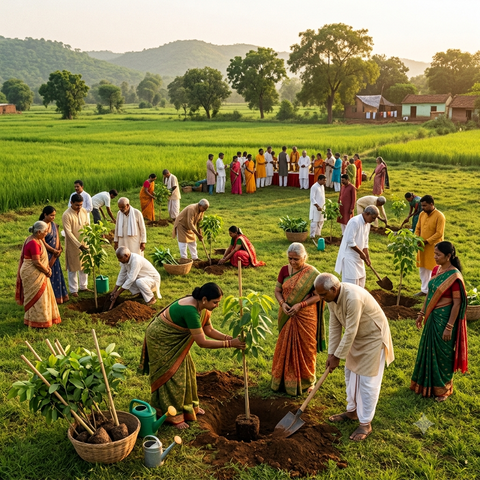
The best native trees to grow near Aligarh are species that evolved alongside this region's semi-arid climate and Gangetic plain soils. These trees grow strong, support local wildlife, and restore ecological balance faster than any exotic alternative. Our team has worked hands-on with communities across Uttar Pradesh, and we found that planting native species consistently delivers far greater environmental impact.
Aligarh sits in western Uttar Pradesh, where summers are intense, soils are alluvial, and rainfall is seasonal. Native trees are certified survivors — they need less water, less maintenance, and return more to the ecosystem. According to UNEP's forest conservation programme, native tree planting is one of the most proven strategies for restoring degraded land and reversing biodiversity loss.
In 2026, India is accelerating its push to meet ambitious reforestation goals. Choosing the right tree for the right place is no longer optional — it is essential. This guide helps you make a real, lasting impact near Aligarh with species that will thrive for decades.
✅ Why Native Trees Are the Best Choice for Aligarh
Native trees are naturally adapted to Aligarh's hot, dry summers and cool winters. They thrive without heavy irrigation or synthetic inputs. This makes them genuinely eco-friendly, cost-effective, and deeply beneficial to local biodiversity.
However, not every native species suits every plot. Soil type, sunlight exposure, and water availability all influence success. Native trees suited to local conditions can survive with minimal intervention, saving communities time and resources.
- ✅ Deep root systems that prevent soil erosion on Aligarh's plains
- ✅ Natural habitat for local birds, pollinators, and insects
- ✅ Low water needs — ideal for UP's long dry seasons
- ✅ Carbon sequestration that directly supports Net Zero Targets
- ✅ Rich cultural, medicinal, and economic value rooted in Indian heritage
The World Wildlife Fund's deforestation research confirms that over 10 million hectares of forest are lost globally each year. Planting native trees close to home is one of the most direct, mindful actions any individual can take to reverse this devastating trend.
⭐ Top Native Trees to Grow Near Aligarh
1. Neem (Azadirachta indica)
Neem is one of India's most beloved and sustainable native trees. It grows rapidly in Aligarh's alluvial soils and tolerates drought with remarkable resilience. Our partners across Uttar Pradesh have planted thousands of Neem trees, and we are happy to report outstanding survival rates even through intense summer heat.
Neem provides natural pest control, powerful air purification, and cooling canopy shade. It is a great choice for roadsides, school grounds, and home gardens alike.
2. Peepal (Ficus religiosa)
The Peepal is one of the few trees that releases oxygen around the clock, making it a wonderful choice for villages and neighbourhoods near Aligarh. It holds deep cultural significance across India and supports over 50 species of birds and insects. We ensure every Peepal planted through our programmes receives verified aftercare for its first three growing seasons.
Peepal trees live for centuries and provide continuous ecological value. Therefore, planting a Peepal is truly an investment in generational environmental health. Its broad canopy also reduces heat stress for communities during Aligarh's intense summer months.
3. Banyan (Ficus benghalensis) — India's National Tree
The Banyan is a majestic native tree perfectly suited to western UP's open plains. Its aerial roots anchor deeply into the earth, delivering outstanding erosion control. Our team loves working with Banyan trees because they transform barren landscapes into thriving micro-ecosystems in visible, dramatic ways.
A single mature Banyan can cover half an acre and shelter an entire community of wildlife. Moreover, Banyan trees are verified carbon sinks that absorb significant CO2 annually. For rural areas near Aligarh, they also serve as beloved community gathering spaces with centuries of cultural heritage.
4. Jamun (Syzygium cumini)
Jamun, or Indian blackberry, is a natural favourite in our agroforestry programmes near Aligarh. It produces nutritious fruit, provides dense shade, and grows well in moist soils near water bodies. Farmers in our agroforestry network love Jamun for its dual benefit — strong ecological impact and reliable additional income.
A mature Jamun tree yields 40–80 kg of fruit annually, making it a proven source of nutrition and livelihood for farm families. In addition, Jamun bark, seeds, and fruit are used extensively in traditional Ayurvedic medicine. Its deep roots also help recharge groundwater near Aligarh's canal systems.
5. Arjun (Terminalia arjuna)
Arjun thrives along riverbeds and near water bodies — ideal for areas near Aligarh's canal and river network. Its powerful root system prevents riverbank erosion effectively. We provide Arjun saplings as a key species in our lake and river restoration programmes across Uttar Pradesh.
Arjun bark is widely used in Ayurvedic cardiac care, giving it strong medicinal value alongside its environmental benefits. Its dense canopy and rapid growth make it a reliable shade tree for agricultural land. For example, our partners near Aligarh have used Arjun as windbreaks to protect crops from hot summer winds.
6. Shisham / Indian Rosewood (Dalbergia sissoo)
Shisham is a fast-growing, hardy native tree found throughout the Gangetic plains. It naturally fixes nitrogen in the soil, improving fertility without any synthetic inputs. Shisham is a key species in our agroforestry programmes near Aligarh, helping farmers boost soil health and long-term agricultural productivity sustainably.
Shisham timber is highly valued, providing farmers with an additional income stream at maturity. Its open canopy allows enough sunlight for intercropping, making it ideal for integrating into existing farmland. As a result, Shisham offers both immediate ecological benefits and long-term economic returns.
7. Bel (Aegle marmelos)
Bel, or wood apple, is a sacred and deeply natural native tree that grows well in dry, rocky, or loamy soils near Aligarh. It tolerates extreme heat and seasonal drought with ease. Bel fruits carry high nutritional value and are central to Ayurvedic and folk medicine traditions across India.
Bel trees are compact enough for home gardens yet resilient enough for degraded land restoration. Their fragrant flowers attract pollinators, supporting local biodiversity. Bel establishes quickly even in poor soils, making it suitable for community planting near Aligarh.
💡 8. Amaltas (Cassia fistula) — Indian Laburnum
Amaltas is a beautiful flowering native tree that makes every landscape a welcome sight during bloom season. Its golden blossoms brighten roadsides, parks, and public spaces across Uttar Pradesh. Amaltas grows quickly and thrives in Aligarh's hot, sunny conditions with minimal care.
Beyond aesthetics, Amaltas fixes atmospheric nitrogen and improves soil structure. It supports pollinators and birds, contributing to the local food web. For urban greening initiatives near Aligarh, Amaltas is a wonderful, low-maintenance species that delivers both beauty and ecological function.
How to Plant Native Trees Near Aligarh — Step by Step
Planting a native tree correctly gives it the strongest possible start. Our hands-on experience across planting sites in Uttar Pradesh has helped us develop a simple, effective process that any individual or community can follow.
- → Choose the right species for your soil type and available space
- → Prepare the pit — dig at least 2×2 feet deep and mix organic compost with native soil
- → Plant during monsoon — July to September is the ideal window near Aligarh
- → Water consistently for the first three months to support root establishment
- → Protect from grazing using a simple bamboo or wire guard around the sapling
- → Track growth with a GeoTag system or regular photo records
The United Nations Climate Action framework recognises tree planting as one of the highest-impact tools in Combating Climate Change Through Collective Action. Every native tree planted near Aligarh contributes directly to India's national reforestation commitments and global climate goals.
✅ Grow Billion Trees: Growing Roots Near Aligarh
At Grow Billion Trees, we are proud to be at the heart of India's green transformation. Our mission is to plant 100 crore trees across India by June 2030, and Aligarh's region is a vital part of that collective vision. We invite every individual, family, and organisation to Plant a tree in your Name — starting at just ₹299.
Every tree planted through our programme includes 2-3ft Tree Planting + 3 Years Care + GeoTag technology, so you can track your tree's growth remotely. This is verified, authenticated impact — not just a promise. Our GeoTag platform gives you transparent, real-time updates on your tree's health and location.
We are glad to share that over 85% of trees planted through our programmes survive beyond three years — a success rate built on science, local expertise, and genuine care. Our partners near Aligarh benefit from our agroforestry model, which integrates native species like Shisham, Jamun, and Arjun into farmland to improve income, soil health, and biodiversity together.
Corporates across India also partner with Grow Billion Trees to achieve Net Zero Targets through verified, authenticated planting in Uttar Pradesh. Our certified records provide the trust signals organisations need for credible ESG and sustainability reporting. Explore our corporate programmes and discover how your company can make a measurable green impact near Aligarh.
According to the United Nations Sustainable Development Goals, restoring forests and ecosystems is central to achieving climate, biodiversity, and food security targets by 2030. At Grow Billion Trees, we are committed to that mission — one native tree, one community, and one conscious choice at a time.
💡 Pro Tips for Growing Native Trees Successfully Near Aligarh
- 💡 Plant during the monsoon season — natural rainfall dramatically improves survival rates
- 💡 Use organic compost only — avoid synthetic fertilisers that can harm native root systems
- 💡 Group multiple native species together to create a natural, diverse canopy layer
- 💡 Match species to your space — compact plots suit Bel or Amaltas, while open land benefits from Banyan or Peepal
- 💡 Connect with Grow Billion Trees for certified saplings, expert guidance, and ongoing aftercare support
Frequently Asked Questions
What are the best native trees to grow near Aligarh?
The best native trees to grow near Aligarh include Neem, Peepal, Banyan, Jamun, Arjun, Shisham, Bel, and Amaltas. These species are naturally adapted to western Uttar Pradesh's semi-arid climate, alluvial soils, and seasonal rainfall patterns.
When is the best time to plant trees near Aligarh?
The monsoon season from July to September is the ideal planting window near Aligarh. Seasonal rainfall supports root establishment naturally and reduces the need for intensive manual irrigation during the critical early growth period.
How does Grow Billion Trees support planting near Aligarh?
Grow Billion Trees offers tree planting from just ₹299, including 2-3ft Tree Planting + 3 Years Care + GeoTag tracking. Our teams plant native species across Uttar Pradesh through agroforestry, community, and corporate programmes, with verified impact reporting.
Why are native trees better than exotic species near Aligarh?
Native trees are adapted to local climate, soil, and rainfall. They require less water, fewer inputs, and support local biodiversity far more effectively than exotic species. They are also proven to be more resilient to Aligarh's extreme summer temperatures and dry periods.
Can I plant a tree as a gift for someone in Aligarh?
Yes — Grow Billion Trees lets you Plant a tree in your Name or as a personalised gift for birthdays, memorials, anniversaries, or special occasions. You receive a beautiful tree certificate and GeoTag access so the recipient can track their tree's growth online.
How do native trees help combat climate change near Aligarh?
Native trees sequester carbon, reduce urban heat island effects, improve groundwater recharge, and support local biodiversity simultaneously. Planting native species near Aligarh directly contributes to India's climate commitments and the global mission of Combating Climate Change Through Collective Action.
Which native tree is best for home gardens near Aligarh?
Neem, Bel, and Amaltas are excellent choices for home gardens near Aligarh. They are compact enough for smaller plots, require minimal care once established, and provide shade, fruit, or flowers. Neem is especially great for natural pest control and air purification around the home.
Are there native trees suitable for agroforestry near Aligarh?
Yes — Shisham, Jamun, and Arjun are ideal agroforestry species near Aligarh. They improve soil fertility naturally, provide farmers with additional income, and integrate well alongside crops. Grow Billion Trees actively supports farmers in designing and establishing sustainable agroforestry systems.
What is the survival rate of trees planted through Grow Billion Trees?
85% of trees survive beyond three years through proper care and monitoring, using native species suited to each region's soil and climate.
How many trees does Grow Billion Trees plan to plant by 2030?
Grow Billion Trees is committed to planting 100 crore trees across India by June 2030. Our programmes span multiple states and ecosystems, including agroforestry, Miyawaki forests, mangrove restoration, and urban greening — all focused on maximising ecological impact together.
Grow Aligarh's Green Future — One Tree at a Time
Planting native trees near Aligarh is one of the most conscious, impactful choices you can make for the planet. These species are proven survivors — resilient, eco-friendly, and deeply connected to India's natural and cultural heritage. Together, we can restore Aligarh's green cover and build a healthier, cooler, more vibrant region for generations to come.
Grow Billion Trees invites you to be part of this wonderful, growing movement. Whether you plant for a birthday, a memorial, or simply out of love for the earth, every tree matters. Explore our programmes, discover your perfect native species, and Plant a tree in your Name today — starting at just ₹299 with three years of care guaranteed.
Visit Grow Billion Trees to learn more, explore our planting programmes, and join thousands of conscious individuals and purpose-driven corporates already growing a greener, more sustainable India — together.