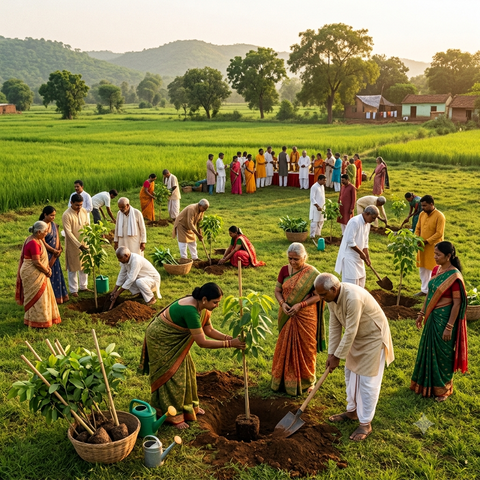
The best native trees to grow in Chhattisgarh include Sal (Shorea robusta), Teak (Tectona grandis), Mahua (Madhuca longifolia), Banyan (Ficus benghalensis), and Neem (Azadirachta indica). These indigenous species thrive naturally in the state's tropical climate and deliver exceptional environmental value. Our team at Grow Billion Trees has worked hands-on with farmers and communities across Chhattisgarh, and we've found that native trees offer superior survival rates and ecological impact compared to exotic species.
Chhattisgarh's rich biodiversity makes it ideal for native tree plantation. Choosing the right native species can help restore local ecosystems. Native trees are central to the goal of growing 100 crore trees by 2030.
Why Choose Native Trees for Chhattisgarh? ✅
Native trees offer remarkable advantages for Chhattisgarh's unique ecosystem. These species have evolved over thousands of years to thrive in the region's specific soil conditions and climate patterns. Our partners in forest restoration have consistently observed better growth rates and survival percentages with indigenous varieties.
According to the United Nations Environment Programme's forest conservation initiative, planting native species is the most effective strategy to restore degraded ecosystems. These trees require minimal water and maintenance once established. They naturally resist local pests and diseases that often affect non-native species.
Native trees also provide crucial habitat for local wildlife. Birds, insects, and small mammals depend on these familiar species for food and shelter. When you plant native trees, you're creating a mindful, green ecosystem that supports biodiversity for generations to come.
Top 10 Best Native Trees for Chhattisgarh 🌳
✅ 1. Sal Tree (Shorea robusta)
The Sal tree stands as Chhattisgarh's most iconic native species. This majestic tree grows up to 35 metres tall and produces valuable timber. We provide Sal saplings that adapt wonderfully to the state's laterite soils, thriving in both rural and urban settings.
Sal trees offer multiple benefits including soil conservation and carbon sequestration. The leaves have traditional medicinal uses, while the resin provides economic value. They are offered as 2-3ft saplings with three years of care and geo-tagging.
⭐ 2. Teak Tree (Tectona grandis)
Teak represents one of the most valuable native trees for Chhattisgarh plantation projects. This deciduous species produces premium hardwood timber highly sought in global markets. We ensure proper spacing and care for optimal teak growth across our agroforestry programs.
The tree reaches maturity in 25–40 years, providing long-term investment potential. Teak leaves create natural mulch that enriches soil fertility. Our team recommends Teak for agroforestry programs due to its proven economic benefits and lasting environmental impact.
💡 3. Mahua Tree (Madhuca longifolia)
Mahua trees hold special cultural significance in Chhattisgarh communities. Every part of this native tree provides value — flowers for traditional beverages, seeds for oil, and leaves for fodder. We love how this tree supports rural livelihoods and connects communities to their natural heritage.
This drought-resistant species thrives in poor soils where other trees struggle. Mahua flowers bloom during summer, providing nectar for bees and supporting honey production. The tree's deep roots help prevent soil erosion effectively, making it a great choice for restoring degraded land.
🌳 4. Banyan Tree (Ficus benghalensis)
The magnificent Banyan tree serves as a natural community gathering space. This native species can live for hundreds of years, creating extensive canopy coverage. Our urban forestry programs at Grow Billion Trees often feature Banyan trees for their wonderful cooling effects in cities.
Banyan trees provide oxygen for approximately 20 people daily. The aerial roots create unique architectural beauty while stabilising soil. We recommend Banyan trees for parks, schools, and community spaces — they're a great way to bring conscious greening into urban life.
→ 5. Neem Tree (Azadirachta indica)
Neem trees have medicinal and pest-control properties and grow well in Chhattisgarh's climate. They require minimal maintenance while supporting the local ecosystem.
Every part of the Neem tree has practical applications — leaves for organic pesticides, bark for medicine, and oil for cosmetics. The tree's natural compounds repel harmful insects, protecting nearby crops. This makes Neem an ideal partner in eco-friendly, organic farming systems.
🌿 6. Peepal Tree (Ficus religiosa)
Peepal trees hold sacred status in Indian culture while providing exceptional environmental benefits. This native species releases oxygen even during nighttime, unlike most other trees. We provide Peepal saplings for both religious and ecological purposes — a happy combination of tradition and green impact.
The heart-shaped leaves create beautiful rustling sounds that many people find peaceful. Peepal trees support various bird species and provide natural air purification. These trees grow well in both rural and urban environments, making them a wonderful versatile choice.
⭐ 7. Jamun Tree (Syzygium cumini)
Jamun trees produce delicious purple fruits with significant health benefits. This native species adapts excellently to Chhattisgarh's monsoon patterns. Our agroforestry programs include Jamun trees for their proven dual food and timber value — an effective way to boost farmer income.
The fruit is rich in antioxidants and has traditional medicinal value for managing blood sugar. Jamun trees attract birds and wildlife, enriching local biodiversity. They grow well in moist, well-drained soils and can reach heights of up to 30 metres.
💡 8. Arjun Tree (Terminalia arjuna)
The Arjun tree is a magnificent riverine species native to central India, including Chhattisgarh. It thrives along riverbanks and provides exceptional erosion control. Our team has planted Arjun trees extensively in riparian zones with wonderful, measurable results.
The bark of the Arjun tree has renowned medicinal properties, particularly for heart health, well-documented in Ayurvedic texts. It also supports silkworm cultivation, which can improve income for rural communities. This conscious choice of species transforms degraded riverbanks into productive, green corridors.
→ 9. Amla Tree (Phyllanthus emblica)
Amla, or Indian Gooseberry, is one of Chhattisgarh's most beloved native fruit trees. This eco-friendly species produces vitamin C-rich fruits valued in Ayurveda and modern wellness. We've found Amla trees to be excellent, natural additions to food forests and home gardens alike.
The tree is highly drought-tolerant and grows well in a variety of soil types. Amla fruits are harvested from November to February, providing seasonal income for farmers. Moreover, the tree's antioxidant-rich fruits support local nutrition and rural health in a sustainable way.
✅ 10. Bel Tree (Aegle marmelos)
The Bel tree, or Wood Apple, is a sacred and medicinal native tree in Indian culture. It thrives in the dry and semi-arid conditions found across Chhattisgarh, making it suitable for dryland agroforestry.
Bel fruits are valued for digestive health and religious ceremonies. The tree's thorny branches also provide natural fencing. With minimal care requirements, the Bel tree is a sustainable and practical choice for farmers looking to diversify their green income streams.
Environmental Impact: Why Native Trees Matter in 2026 ✅
In 2026, the urgency of Combating Climate Change Through Collective Action has never been greater. According to United Nations Climate Change reports, forests play a critical role in absorbing carbon dioxide and mitigating global warming. Planting native trees in Chhattisgarh directly contributes to this vital global mission.
According to the World Wildlife Fund's research on deforestation and forest degradation, the planet loses millions of hectares of forest annually. Native tree plantation in states like Chhattisgarh helps reverse this damaging trend. Each tree planted is a step toward a more resilient, biodiverse, and hopeful future for our earth.
The United Nations Sustainable Development Goals highlight ecosystem restoration as essential for achieving a sustainable planet by 2030. Our mission to Plant a tree in your Name — targeting 100 crore trees across India — aligns directly with these global goals. Together, we can make a meaningful, lasting impact.
Native tree species support higher biodiversity than exotic plantations, making them important for ecosystem restoration across India.
How to Plant Native Trees in Chhattisgarh ✅
Planting native trees successfully requires mindful preparation and the right approach. Here are the key steps our team recommends, based on hands-on experience across Chhattisgarh:
- Choose the right species for your soil type and land use goals — refer to the top 10 list above.
- Prepare the planting site by clearing weeds and loosening soil around a 60x60 cm pit.
- Plant during the monsoon season (July–September) for the best natural moisture support.
- Provide 3 years of nurturing care including watering, mulching, and pest monitoring during establishment.
- Use GeoTag technology to track your tree's growth and verify its health — a certified service included with every planting at Grow Billion Trees.
Grow Billion Trees: Your Trusted Partner in Reforestation ⭐
At Grow Billion Trees, we make it easy and meaningful to Plant a tree in your Name for just ₹299. Every planting includes 2-3ft Tree Planting + 3 Years Care + GeoTag so you can track your tree's journey from sapling to towering canopy. We are glad to be part of your green story and help you grow your impact.
Our verified and certified processes ensure every tree has the best chance to thrive. We operate across Mumbai, Bangalore, Delhi, Chennai, Hyderabad, and rural Chhattisgarh. Whether you're planting for a birthday, memorial, corporate Net Zero Targets, or simply for the love of the earth — we're here to help you grow.
In 2026, we're working toward our goal of planting 100 crore trees by June 2030 — and every single tree counts. Our programs include Miyawaki Forest Creation, Agroforestry, Mangrove Restoration, and Urban Forestry. Explore our programs and discover how you can transform our planet, one tree at a time.
Frequently Asked Questions
What are the best native trees to grow in Chhattisgarh?
The best native trees to grow in Chhattisgarh include Sal, Teak, Mahua, Banyan, Neem, Peepal, Jamun, Arjun, Amla, and Bel. These species are naturally adapted to the state's tropical climate and soil conditions, offering superior survival rates and ecological value.
Why are native trees better than exotic species for Chhattisgarh?
Native trees have evolved over thousands of years in Chhattisgarh's specific environment. They require less water, naturally resist local pests, support local wildlife, and provide stronger ecological benefits. Exotic species often struggle to adapt and can even disrupt local biodiversity.
When is the best time to plant trees in Chhattisgarh?
The best time to plant trees in Chhattisgarh is during the monsoon season, from July to September. This period provides natural rainfall that supports sapling establishment, reduces the need for manual watering, and significantly improves survival rates.
Can I plant trees for special occasions in Chhattisgarh?
Yes, absolutely. Grow Billion Trees offers tree planting for birthdays, memorials, anniversaries, Women's Day, and corporate events. You receive a personalized tree certificate and GeoTag access to track your tree's growth — a wonderful, meaningful gift for any occasion.
What is the Miyawaki method, and is it suitable for Chhattisgarh?
The Miyawaki method involves planting multiple native species very close together to create a dense, self-sustaining mini-forest. It is highly suitable for Chhattisgarh's climate and can produce a mature forest in 20–30 years, far faster than conventional planting methods.
How does Grow Billion Trees use GeoTag technology?
Grow Billion Trees uses GeoTag technology to assign a unique geographic location to every tree planted. This allows you to track your tree's growth online, verify its survival, and receive real-time updates. It adds transparency and accountability to our verified, certified planting programs.
How can corporates benefit from planting native trees in Chhattisgarh?
Corporates can plant native trees in Chhattisgarh to achieve Net Zero Targets, meet CSR requirements, and demonstrate authentic environmental commitment. Grow Billion Trees provides verified, large-scale planting programs with full documentation and GeoTag reporting for corporate partners.
What is agroforestry, and which native trees are best for it in Chhattisgarh?
Agroforestry combines tree cultivation with crops or livestock on the same land. In Chhattisgarh, the best native trees for agroforestry include Teak, Mahua, Jamun, Amla, and Arjun. These species improve soil health, provide shade for crops, and generate additional income for farmers.
How much does it cost to plant a tree with Grow Billion Trees?
You can plant a tree in your name for just ₹299 with Grow Billion Trees. This includes 2-3ft tree planting, 3 years of professional care, and a GeoTag to track your tree. It is an easy, proven, and impactful way to contribute to India's reforestation mission.
Which native tree is best for improving soil health in Chhattisgarh?
The Arjun tree and Mahua tree are both excellent for improving soil health in Chhattisgarh. Arjun's deep roots stabilise riverbanks, while Mahua's extensive root system prevents erosion. Teak also enriches soil through natural leaf mulch, making it a great choice for agroforestry systems.
Summary: Grow Native, Grow Together 🌿
Planting the best native trees in Chhattisgarh is one of the most impactful, conscious choices you can make for our planet. From the towering Sal and valuable Teak to the medicinal Neem and sacred Peepal, each native species nurtures the earth and supports local communities. In 2026, the time to act is now — and together, we can grow a greener, more sustainable future.
Ready to make your impact? Plant a tree in your Name for just ₹299 and join thousands of eco-conscious individuals and corporates in our mission to plant 100 crore trees across India. Explore our tree planting programs at Grow Billion Trees and start your green journey today.