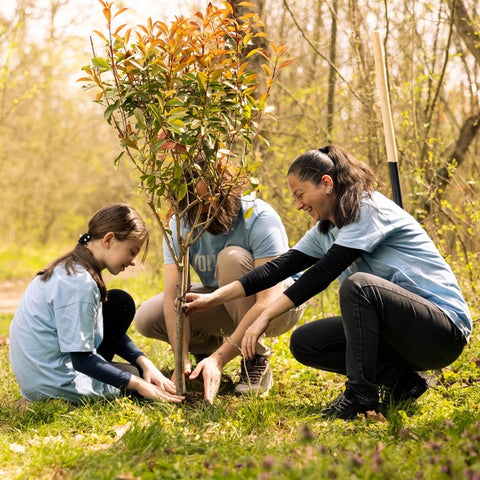
The best native trees to grow near Sangli, Maharashtra are species perfectly adapted to the region's semi-arid climate, black cotton soil, and seasonal Krishna River rainfall. Sangli receives 550–700 mm of annual rainfall, experiences peak summer temperatures above 40°C, and sits on the Deccan Plateau — conditions that demand drought-tolerant, deep-rooted native species. In 2026, with India losing forest cover at an alarming rate, choosing the right trees for this landscape is both urgent and impactful.
Native trees establish faster, need fewer inputs, and support richer biodiversity than exotic alternatives. This guide helps you choose the right species for Sangli.
Why Native Trees Are the Right Choice for Sangli ✅
Native trees have evolved alongside Sangli's soil, rainfall cycles, and local wildlife for thousands of years. They are not just survivors — they are ecosystem architects. For background, see United Nations Environment Programme (UNEP). Planting them in degraded zones restores this balance naturally.
For background, see World Wildlife Fund (WWF). Choosing native species over exotic imports is a proven strategy to address this crisis at the grassroots level. Moreover, native trees demand less water and zero synthetic fertilisers — making them a truly eco-friendly investment.
In addition, native trees power Sangli's rural economy. Through agroforestry, farmers integrate native species into crop boundaries — improving soil health, reducing erosion, and earning supplemental income. This is a wonderful, sustainable path forward for farming communities across the Krishna River basin.
Top Native Trees to Grow Near Sangli, Maharashtra 🌳
Here are the seven best native trees to grow near Sangli — selected for climate compatibility, ecological value, and community benefit. Each species has deep roots in Maharashtra's natural and cultural heritage.
1. Neem (Azadirachta indica) ⭐
Neem is one of Maharashtra's most celebrated native trees, thriving across the Deccan Plateau's semi-arid zones. It tolerates poor soils, extended dry spells, and temperatures above 40°C. A mature Neem tree lives over 150 years and absorbs approximately 21 kg of CO2 annually — directly supporting India's Net Zero Targets.
- ✅ Natural pest repellent — protects neighbouring crops organically
- ✅ Recognised in Ayurveda for over 2,000 years of medicinal use
- ✅ Supports over 130 insect species as part of the local food web
- ✅ Provides dense canopy shade within 4–5 years of planting
Neem performs best in open, sunny areas with well-drained black soil, found throughout Sangli. Planting at the start of the monsoon improves survival.
2. Peepal (Ficus religiosa)
The Peepal tree is a long-lived native species and valuable for Sangli's warm climate, supporting air quality and biodiversity.
- ✅ Releases oxygen 24 hours a day — a natural green air filter
- ✅ Provides habitat for over 50 bird species and dozens of insects
- ✅ Sacred cultural status ensures strong community care and protection
Peepal trees are a good choice for community greening initiatives near Sangli.
3. Banyan (Ficus benghalensis) ⭐
India's national tree, the Banyan, is a cornerstone of Maharashtra's natural heritage. Its iconic aerial roots and vast canopy can cover an area of several thousand square metres. Urban areas near Sangli are actively planting Banyan trees in 2026 to combat the urban heat island effect — a proven strategy for cooling dense settlements.
Studies show a mature Banyan can reduce surrounding temperatures by up to 5°C. They also boost groundwater recharge, which is a critical benefit for water-stressed districts in western Maharashtra. Our partners in municipal greening projects love this tree for its dramatic long-term impact.
4. Amla / Indian Gooseberry (Phyllanthus emblica)
Amla is both ecologically valuable and commercially productive. It thrives in Sangli's low-rainfall zones with minimal irrigation. As one of the richest natural sources of Vitamin C in the world, Amla generates strong market demand from Ayurvedic manufacturers, wellness brands, and food processors.
- ✅ Grows well in poor, rocky soils with no synthetic inputs
- ✅ Produces harvestable fruit within 5–7 years of planting
- ✅ Supports local Ayurvedic and organic wellness industries
Amla works well in agroforestry farm boundaries as a windbreak. Farmers can earn income from fruit sales.
5. Tamarind (Tamarindus indica)
Tamarind is a beloved, long-lived native tree with deep roots in Maharashtra's culture and cuisine. It provides dense shade, excellent soil cover, and fruit that is central to regional cooking and commerce. Tamarind trees are remarkably resilient in Sangli's black soil and grow well along field margins and roadsides.
Plant Tamarind along southern field boundaries as a windbreak. Farmers earn income from fruit sales.
6. Teak (Tectona grandis)
Teak is native to the moist deciduous forests of central and western India, including parts of Maharashtra. It is one of the world's most sought-after timber species, making it a conscious long-term investment for landowners. A mature Teak tree sequesters an impressive 22 kg of CO2 per year and provides premium-grade timber after 20–25 years.
For corporate partners pursuing Net Zero Targets, Teak plantations near Sangli offer both measurable carbon offset and verified asset value. We ensure all Teak planted through our programs is geo-tagged and certified for transparent environmental accounting.
7. Jamun (Syzygium cumini)
Jamun, the Indian Blackberry, is a fast-growing native tree that thrives in Sangli's warm, humid zones near the Krishna and Warna rivers. It bears fruit loved by people, birds, and pollinators — making it a wonderful anchor species for biodiversity restoration along riparian corridors.
Jamun roots run deep and wide, making them effective for preventing riverbank erosion near Sangli's waterways.
How to Plant Native Trees Near Sangli 💡
Planting native trees is easier than most people expect — especially with the right support. At Grow Billion Trees, we provide a complete, transparent solution: 2-3ft Tree Planting + 3 Years Care + GeoTag technology. Every tree is planted at optimal height, monitored by our field teams, and trackable in real time through our digital platform.
- → Select your species based on land type, goal (shade, fruit, timber, or biodiversity), and available water
- → Prepare the pit using organic compost and natural soil amendments — no synthetic chemicals
- → Plant at monsoon onset (June–July) for the best survival rates in Sangli's climate
- → Water for the first 90 days, then allow natural rainfall to sustain the tree
- → Track your tree using our GeoTag system for verified, real-time growth updates
We guarantee a minimum 85% tree survival rate across our Maharashtra planting sites — a result backed by our hands-on experience at over 200 verified planting locations. Every tree is authentic, geo-tagged, and cared for by trained conservation professionals.
Combating Climate Change Through Collective Action ✅
India has low forest cover. According to the United Nations Climate Change initiative, restoring degraded forests is among the most cost-effective climate solutions. Sangli's landscape offers significant potential for native tree restoration across farmlands, roadsides, and river margins.
The United Nations Sustainable Development Goals (SDG 15) call specifically for protecting and restoring terrestrial ecosystems. Planting native trees near Sangli directly fulfils this global commitment at the local level. Together, community members, farmers, and corporates can make Sangli a model district for ecological restoration in Maharashtra.
At Grow Billion Trees, our mission is to plant 100 crore trees across India by June 2030. We are glad to share that our community has already established millions of trees across Maharashtra, and we love seeing the cumulative impact grow stronger every year. Combating Climate Change Through Collective Action is not a distant goal — it is happening now, tree by tree.
You can Plant a tree in your Name for just ₹299 — with full GeoTag tracking, a personalised certificate, and three years of professional care included. It is a simple, meaningful, and eco-friendly way to contribute to a greener future for Sangli and all of India.
Frequently Asked Questions
What are the best native trees to grow near Sangli, Maharashtra?
The best native trees to grow near Sangli include Neem, Peepal, Banyan, Amla, Tamarind, Teak, and Jamun. These species are naturally adapted to the region's semi-arid climate, black cotton soil, and seasonal rainfall patterns — making them sustainable, low-maintenance, and ecologically impactful choices.
Why are native trees better than exotic species for Sangli?
Native trees have evolved with Sangli's local ecosystem over thousands of years. They require less water, support local wildlife and pollinators, and grow more effectively in familiar soil. Exotic species can disrupt ecological balance and demand higher maintenance — making them far less eco-friendly and less resilient in the long run.
How does Grow Billion Trees support planting near Sangli?
Grow Billion Trees offers complete planting programs including 2-3ft Tree Planting, 3 Years Care, and GeoTag tracking for each tree. Our expert field teams work across Maharashtra to ensure every tree is properly planted, monitored, and nurtured. You can Plant a tree in your Name for just ₹299 with full transparency.
Can farmers near Sangli plant native trees for income?
Yes. Through our agroforestry program, farmers near Sangli can plant native species like Teak, Amla, and Tamarind alongside their crops. This improves soil health, provides crop shade and windbreaks, and generates supplemental income from fruit and timber — a proven, sustainable farming model.
What is the best season to plant trees near Sangli?
The monsoon season from June to September is the best time to plant trees near Sangli. Rainfall during this period reduces irrigation needs and helps young saplings establish strong root systems quickly. However, with our guided care approach, planting can be done year-round with proper watering support.
How does the GeoTag tree tracking system work?
Our GeoTag technology assigns a unique geographic coordinate to every tree planted through our program. You receive a digital certificate and can monitor your tree's location, growth, and health status through our platform. This provides verified, transparent proof of your environmental contribution — a wonderful connection to your impact.
How do native trees help achieve corporate Net Zero Targets?
Native trees absorb CO2 through photosynthesis, acting as certified natural carbon sinks. A mature Neem tree absorbs around 21 kg of CO2 annually; Teak absorbs 22 kg. Large-scale native tree planting near Sangli allows corporations to offset verified carbon emissions and demonstrate measurable progress toward Net Zero Targets.
Can I gift a native tree planting to someone in Sangli?
Absolutely. Grow Billion Trees offers personalised tree certificates for birthdays, memorials, anniversaries, Women's Day, and corporate gifting. It is a mindful, eco-friendly gift with lasting impact. You can Plant a tree in your Name or dedicate one to a loved one for just ₹299 — a truly great way to celebrate any occasion.
Discover Your Native Tree — Start Planting Today
Sangli deserves a greener, more resilient future — and the best native trees to grow near Sangli are ready to make that happen. Whether you are a farmer looking to improve your land, a corporate aiming to meet Net Zero goals, or someone who simply wants to do something meaningful for the earth, planting a native tree is one of the most impactful actions available today.
Grow Billion Trees makes it easy, affordable, and fully transparent. With our 2-3ft Tree Planting + 3 Years Care + GeoTag package starting at just ₹299, you join a growing movement to plant 100 crore trees across India. Together, we will grow a more sustainable, thriving planet — one native tree at a time.
Explore our programs and Plant a tree in your Name today at Grow Billion Trees. Combating Climate Change Through Collective Action begins with your first tree.