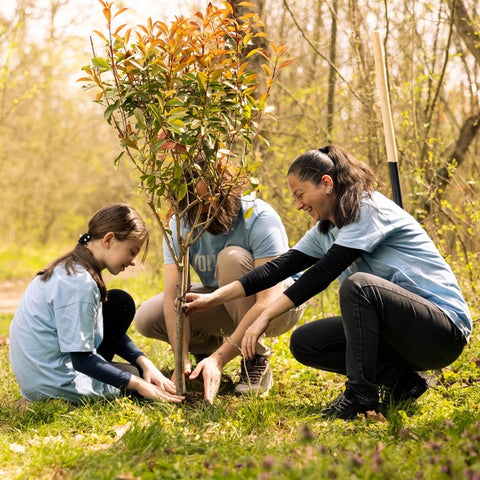
The best native trees to grow in India include Neem, Peepal, Banyan, Teak, Jamun, Arjuna, and Mahua — species that have shaped India's landscapes for thousands of years. Rapid urbanisation and land-use changes have shrunk forest cover. For background, see WWF's research on deforestation and forest degradation. Planting native trees is one of the most proven, sustainable ways to reverse this damage.
Native species offer greater ecological value and long-term impact. Grow Billion Trees supports India's goal to plant 100 crore trees and restore natural heritage.
Why Native Trees Matter for India ✅
Native trees are naturally adapted to India's varied climates — from coastal mangrove belts to the semi-arid Deccan plateau. They require less water, fewer chemical inputs, and develop stronger root systems than exotic species. Moreover, they nurture local wildlife, support pollinators, and improve soil health in ways that monoculture plantations simply cannot.
For background, see United Nations Environment Programme research on forests. Native species support India's ecological restoration efforts.
Our team has observed firsthand that communities near native plantations report improved air quality, reduced soil erosion, and greater food security within just three to five years. These are outcomes we ensure through our hands-on planting programs across India — not promises, but verified, certified results.
Top Native Trees to Grow in India ⭐
Here are seven wonderful native trees that every conscious individual, farmer, or community should consider planting in 2026. Each of these species offers unique ecological, cultural, and economic benefits.
1. Neem (Azadirachta indica)
Neem is one of India's most beloved and versatile native trees. It thrives in dry and semi-arid conditions and grows well across nearly every Indian state. A mature Neem tree provides shade, purifies air, and produces natural, organic compounds used in eco-friendly pest control. For example, neem oil is a certified and trusted pesticide alternative embraced by farmers across India.
- ✅ Grows up to 15–20 metres tall
- ✅ Lives for 150–200 years
- ✅ Absorbs CO2 and boosts local air quality
- ✅ Medicinal bark, leaves, and seeds — all well-documented
2. Peepal (Ficus religiosa)
The Peepal tree is sacred in Hindu, Buddhist, and Jain traditions and is one of the few trees that releases oxygen at night. This makes it a great choice for urban green spaces and densely populated neighbourhoods. Peepal trees can live for over 2,000 years — extraordinary, long-term carbon sinks that improve city air for generations. Our partners in urban forest programs consistently recommend Peepal for city plantations across India.
3. Banyan (Ficus benghalensis)
India's national tree, the Banyan, is a true ecological marvel. A single Banyan can spread across several acres, supporting hundreds of bird and insect species under its canopy. The famous Thimmamma Marrimanu Banyan in Andhra Pradesh covers over 4 acres — a living, natural wonder. Banyan trees are ideal for parks, agroforestry systems, and large open spaces where they can thrive freely.
4. Teak (Tectona grandis)
Teak is a premium hardwood native to central and southern India. It is one of the most sustainable timber options available, regenerating well and locking carbon over decades. We found that farmers in our agroforestry programs who plant Teak report a significant boost in long-term income. Teak also improves soil nutrient profiles over time — a wonderful win for both people and the planet.
5. Jamun (Syzygium cumini)
Jamun, or Indian Blackberry, is a fast-growing fruit tree native to the Indian subcontinent. It produces nutrient-rich berries that support both human health and local bird populations. Jamun trees are mindful choices for food forests and community orchards — easy to grow and highly productive. They thrive across most Indian climatic zones and need minimal care after establishment.
6. Arjuna (Terminalia arjuna)
The Arjuna tree grows naturally along India's riverbanks and is known for its powerful medicinal bark, widely used in Ayurvedic cardiology treatments. It is an excellent choice for riparian restoration and watershed management. As a result of its deep root system, Arjuna prevents soil erosion and helps recharge groundwater along river corridors. It is a conscious and impactful species for sustainable land restoration projects.
7. Mahua (Madhuca longifolia)
Mahua is a multi-use native tree providing food, fuel, and livelihood to millions of tribal communities across central India. Its flowers, seeds, and timber all carry high economic value, making it a truly green, earth-friendly resource. Mahua trees are key species in agroforestry models, offering shade and organic leaf litter that naturally enriches the soil. Growing Mahua is a meaningful way to support both the planet and rural communities together.
💡 How to Plant Native Trees Successfully
Planting a native tree is a joyful and rewarding experience. However, success depends on the right technique, timing, and aftercare. Here is a simple, step-by-step guide based on our hands-on planting experience across India:
- → Choose the right season: The monsoon (July–September) is ideal for most Indian regions — rainfall reduces irrigation needs significantly.
- → Prepare the planting pit: Dig a 2×2 ft pit and enrich with compost and natural organic soil to save on fertiliser costs.
- → Plant a healthy sapling: Choose disease-free, certified saplings from trusted and verified nurseries.
- → Water regularly at first: Water daily for the first month, then reduce as roots establish. This easy routine makes a big difference.
- → Protect from grazing: Use tree guards in rural and semi-urban areas to improve sapling survival rates.
At Grow Billion Trees, we provide 2-3ft Tree Planting + 3 Years Care + GeoTag technology with every tree planted through our platform. This means you can track your tree's exact location and growth directly from your smartphone. Our verified, certified process ensures every tree is genuinely nurtured — not just planted and abandoned.
Programs That Support Native Tree Planting in India ✅
India's commitment to a greener, more sustainable future is growing stronger every year. The United Nations Climate Change platform recognises India as a vital actor in global reforestation efforts. Several government schemes, NGO partnerships, and corporate initiatives are actively championing the best native trees to grow in India across all regions.
Grow Billion Trees is proud to be Combating Climate Change Through Collective Action. Our programs span Miyawaki forests, mangrove restoration, urban forestry, and agroforestry — all centred around native species. We partner with corporates to help them achieve Net Zero Targets through transparent, GeoTagged tree planting. Moreover, individuals can Plant a tree in your Name for just ₹299 — a simple, accessible, and impactful act.
According to the United Nations Sustainable Development Goals, restoring 350 million hectares of degraded land by 2030 could generate up to $9 trillion in ecosystem benefits globally. India's goal to plant 100 crore trees is a bold, hopeful step in that direction. We invite you to join this movement — together, we can transform the future of our earth.
Native vs. Exotic Trees: Why Native Always Wins ⭐
Exotic or non-native species may grow fast, but they rarely deliver the ecological depth of native trees.
- ✅ Native trees support local wildlife better than exotic plantations
- ✅ Native trees require less water after establishment
- ✅ Native trees store carbon more effectively over their full lifecycle
- ⚠️ Exotic species can become invasive and displace native flora over time
- ⚠️ Monoculture exotic plantations reduce soil biodiversity and microbiome health
Native trees can thrive in urban environments such as major Indian cities, supporting ecological restoration in city landscapes.
Frequently Asked Questions
What are the best native trees to grow in India for beginners?
Neem, Peepal, and Jamun are the best native trees for beginners. They are easy to plant, low-maintenance, and adapt well to most Indian climates. All three thrive with minimal water once their root systems are established.
Which native Indian trees grow the fastest?
Neem and Jamun are among India's fastest-growing native trees. Neem can grow up to 1.5 metres per year in favourable conditions. Teak also grows quickly in well-drained tropical and sub-tropical soils across central India.
Can I plant native trees in an urban environment?
Yes — many of the best native trees to grow in India adapt well to urban spaces. Peepal, Jamun, and Neem thrive in city parks, roadsides, and community green zones. You can also sponsor a tree through Grow Billion Trees for just ₹299 if you lack planting space.
What is the best season to plant trees in India?
The monsoon season (July to September) is the ideal window across most of India. Rain reduces irrigation needs and helps saplings establish strong root systems quickly. In southern states, the northeast monsoon (October–November) also provides an excellent secondary planting window.
How does GeoTag technology work for tree planting?
GeoTag technology assigns a GPS coordinate to your planted tree, letting you track its exact location and monitor its growth via a digital dashboard. At Grow Billion Trees, every tree comes with GeoTag as part of our 2-3ft Tree Planting + 3 Years Care + GeoTag package. This guarantees full transparency and accountability in every plantation we manage.
Are native trees better for biodiversity than exotic species?
Native trees support local wildlife, maintain soil health, and support pollinators essential for food production and ecosystem stability across India.
How can corporates use native tree planting for Net Zero goals?
Corporates can partner with Grow Billion Trees to offset carbon footprints through verified, certified native tree planting programs. Our team provides tailored planting plans, ESG-compliant impact reports, and GeoTagged tree tracking for full corporate accountability. This is a proven and sustainable path toward genuine Net Zero Targets.
What is a Miyawaki forest and does it use native trees?
A Miyawaki forest is a dense, multi-layered forest created using the Japanese Miyawaki afforestation method. It uses exclusively native tree species planted close together to accelerate growth and biodiversity. Grow Billion Trees offers certified Miyawaki plantation programs across urban and rural India.
Grow Native, Grow Together
Planting the best native trees to grow in India is one of the most sustainable, impactful, and meaningful acts of 2026. Whether you are an individual, a school, a farmer, or a large corporation, choosing native species helps restore India's natural heritage and supports our shared mission. We are glad to offer accessible, transparent, and affordable tree planting for every Indian.
Explore our programs at Grow Billion Trees and discover how you can Plant a tree in your Name for just ₹299 — complete with 2-3ft Tree Planting + 3 Years Care + GeoTag. Join thousands of happy customers already making a real difference. Together, let us nurture a greener, healthier India for generations to come.