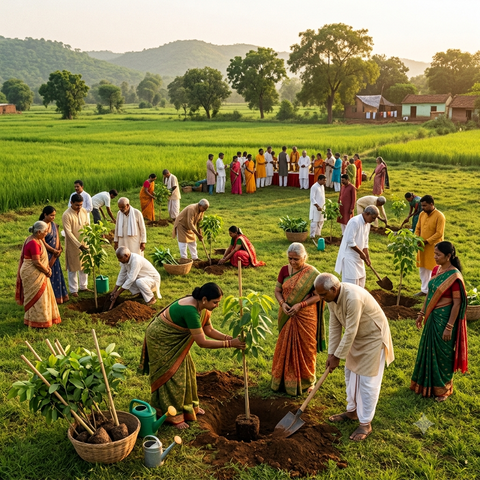
The best native trees to grow near Coimbatore include Neem, Peepal, Teak, Amla, Tamarind, Banyan, Moringa, and the Indian Coral Tree. These species are perfectly adapted to the region's semi-arid tropical climate and red loam soils. Planting them helps restore biodiversity, improve air quality, and actively combat the growing climate crisis. Our team at Grow Billion Trees has verified these as top choices for home gardens, farmlands, and urban green spaces across the Kongu Nadu region.
Why Native Trees Matter for Coimbatore's Ecosystem
Coimbatore sits at the foothills of the Nilgiri Mountains in Tamil Nadu, with a rich and ancient ecological heritage. The region once boasted dense tropical dry deciduous forests that supported remarkable biodiversity. However, rapid urbanisation has severely reduced this green cover in recent decades. According to WWF's research on deforestation and forest degradation, India loses thousands of hectares of forest cover every year due to expanding development pressures.
Native trees are naturally adapted to Coimbatore's climate. They need far less water and zero synthetic inputs to thrive. Moreover, they provide natural habitats for local birds, insects, and mammals that exotic species simply cannot support. This makes them the most sustainable and conscious choice for long-term green cover restoration.
The United Nations Environment Programme on forests emphasises that restoring native species is among the most effective strategies to reverse global biodiversity loss. In 2026, Coimbatore's reforestation ambitions align closely with these international sustainability goals. Every native tree planted here is a direct contribution to a greener planet.
✅ Top Native Trees to Grow Near Coimbatore
We have curated this list based on hands-on experience across Tamil Nadu's Kongu region. Our partners confirm these species grow robustly in Coimbatore's varied red loam and black cotton soil conditions.
1. Neem (Azadirachta indica)
Neem is one of India's most versatile and valuable native trees. It grows up to 20 metres tall and can live for over 200 years under natural conditions. Neem provides organic pest control benefits that improve surrounding crop health significantly. It also fixes nitrogen in the soil, making it an ideal anchor species for agroforestry programs near Coimbatore.
- Water needs: Very low — drought-tolerant once established after 3 months
- Soil type: Thrives naturally in Coimbatore's red loam soil
- Ecological benefit: Supports over 130 insect species and countless bird species
- Additional value: Medicinal properties recognised in Indian traditional medicine
2. Peepal (Ficus religiosa)
Peepal is among the oldest recorded trees in Indian history. It is valued in urban areas, public parks, and schools near Coimbatore, and for temple groves and roadside green corridors.
3. Teak (Tectona grandis)
Teak is native to India's tropical forests and thrives naturally across Tamil Nadu's diverse landscape. It is a hardwood species with commercial and ecological value. Teak intercropping provides income alongside field crops and offers long-term protection against soil erosion on sloped terrain.
4. Indian Gooseberry — Amla (Phyllanthus emblica)
Amla is a nutrient-rich fruit tree native to the Indian subcontinent and thrives in dry deciduous zones. It grows naturally in Coimbatore's climate without any special care or inputs. Amla trees support local biodiversity by providing food and shelter for birds and native mammals. Our partners in the agroforestry program have found that Amla significantly enhances soil organic matter within just two growing seasons.
5. Tamarind (Tamarindus indica)
Tamarind is iconic to South India and a deep cultural cornerstone of Tamil Nadu's landscape. It can live for over 300 years and develops an impressive, dense canopy that shades vast areas below. Tamarind trees are excellent long-term carbon sequesters, storing carbon for centuries within their dense wood. They are wonderful choices for roadsides, farmland boundaries, and community green spaces near Coimbatore.
6. Banyan (Ficus benghalensis)
The Banyan is India's national tree and a magnificent, awe-inspiring native species. It spreads through aerial prop roots, creating vast microhabitats that support incredible biodiversity beneath its canopy. Banyan trees nurture rich ecosystems of birds, insects, and small mammals through every season. They also actively help recharge groundwater tables — a critical ecological service in Coimbatore's increasingly water-stressed districts.
7. Drumstick Tree — Moringa (Moringa oleifera)
Moringa is a fast-growing native tree with exceptional nutritional and ecological value combined. It can grow up to 3 metres in its very first year, making it ideal for achieving rapid green cover. Moringa improves soil fertility naturally and provides reliable food security for rural communities. It is a great choice for home gardens, school campuses, and agroforestry plots throughout the Coimbatore district.
8. Indian Coral Tree (Erythrina variegata)
The Indian Coral Tree is a striking native species recognised by its vivid scarlet-red flowers. It enriches soil through nitrogen fixation and attracts sunbirds and key pollinating insects. It is useful for ecological restoration programs across the Coimbatore region.
💡 Key Benefits of Planting Native Trees Near Coimbatore
Planting native trees delivers measurable, lasting environmental and community benefits for generations. According to the United Nations Climate Change platform, tree planting is one of the most cost-effective tools available to offset rising carbon emissions worldwide.
- ✅ Carbon sequestration: A single native tree absorbs up to 22 kg of CO₂ every year
- ✅ Biodiversity boost: Native species support more wildlife than exotic trees
- ✅ Water conservation: Deep root systems improve groundwater recharge capacity
- ✅ Temperature reduction: Urban native canopies reduce local temperatures by 2–5°C in summer
- ✅ Soil health: Native roots prevent erosion and improve natural nutrient cycling
- ✅ Food and nutrition: Trees like Amla, Moringa, and Tamarind provide organic fruit and nutrition
- ✅ Air purification: Dense native canopies filter particulate matter and improve urban air quality
Agroforestry with native trees near Coimbatore can improve crop yields and support both the environment and farmer livelihoods.
⭐ How Grow Billion Trees is Transforming Coimbatore's Green Future
Grow Billion Trees is on a bold mission to plant 100 crore trees across India by June 2030. We are actively working in Tamil Nadu, including the Coimbatore district, to restore native forests and empower local communities through our proven agroforestry programs. We ensure every tree planted receives the full benefit of 2-3ft Tree Planting + 3 Years Care + GeoTag technology for complete accountability and transparency.
With our flagship Plant a tree in your Name initiative, anyone can contribute meaningfully to Coimbatore's green revival for just ₹299. This includes three years of dedicated professional care and a certified GeoTag so you can track your tree's real-time growth online. We provide personalised, authentic tree certificates for birthdays, memorials, corporate gifting, and Women's Day — making eco-conscious gifting easy and deeply meaningful.
Agroforestry programs in the Coimbatore district help farmers grow native trees alongside food crops. This supports sustainable income while restoring the region's ecological balance.
Corporations aiming for Net Zero Targets are welcome to partner with us for verified, scalable native tree planting near Coimbatore. Our ESG-compliant programs offer secure carbon offset solutions with certified, auditable reporting. We guarantee transparent, measurable environmental impact to help businesses meet their 2026 sustainability commitments with confidence.
Tips for Successfully Growing Native Trees Near Coimbatore
Growing native trees near Coimbatore is straightforward when you follow mindful, proven practices. Our hands-on experience across the Tamil Nadu region has shaped these key recommendations for success:
- Plant during monsoon season: June to August provides optimal natural moisture for healthy root establishment
- Prepare the soil organically: Add natural compost to improve Coimbatore's red loam soil structure before planting
- Water consistently at first: Water every 2–3 days for the first three months — native trees thrive with minimal water after that
- Avoid all synthetic inputs: Native trees grow strongest in natural, organic conditions without chemical fertilisers
- Plant in conscious clusters: Groups of 3–5 trees encourage better canopy development and richer biodiversity
- Use the Miyawaki method: This technique creates dense native forests faster than conventional planting
Therefore, whether you are planting in a home garden or across large farmland, these natural practices will help your trees thrive beautifully. Our team has successfully implemented Miyawaki forests using native Coimbatore species in urban and peri-urban plots across Tamil Nadu. As a result, these spaces now support thriving green ecosystems within just a few seasons of planting.
Native Trees and Coimbatore's Growing Water Crisis
Coimbatore has faced increasing water stress in recent decades as urbanisation accelerates. The Noyyal River, which flows through the city's heart, has seen significantly reduced seasonal flow due to upstream deforestation. Native trees like Banyan, Peepal, and Neem play a vital ecological role in naturally recharging local groundwater. Their deep, extensive root systems act as biological water retention infrastructure, drawing and storing moisture deep within the earth.
According to the United Nations Sustainable Development Goals framework, access to clean water and ecosystem restoration are deeply and directly interconnected global priorities. Planting native trees near Coimbatore directly supports SDG 6 (Clean Water and Sanitation) and SDG 15 (Life on Land). Every native tree planted is a practical contribution to a more water-secure and biodiverse future for the city and its surrounding communities.
Areas with dense native tree cover support better groundwater retention compared to degraded land.
Frequently Asked Questions
What are the best native trees to grow near Coimbatore?
The best native trees include Neem, Peepal, Teak, Amla, Tamarind, Banyan, Moringa, and Indian Coral Tree. These species are naturally adapted to Coimbatore's climate and diverse soil conditions. They thrive with minimal maintenance after initial establishment in the ground.
Why should I plant native trees instead of exotic species near Coimbatore?
Native trees support local biodiversity, require far less water, and develop resilient root systems suited to Coimbatore's climate. They naturally belong to the local ecosystem, supporting wildlife and improving soil health. Exotic species often struggle in local conditions and can disrupt native ecosystems over time.
When is the best time to plant native trees near Coimbatore?
The ideal planting season is June to August, during the southwest monsoon. This gives trees ample natural moisture during the critical root establishment phase.
How does Grow Billion Trees support native tree planting near Coimbatore?
Grow Billion Trees offers certified tree planting programs starting at just ₹299 per tree. Each tree includes 2-3ft planting depth, 3 years of professional care, and live GeoTag tracking. Our team plants native trees across Tamil Nadu as part of the 100 crore trees mission by 2030.
Can I plant native trees as an eco-friendly gift for someone near Coimbatore?
Yes, Grow Billion Trees offers personalised, authentic tree certificates as meaningful eco-friendly gifts. You can Plant a tree in your Name or dedicate one to a loved one for birthdays, anniversaries, or memorials. Each tree comes with a verified GeoTag for real-time growth tracking.
What is the Miyawaki method and is it suitable for Coimbatore?
The Miyawaki method is a proven Japanese technique for creating dense native forests in compact urban spaces. It is highly effective for Coimbatore's urban and peri-urban landscape. Our team has successfully used this method to create thriving mini-forests using local native species.
How do native trees help address climate change near Coimbatore?
Native trees absorb CO₂, reduce urban heat islands, and improve groundwater availability simultaneously. A single native tree can sequester up to 22 kg of CO₂ annually over its lifetime. Planting 100 crore trees across India could collectively offset millions of tonnes of carbon emissions every year.
What is agroforestry and how does it benefit farmers near Coimbatore?
Agroforestry integrates native trees with food crops on the same agricultural land. It helps farmers near Coimbatore earn additional income from timber, organic fruits, and natural fodder.
Plant Your Green Legacy Near Coimbatore Today
Choosing the best native trees to grow near Coimbatore is one of the most impactful, conscious steps you can take for the planet right now. Species like Neem, Peepal, Teak, and Tamarind are proven to transform degraded landscapes, support thriving wildlife, and meaningfully combat climate change. Together, we can restore Coimbatore's rich natural heritage and nurture a greener, healthier future for all generations to come.
Join Grow Billion Trees in our inspiring mission to plant 100 crore trees across India. Discover how you can Plant a tree in your Name for just ₹299, complete with full GeoTag tracking and 3 years of dedicated professional care. Explore our sustainable, certified planting programs and start your tree planting journey today at Grow Billion Trees — because every native tree is a powerful step forward in Combating Climate Change Through Collective Action.