
Are Biochar Projects Eligible for Carbon Credits? Complete Guide
Yes, biochar projects are eligible for carbon credits under several globally recognised voluntary carbon standards. Biochar transforms organic waste into a stable carbon compound that locks CO2 out of the atmosphere for centuries. In 2026, biochar has emerged as one of the most credible and durable carbon dioxide removal methods available — making it a great choice for organisations pursuing Net Zero Targets and genuine climate restoration.
What Is Biochar and How Does It Sequester Carbon?
Biochar is a carbon-rich, porous material created through pyrolysis — heating organic biomass such as agricultural residues, wood chips, or crop waste in a low-oxygen environment. This process converts the natural carbon in organic matter into a stable, solid form. Rather than decomposing and releasing CO2, the carbon remains locked in biochar for hundreds to thousands of years.
The resulting material is applied to soil, where it improves water retention, boosts microbial activity, and reduces the need for synthetic fertilisers. Our team finds this dual benefit — carbon storage plus soil health improvement — makes biochar uniquely valuable among nature-based solutions. According to the United Nations Climate Change framework, durable carbon removal methods like biochar are essential pathways to keeping global temperature rise below 1.5°C.
Biochar's permanence is a wonderful quality that sets it apart. Unlike biological storage methods that can be reversed by fire or land-use change, biochar in soil remains stable across geological timescales — a truly future-proof solution.
✅ Are Biochar Projects Eligible for Carbon Credits? What the Standards Say
Biochar projects are indeed eligible for carbon credits when they meet rigorous verification requirements. The most recognised voluntary carbon standards that certify biochar credits include the following frameworks:
- Puro.earth Standard: One of the first dedicated biochar carbon removal standards globally
- Verra VM0044 Methodology: Part of the trusted Verified Carbon Standard (VCS) framework
- Gold Standard for the Global Goals: Includes biochar projects with strong sustainable development co-benefits
- European Biochar Certificate (EBC): Widely used for quality assurance and safety verification
Our experience with carbon project development shows that eligibility depends on five key factors: sustainably sourced feedstock, controlled pyrolysis conditions, demonstrated carbon stability, verified end-use application, and additionality — proving the project would not happen without carbon finance support.
💡 How the Carbon Credit Process Works for Biochar
The process of generating carbon credits from biochar follows a clear, structured path. Each tonne of CO2-equivalent permanently removed generates one verified carbon credit. Here is how the journey unfolds step by step:
- Project Design: Define scope, methodology, feedstock sources, and baseline emissions
- Third-Party Validation: An accredited auditor reviews and approves the project plan
- Ongoing Monitoring: Collect data on feedstock input, pyrolysis conditions, and application sites
- Annual Verification: A certified body independently reviews all reported data
- Credit Issuance: Verified credits are registered on a transparent public registry
- Credit Retirement: Buyers retire credits against their emissions to demonstrate genuine offset
This process provides secure, certified assurance that every credit represents real, permanent carbon removal. Corporates and sustainability teams love the transparency that verified biochar credits deliver for stakeholder reporting.
⭐ Key Benefits of Biochar Carbon Credits
Biochar carbon credits offer a range of benefits that help them stand out in voluntary carbon markets. They go far beyond simple emissions accounting to deliver real ecological and agricultural impact. Moreover, they align with the goals of Combating Climate Change Through Collective Action.
- ✅ Permanence: Carbon stored for 1,000+ years, far exceeding most biological offsets
- ✅ Soil health boost: Improves fertility, water retention, and microbial biodiversity
- ✅ Waste reduction: Converts agricultural and forestry residues into valuable material
- ✅ Farmer income: Creates new, sustainable revenue streams for smallholder farmers
- ✅ Methane reduction: Prevents methane emissions from organic waste decomposition
2026 data from voluntary carbon market reports confirms that buyers increasingly prioritise high-durability credits. Biochar projects are well positioned to thrive in a market moving toward genuine, measurable impact. This growth aligns with the United Nations Sustainable Development Goals, particularly SDG 13 (Climate Action) and SDG 15 (Life on Land).
Types of Biochar Projects That Qualify for Credits
Several project types can qualify for biochar carbon credits, depending on feedstock source and application method. Understanding these categories helps project developers identify the right pathway:
- Agricultural biochar: Crop residues converted to biochar and applied to farmland
- Agroforestry biochar integration: Combining tree planting with biochar soil enrichment
- Urban organic waste biochar: Municipal green waste converted in controlled facilities
- Mangrove and coastal restoration: Supporting blue carbon ecosystems with biochar amendments
- Forestry residue biochar: Using slash and sustainable logging waste as feedstock
The United Nations Environment Programme's forests programme highlights the importance of using forest residues sustainably. Biochar projects built on responsibly managed biomass support both climate and biodiversity objectives. In addition, our partners in agroforestry have found that integrating biochar into tree planting programs delivers compounding ecological benefits over time.
Biochar vs. Other Carbon Credit Methods
Understanding how biochar compares to other carbon credit types helps organisations make conscious, informed decisions. Tree planting creates biological carbon storage, which is vital and impactful for ecosystems. Biochar, however, offers near-permanent storage with a durability profile that few other methods can match.
According to the World Wildlife Fund on deforestation and forest degradation, forests face severe pressure globally from land conversion and climate stress. Biochar produced from sustainably managed forest residues creates a circular, mindful approach — supporting reforestation goals while delivering long-term carbon removal. This makes the combination of tree planting and biochar application a powerful, proven dual strategy.
How Grow Billion Trees Supports Biochar and Carbon Credit Programs
Grow Billion Trees is on a mission to plant 100 crore trees across India, Combating Climate Change Through Collective Action. We love empowering individuals, farmers, and corporates to grow a real, lasting green impact. Our integrated environmental programs — including agroforestry, mangrove restoration, Miyawaki forests, and urban forestry — align naturally with biochar carbon credit frameworks.
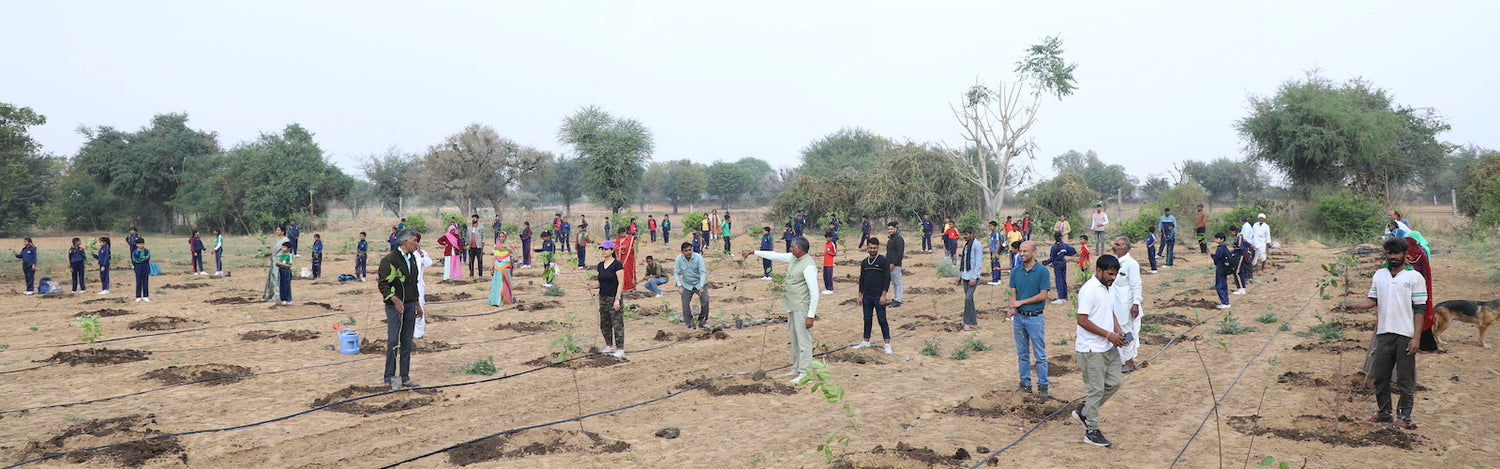
Our agroforestry program is especially well-suited to biochar integration. Farmers working within our network can convert crop residues into biochar, apply it to their land, and participate in verified carbon programs. We provide hands-on support at every stage: project planning, monitoring, and impact documentation. Every tree we plant includes 4ft Tree Planting + 3 Years Care + GeoTag technology, ensuring transparent, certified tracking of each individual tree.
For corporates seeking to achieve ambitious Net Zero Targets, we are glad to offer structured programs that combine measurable tree planting with thorough documentation for sustainability reporting. We ensure all projects meet rigorous environmental standards, giving partners authentic, verified impact to share with stakeholders and investors.
When you choose to Plant a tree in your Name or engage with our corporate programs, you join a mindful, verified movement to restore India's natural ecosystems. Together, we can thrive as a community of conscious changemakers — planting trees, building soil, and securing a sustainable future for generations ahead.
Frequently Asked Questions
Are biochar projects eligible for carbon credits in India?
Yes, biochar projects in India can generate carbon credits under international voluntary carbon standards such as Verra and Gold Standard. India's vast agricultural sector provides abundant organic feedstock, making it an ideal location for qualifying biochar programs that also improve farmer livelihoods.
How long do biochar carbon credits remain valid?
Biochar carbon credits represent permanent carbon removal, as biochar remains stable in soil for hundreds to thousands of years. This long-term durability makes them among the most credible and future-proof credits available in voluntary carbon markets today.
What standards certify biochar carbon credits?
Leading certification standards include Puro.earth, Verra's VM0044 methodology, and the Gold Standard for the Global Goals. Each requires independent third-party verification, rigorous ongoing monitoring, and transparent public registry issuance to maintain certified status.
Can smallholder farmers participate in biochar carbon credit programs?
Yes, farmers can convert agricultural waste into biochar and apply it to their fields to generate verified carbon removal credits. This approach also improves soil health naturally and can boost crop yields over time, creating a sustainable income stream.
How is biochar different from charcoal for carbon credits?
Biochar is produced specifically for soil application and long-term carbon sequestration under controlled pyrolysis conditions. It must meet strict quality and stability standards — including H:Corg ratios — that regular charcoal produced for fuel does not require.
How does agroforestry connect to biochar carbon projects?
Agroforestry integrates trees into farming landscapes for compounding ecological benefit. When combined with biochar, these systems deliver dual carbon storage — biological sequestration in living trees and permanent sequestration in biochar-enriched soil beneath them.
How do companies use biochar credits for net zero strategies?
Companies purchase verified biochar carbon credits to offset hard-to-reduce emissions as part of science-based net zero strategies. These credits meet international reporting frameworks and demonstrate genuine, durable climate commitment to investors and regulators.
Is biochar carbon removal considered nature-based?
Biochar sits at the intersection of nature-based and engineered carbon removal. It uses natural organic matter through a controlled process, and many standards classify it as a carbon dioxide removal solution with strong nature-based co-benefits for soil and ecosystems.
What role does GeoTag technology play in carbon credit verification?
GeoTag technology enables precise, real-time tracking of tree planting and land restoration activities. For carbon credit verification, this transparent data trail supports monitoring, reporting, and verification requirements — making projects more credible and audit-ready.
How does tree planting complement biochar carbon credits?
Tree planting and biochar work together as complementary climate solutions. Trees provide biological carbon storage, biodiversity, and ecosystem services, while biochar delivers permanent soil-based carbon removal. Together, they form a comprehensive, proven approach to climate restoration.
Start Your Green Journey Today
Biochar projects represent a proven, durable, and impactful pathway to verified carbon credits that save the planet while improving soils and livelihoods. Whether you are a farmer looking to transform your land, a corporate team building a net zero roadmap, or an individual wanting to make a conscious difference, biochar combined with tree planting delivers real, measurable results.
We welcome you to explore how Grow Billion Trees can help you join India's largest tree planting and environmental restoration movement. Our hands-on programs make it easy to take meaningful climate action, backed by transparent GeoTag technology and certified impact reporting. Discover the full range of our eco-friendly, nature-based solutions and learn more at Grow Billion Trees — together, let us grow a greener, healthier planet for all future generations.
