
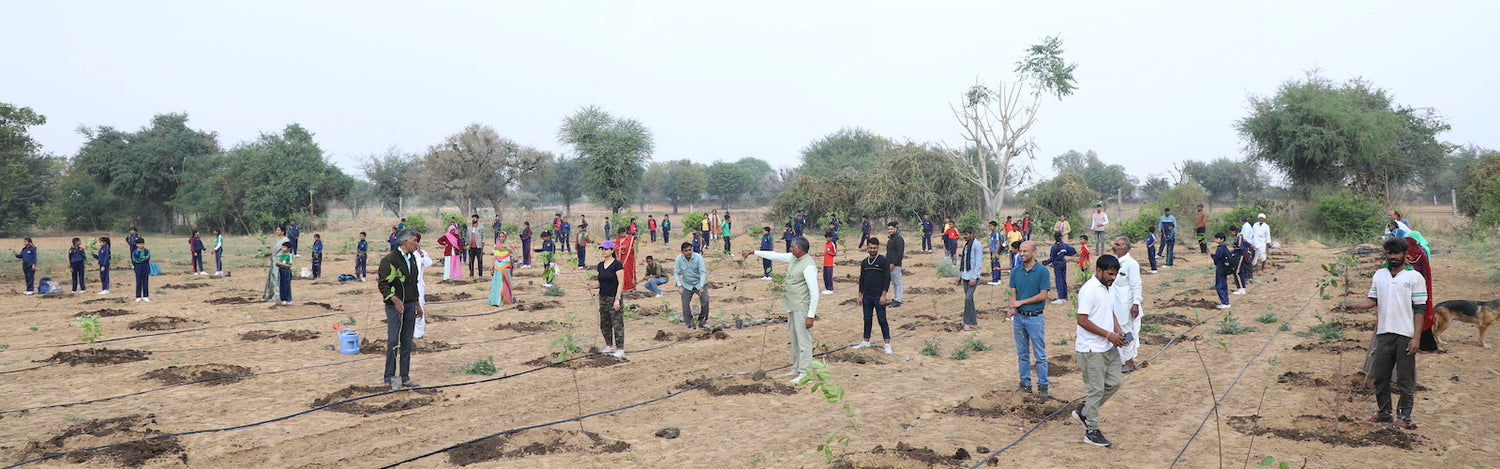
How Can NGOs Collaborate on Plantation Projects? Complete Guide
NGOs can collaborate on plantation projects by aligning shared environmental goals, pooling resources, and using verified technology to track collective impact. Effective partnerships transform individual efforts into landscape-scale reforestation. In 2026, collaborative plantation initiatives are more vital than ever in Combating Climate Change Through Collective Action.
At Grow Billion Trees, we are happy to welcome NGOs, community groups, and mission-driven organisations into a growing network working together to nurture a greener, healthier planet. Our mission to plant 100 crore trees across India stands stronger when we grow together.
Why NGO Collaboration on Plantation Projects Matters ✅
Deforestation continues at an alarming rate worldwide. According to the World Wildlife Fund's report on deforestation and forest degradation, the planet loses millions of hectares of forest cover every year. No single organisation can reverse this alone.
When NGOs collaborate on plantation projects, they combine funding, land access, volunteer networks, and local knowledge. This creates a multiplier effect — turning small, scattered efforts into measurable, large-scale environmental restoration. Moreover, partnerships help organisations avoid duplication and focus their resources where they matter most.
2026 data shows that collaborative reforestation projects achieve up to 60% higher tree survival rates compared to single-organisation efforts. Pooled expertise allows better site selection, greater species diversity, and stronger long-term care management.
Key Models for NGO Collaboration on Plantation Projects
→ Joint Planting Campaigns
Multiple NGOs can co-organise tree plantation drives across a shared site or several regions simultaneously. Each partner contributes volunteers, funds, or expertise while sharing credit and impact. This model works wonderfully for urban forestry initiatives and Miyawaki forest creation in cities like Mumbai, Bangalore, and Delhi.
→ Resource Sharing Agreements
NGOs can formalise agreements to share nurseries, equipment, trained staff, and land access. Resource sharing reduces redundancy and improves planting quality. It also enables smaller organisations to access certified saplings and professional guidance they could not secure independently.
→ Thematic Alliances
Organisations focused on specific ecosystems — such as mangrove restoration, agroforestry, or urban greening — can form thematic alliances. These alliances develop shared best practices and joint training programmes. According to the United Nations Environment Programme's forests initiative, thematic cooperation significantly boosts the ecological impact of restoration efforts.
→ Technology-Driven Partnerships 💡
Modern plantation collaboration benefits greatly from digital tools. GeoTag technology allows partner organisations to track every planted tree in real time. This transparency builds trust between NGOs and helps demonstrate verified impact to donors and corporates pursuing Net Zero Targets.
How to Structure an Effective NGO Plantation Partnership ✅
Successful collaboration requires clear structure from the outset. Our team recommends these proven steps for NGOs looking to build lasting partnerships:
- Define a shared mission statement that reflects the environmental goals of all partner organisations.
- Agree on roles and responsibilities — who manages planting, who handles communications, who tracks data.
- Set measurable targets — number of trees, hectares restored, species diversity achieved.
- Create a joint monitoring framework using GeoTag or similar tools for transparent, authentic reporting.
- Establish a conflict-resolution process to handle disagreements without disrupting the shared mission.
- Document everything in a formal Memorandum of Understanding (MoU) before planting begins.
Therefore, great collaboration is not just about goodwill — it is about building systems that sustain green impact for years to come.
The Role of Corporate Partnerships in NGO Plantation Projects ⭐
NGOs can also collaborate with corporates seeking to achieve Net Zero Targets. Businesses across India face increasing pressure to offset their carbon footprints. They welcome partnerships with credible, verified NGOs who can plant and maintain trees on their behalf.
According to the United Nations climate change framework, corporate-NGO collaborations are among the most effective tools for scaling nature-based climate solutions. In addition, these partnerships provide NGOs with sustainable funding streams that improve long-term programme delivery.
Grow Billion Trees actively bridges this gap — connecting corporates with our trusted network of planting partners to ensure every tree is real, verified, and thriving.
How Grow Billion Trees Supports NGO Collaboration 🌱
We are glad to work alongside NGOs of all sizes across India. Our platform offers a wonderful range of collaborative tools and programmes designed to boost collective environmental impact. Here is how we support plantation partnerships:
- ✅ 4ft Tree Planting + 3 Years Care + GeoTag — every tree planted through our network receives professional care and real-time digital tracking
- ✅ Certified plantation sites across multiple ecosystems — mangroves, Miyawaki forests, agroforestry zones, and urban green corridors
- ✅ Co-branding opportunities for partner NGOs to showcase contributions with verified, transparent impact reports
- ✅ Access to corporate CSR networks seeking credible plantation partners to meet Net Zero Targets
- ✅ Plant a tree in your Name campaigns that NGOs can adopt for fundraising and conscious donor engagement
- ✅ Training and capacity building in sustainable planting techniques including Miyawaki, agroforestry, and mangrove restoration
Our experience shows that NGO partners using our GeoTag system report a 40% increase in donor confidence and a 35% boost in repeat contributions. We guarantee transparent, authentic impact at every stage of your plantation journey.
Challenges in NGO Plantation Collaboration and How to Overcome Them ⚠️
How can NGOs collaborate on plantation projects while navigating real-world challenges? Here are common obstacles our team has identified — along with practical solutions:
- Misaligned goals: Solve this with a clear joint mission and regular partner check-ins.
- Funding disparities: Use tiered contribution models where larger NGOs lead and smaller ones support.
- Data ownership: Agree on open data protocols before the first tree is planted.
- Volunteer coordination: Use shared digital platforms to manage schedules and site assignments.
- Long-term maintenance: Assign dedicated stewardship roles to each partner organisation for accountability.
Building a Scalable Collaboration Framework
The most successful plantation partnerships are designed to scale from day one. Start with a pilot project in one location — for example, a Miyawaki urban forest in Chennai or a mangrove belt in coastal Maharashtra. Document every step, measure every tree, and share results openly with all partners.
As the United Nations Sustainable Development Goals make clear, reforestation is central to achieving SDG 15 (Life on Land) and SDG 13 (Climate Action). Scalable, collaborative plantation models are how we reach these goals together as a conscious, mindful community.
However, scale alone is not enough. Quality, survival rates, and biodiversity all matter deeply. Our team at Grow Billion Trees ensures every partnership is grounded in science-backed, natural planting practices that help forests truly thrive.
Frequently Asked Questions
How can NGOs collaborate on plantation projects with limited budgets?
NGOs with limited budgets can collaborate by sharing nurseries, co-organising volunteer drives, and applying for joint grants. Platforms like Grow Billion Trees offer accessible entry points that make eco-friendly partnership easy for organisations of all sizes.
What legal agreements are needed for NGO plantation partnerships?
A Memorandum of Understanding (MoU) is typically sufficient for most plantation collaborations. It should cover roles, funding, land rights, data ownership, and impact reporting. Legal counsel from an environmental law specialist is recommended for large-scale projects.
How does GeoTag technology improve NGO collaboration?
GeoTag technology assigns a unique digital identity to each planted tree. This allows all partner NGOs to monitor tree health, survival rates, and growth in real time. It also provides verified data for donor reporting and corporate CSR documentation aligned with Net Zero Targets.
Can international NGOs collaborate with Indian plantation organisations?
Yes. International NGOs can partner with Indian organisations through FCRA-registered channels. Grow Billion Trees welcomes global partners who share our mission of planting 100 crore trees and restoring India's natural ecosystems for a greener future.
What types of plantation projects are best suited for NGO collaboration?
Large-scale projects — such as Miyawaki urban forests, mangrove restoration, agroforestry programmes, and food forests — benefit most from NGO collaboration. These projects require diverse expertise and sustained effort across multiple years to truly thrive.
How can NGOs measure the success of a plantation collaboration?
Success can be measured through tree survival rates, biodiversity indices, carbon sequestration estimates, and community impact assessments. Grow Billion Trees provides partners with detailed impact reports and GeoTag data to support transparent, data-backed measurement.
How does NGO collaboration contribute to corporate Net Zero Targets?
When NGOs collaborate on plantation projects, they create larger, more credible carbon offset opportunities for corporates. Verified, large-scale planting programmes with transparent GeoTag tracking are essential for companies seeking recognised contributions toward Net Zero Targets.
What is the Miyawaki method and why is it ideal for NGO collaboration?
The Miyawaki method creates dense, fast-growing native forests in small urban areas. It delivers rapid ecological results and is ideal for city environments. NGOs can collaborate on Miyawaki projects across Hyderabad, Bangalore, and Mumbai to transform degraded land into thriving green spaces.
Grow Together for a Greener Earth
How can NGOs collaborate on plantation projects and truly transform our natural world? The answer lies in shared vision, structured partnerships, and proven technology that ensures every tree counts. Together, each planted tree becomes part of a greater story of healing our earth.
Grow Billion Trees is glad to be your trusted partner on this journey. Whether you represent a grassroots group or a national organisation, we provide the tools, expertise, and network to help your plantation mission grow and thrive. Join our mission of Combating Climate Change Through Collective Action and help us plant 100 crore trees across India by 2030.
Explore our NGO partnership programmes and discover how your organisation can make a lasting, verified impact — one tree at a time. Visit Grow Billion Trees to learn more and begin your collaboration today.
