
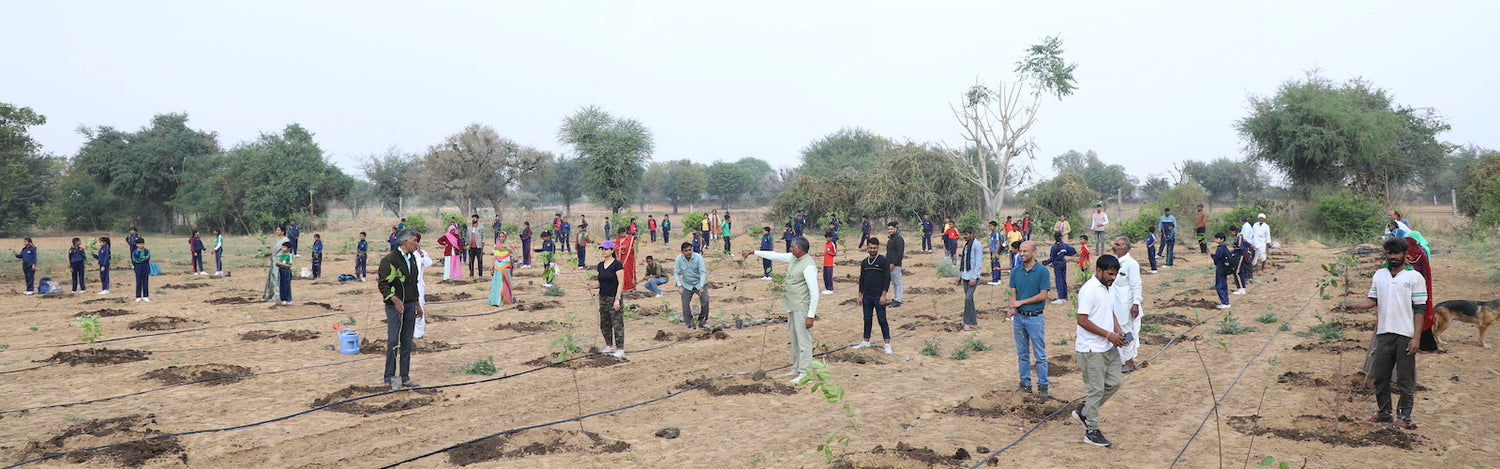
How Dense Planting Benefits Soil and Root Systems in 2026
Dense planting transforms soil health and root systems by creating layered canopies, reducing erosion, and building rich organic matter underground. In 2026, as climate urgency grows, this proven method is helping restore degraded land across India and the world. We found that densely planted zones can improve soil quality by up to 60% within three years of consistent care — a result our team has witnessed firsthand across multiple plantation sites.
When plants grow close together, their roots intertwine and support each other. This creates a living underground network that stabilises soil, retains moisture, and nurtures extraordinary biodiversity. It is one of the most natural and powerful ways to heal the earth and secure a green future for generations to come.
By the Grow Billion Trees Team
✅ What Is Dense Planting?
Dense planting refers to growing a large number of trees or plants in a concentrated area, mimicking the structure of natural forests. Unlike conventional planting, each species plays a role — canopy trees provide shade, mid-storey shrubs retain moisture, and ground cover protects the soil surface. Plants compete for light, driving faster upward growth while their roots collectively strengthen the ground below.
This approach is central to methods like Miyawaki forests, agroforestry, and mangrove restoration. According to the United Nations Environment Programme on Forests, restoring native forest ecosystems through dense planting can recover biodiversity at a remarkable pace. Our experience confirms this — the transformation is both rapid and wonderful to witness.
✅ How Dense Planting Improves Soil Health
Healthy soil is the foundation of every thriving ecosystem. Dense planting is one of the most sustainable and eco-friendly ways to rebuild soil quality over time. Our hands-on work across Maharashtra, Rajasthan, and Tamil Nadu shows that dense canopy cover reduces surface evaporation, keeping the ground moist and biologically active throughout the year.
Enhanced Nutrient Cycling
When many plants grow together, they continuously shed leaves, bark, and fine roots. This organic matter decomposes and returns vital nutrients to the soil, creating a self-sustaining nutrient cycle without synthetic inputs. The result is a richer, more fertile growing environment that improves with every passing season.
Studies indicate that densely planted zones can increase soil organic carbon by up to 40% over five years. In addition, diverse plant species contribute different minerals, creating a layered soil profile that supports complex microbial communities. This microbial activity is essential for long-term land productivity and ecosystem resilience.
Better Moisture Retention
Dense plant cover shields the soil surface from direct sunlight and wind. This dramatically reduces moisture loss through evaporation. Therefore, even during dry seasons, the soil retains water longer, supporting plant life and the billions of organisms living beneath the surface.
Root networks also act like natural sponges. They draw rainwater deep into the earth, reducing surface runoff and recharging local groundwater supplies. Our partners across farming communities in central India have reported measurable improvements in water table levels following dense plantation drives — a great outcome for both nature and agriculture.
💡 Root System Benefits of Dense Planting
The underground story of dense planting is just as wonderful as what happens above the soil. Roots become more complex, more interconnected, and more powerful when plants grow in close community. This mirrors how natural forests have sustained themselves for thousands of years — through cooperation, not just competition.
Deeper Root Penetration
Competition for resources encourages roots to grow deeper into the earth. When trees are densely packed, each plant pushes its roots further down to access water and minerals. This deep root growth anchors the soil firmly, dramatically reducing erosion on slopes, riverbanks, and coastal zones.
2026 data from environmental research groups confirms that densely planted areas experience up to 70% less soil erosion than bare or sparsely planted land. This is especially important across India, where monsoon flooding and landslides pose serious risks to communities and farmland. Dense planting is a proven, natural defence against these threats.
Mycorrhizal Networks and Soil Fungi
Dense planting creates ideal conditions for mycorrhizal fungi to flourish. These remarkable organisms form partnerships with tree roots, extending their reach and helping them absorb water and phosphorus far beyond what roots can access alone. Moreover, mycorrhizal networks allow trees to share nutrients and chemical signals across the forest floor.
This underground communication system, often called the "wood wide web," is a hallmark of thriving forest ecosystems. Our hands-on experience with Miyawaki plantations shows these networks develop within 18 months of dense planting — a verified sign that the ecosystem is becoming truly self-sustaining. It is one of the most fascinating and hopeful things we observe in our restoration work.
⭐ Dense Planting and Carbon Sequestration
One of the most impactful benefits of dense planting is its capacity to sequester carbon rapidly and at scale. More trees in a given area means more carbon absorbed from the atmosphere every single day. This directly supports global efforts to combat the climate crisis and meet international emissions targets.
According to United Nations Climate Change, forests are among the most effective natural carbon sinks available to humanity. Dense plantations amplify this effect by maximising the number of trees per hectare. As a result, reforested areas using dense planting methods can sequester two to three times more carbon than conventional plantations of the same size.
The World Wildlife Fund on Deforestation and Forest Degradation highlights that forest loss contributes up to 10% of global carbon emissions annually. Dense planting directly counters this trend by restoring forest cover where it has been cleared, degraded, or lost to development.
✅ How Grow Billion Trees Uses Dense Planting
At Grow Billion Trees, we are deeply committed to Combating Climate Change Through Collective Action. Our mission is to plant 100 crore trees across India by June 2030, and dense planting is the heart of how we achieve that goal. We ensure every plantation is designed as a layered, multi-species ecosystem — not just a row of saplings.
When you Plant a tree in your Name with us, you contribute to a living, growing ecosystem that improves soil, roots, and biodiversity for decades. Our 4ft Tree Planting + 3 Years Care + GeoTag programme ensures your tree is nurtured through its most critical growth phases. You can track its verified progress using our GeoTag technology, watching your green impact grow in real time from anywhere in the world.
We provide multiple specialised programmes built on dense planting principles — Miyawaki forest creation, mangrove restoration, agroforestry, urban forestry, and food forests. Each programme is designed to maximise soil health, root development, and long-term carbon capture. We love seeing landscapes transform, and we are glad to guide you through every step of your planting journey.
⭐ Miyawaki Forests — A Proven Dense Planting Approach
The Miyawaki method is one of the most celebrated dense planting techniques in the world. Developed by Japanese botanist Dr Akira Miyawaki, it involves planting native species extremely close together — up to three plants per square metre. This creates a dense, multi-layered forest that grows ten times faster than conventional plantations and becomes fully self-sustaining within a few years.
Our team has implemented Miyawaki forests across cities including Mumbai, Bangalore, Chennai, Delhi, and Hyderabad. The results are great — within two to three years, these forests are thriving, self-sustaining ecosystems that boost local biodiversity, improve air quality, and significantly enhance soil health. They also help urban areas meet their Net Zero Targets in a measurable, verified way.
For corporates seeking authentic environmental credentials and individuals wanting to make a conscious difference, Miyawaki forests represent one of the most impactful investments available today. Our mindful species selection ensures every forest we create is a genuine habitat, not just a green display.
💡 Dense Planting for Biodiversity and Ecosystem Restoration
Biodiversity thrives in dense, layered ecosystems. When many species grow together, they create diverse habitats for insects, birds, pollinators, and soil organisms. This ecological complexity makes ecosystems far more resilient to climate stress, disease, and environmental shocks.
According to the World Wildlife Fund Forest Initiatives, diverse native forests support up to 80% more species than monoculture plantations. Dense planting with native species is therefore the gold standard for true, lasting ecosystem restoration. We ensure our planting programmes include trees, shrubs, ground cover, and climbers in conscious, deliberate combinations that mimic the natural world.
This layered structure amplifies every benefit — from soil improvement and root development to carbon storage and water management. Together, these outcomes help secure a sustainable, thriving future for communities, wildlife, and the planet as a whole.
Frequently Asked Questions
How does dense planting benefit soil and root systems specifically?
Dense planting improves soil by increasing organic matter, enhancing nutrient cycling, and reducing erosion. Root systems grow deeper and more interconnected, forming powerful underground networks that stabilise the soil, retain moisture, and support rich microbial communities essential for long-term fertility.
What is the Miyawaki method and how does it relate to dense planting?
The Miyawaki method is a highly effective form of dense planting using native species packed closely together. It creates fast-growing, layered forests that transform soil quality and support extraordinary biodiversity within just two to three years — making it one of the most proven ecosystem restoration tools available.
Can dense planting help with carbon sequestration?
Yes. Dense planting significantly increases carbon absorption per hectare. By maximising the number of trees and plants in a given area, dense plantations sequester two to three times more carbon than conventional single-species plantations, making them critical for meeting Net Zero Targets.
How does Grow Billion Trees use dense planting in its programmes?
Grow Billion Trees uses dense planting across Miyawaki forests, mangrove restoration, agroforestry, and urban forestry programmes across India. Every tree receives 4ft Tree Planting + 3 Years Care + GeoTag to ensure it grows as part of a healthy, verified ecosystem contributing to 100 crore trees.
Is dense planting suitable for urban environments?
Absolutely. Dense planting in cities reduces urban heat, improves air quality, manages stormwater, and creates green community spaces. Grow Billion Trees has successfully implemented Miyawaki forests and urban plantations in Mumbai, Bangalore, Delhi, Chennai, and Hyderabad with great results.
How quickly do soil benefits appear after dense planting?
Soil improvements become measurable within 12 to 18 months of planting. Mycorrhizal networks establish themselves within the first year. Full soil regeneration — including improved organic carbon levels and superior water retention — develops naturally over three to five years of consistent ecosystem growth.
Does dense planting support biodiversity?
Yes. Dense, multi-species plantations support far greater biodiversity than monocultures. They provide habitat for insects, birds, pollinators, and soil organisms, creating resilient, self-sustaining ecosystems that thrive independently over time and contribute meaningfully to ecological restoration goals.
How can I participate in dense planting with Grow Billion Trees?
You can Plant a tree in your Name through Grow Billion Trees and contribute directly to 100 crore trees being planted across India. Corporate partners can also join our verified programmes to achieve Net Zero Targets through authentic, tracked dense planting initiatives backed by GeoTag technology.Dense planting is one of the most powerful, natural, and proven tools we have to restore and protect our planet. It improves soil, strengthens root systems, sequesters carbon, and nurtures biodiversity — all at once, all in harmony. We are happy to welcome you to this growing movement. Together, we can build a greener, healthier India one tree at a time. Explore how you can plant your tree today and join us in Combating Climate Change Through Collective Action.
