How Fast Does a Miyawaki Forest Grow Compared to Normal Forests?
A Miyawaki forest grows up to 10 times faster than a conventional forest, reaching a full canopy in just 2 to 3 years. This remarkable method transforms barren land into lush, dense woodland in record time. For anyone passionate about the planet, that speed is truly wonderful news. Our team at Grow Billion Trees has witnessed this transformation firsthand across India.
Traditional forests can take 100 years or more to reach maturity. The Miyawaki method, developed by Japanese botanist Dr. Akira Miyawaki, compresses that timeline dramatically. As a result, communities enjoy biodiversity benefits far sooner. This makes it one of the most exciting tools in ecological restoration available in 2026.
What Is the Miyawaki Method? 💡
The Miyawaki method is a natural forest-creation technique that mimics native ecosystems. It plants multiple native species densely — typically 3 to 5 plants per square metre — encouraging trees to compete for sunlight. This competition drives rapid vertical growth. The result is a forest that is dense, diverse, and self-sustaining.
Dr. Akira Miyawaki developed this approach in Japan in the 1970s. It draws from the science of potential natural vegetation, planting species that naturally belong together. Our experience shows these forests become maintenance-free within three years. According to the United Nations Environment Programme (UNEP), native forests support far greater biodiversity than monoculture plantations.
✅ How Fast Does a Miyawaki Forest Grow?
The growth speed of a Miyawaki forest is one of its most compelling advantages. In the first year, seedlings typically grow 60 to 100 cm tall. By year two, the canopy starts to close. By year three, the forest is self-sustaining and largely maintenance-free.
Here is a year-by-year growth snapshot our team has observed on the ground:
- Year 1: Roots establish; visible growth of 60–100 cm per tree
- Year 2: Canopy begins to close; biodiversity increases rapidly
- Year 3: Forest is dense, layered, and fully self-sustaining
- Year 5+: Indistinguishable from a 20–30-year-old conventional forest
A 2026 report on urban reforestation confirmed that Miyawaki forests reach structural maturity 10 times faster than traditional plantation methods. They also support 100 times more biodiversity than single-species plantations. That is a wonderful outcome for both wildlife and local communities.
Miyawaki vs Normal Forest: Key Growth Differences
Understanding the difference between Miyawaki and conventional forest growth helps us appreciate why this method matters so much. Normal forests planted in monocultures grow slowly and support limited wildlife. Miyawaki forests, however, thrive because of their dense, multi-species, eco-friendly design.
Here is a clear side-by-side comparison:
- Growth rate: Miyawaki forests grow 10x faster than conventional forests
- Biodiversity: Up to 100x more species compared to single-crop plantations
- Carbon absorption: Absorbs carbon up to 30 times faster than normal forests
- Maintenance: Self-sustaining within 3 years vs. decades for normal forests
- Land required: Effective on plots as small as 100 square metres
The World Wildlife Fund (WWF) reports that deforestation destroys approximately 10 million hectares of forest every year globally. Miyawaki forests offer a powerful, fast-acting response to this crisis. Moreover, they can grow in urban spaces, degraded farmland, and industrial zones alike.
💡 Why Miyawaki Forests Matter for India in 2026
India faces serious pressure on its green cover due to rapid urbanisation and population growth. According to the United Nations Climate Change portal, nations like India must significantly boost forest cover to meet their net zero commitments. Miyawaki forests offer a fast, sustainable, and eco-friendly solution that works.
Urban heat islands are expanding across Indian cities. Biodiversity is in sharp decline. Soil erosion is worsening across major agricultural zones. Miyawaki forests address all three problems simultaneously — and they do it fast.
Cities like Mumbai, Bangalore, Delhi, Chennai, and Hyderabad are now embracing urban Miyawaki forests. These green pockets improve air quality, reduce local temperatures, and bring nature back into concrete environments. They also boost mental well-being for nearby residents. That ripple effect is truly great for communities.
✅ How Grow Billion Trees Is Leading India's Miyawaki Mission
At Grow Billion Trees, we are proud to be part of India's green restoration movement. Our mission is to plant 100 crore trees across India by June 2030. We use the Miyawaki method as a core planting program because of its proven, rapid impact on the earth's natural ecosystems.
We are glad to offer a fully managed, hands-on planting experience. When you choose to Plant a tree in your Name, you receive a personalised certificate and GeoTag tracking to monitor your tree as it grows. Our 4ft Tree Planting + 3 Years Care + GeoTag package ensures every sapling thrives under expert, nurturing care.
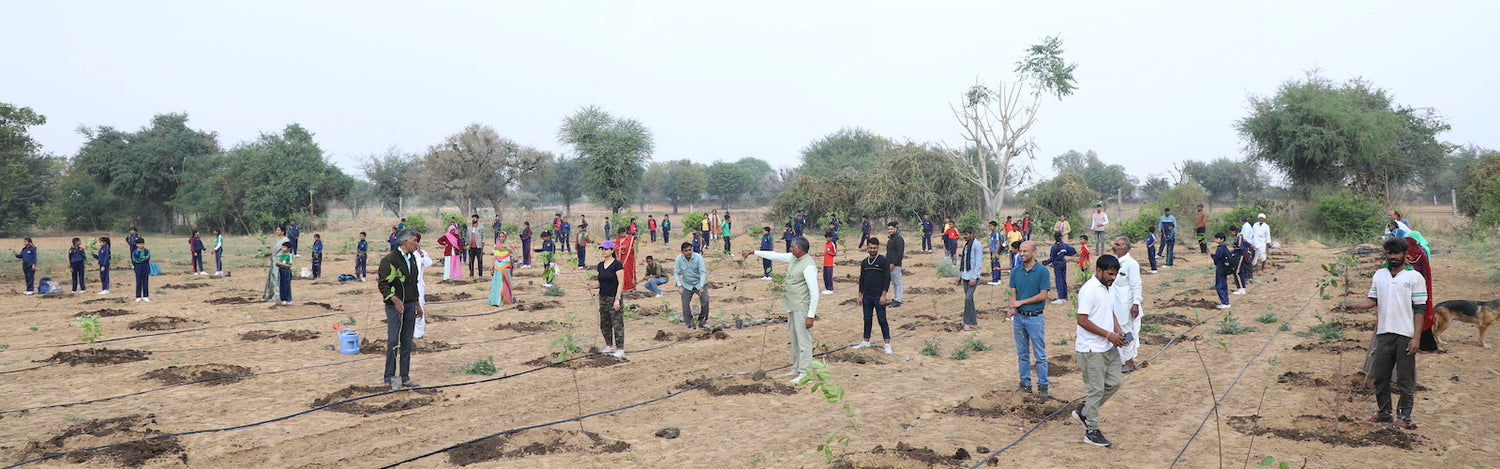
Our partners include urban housing societies, corporate campuses, and government agencies. We provide Miyawaki forest creation services that transform even the smallest plots into thriving, natural green spaces. We ensure each forest is planted with verified native species, supported by scientific methods and conscious stewardship.
We also support organisations working toward Net Zero Targets. Combating Climate Change Through Collective Action is at the heart of everything we do. Our certified tree planting programs are transparent, traceable, and guaranteed to generate a real, lasting impact on India's environment.
How You Can Make a Difference ➡️
You do not need a large plot of land to make an impact. Miyawaki forests can grow in gardens, school grounds, factory premises, and rooftops. Every tree planted is a step toward a greener, more mindful India that future generations will love.
Here is how to get started with Grow Billion Trees:
- → Choose your planting program — Miyawaki, Agroforestry, Mangrove, or Urban Forest
- → Plant a tree in your Name or gift one to someone you love
- → Track your tree's growth using our verified GeoTag technology
- → Share your impact and inspire others to join the mission together
The United Nations Sustainable Development Goals (SDGs) call for action to protect and restore terrestrial ecosystems across the globe. Planting a Miyawaki forest directly supports SDG 15 — Life on Land. It is one of the most mindful, rewarding things you can do for the planet in 2026.
Frequently Asked Questions
How fast does a Miyawaki forest grow compared to normal forests?
A Miyawaki forest grows approximately 10 times faster than a conventional forest. It reaches structural maturity in 2 to 3 years, compared to 20 to 30 years for a traditionally planted forest. This speed makes it ideal for urgent reforestation needs.
What makes Miyawaki forests grow so fast?
Dense planting using native multi-species combinations creates natural competition for sunlight. This drives rapid upward growth. Soil preparation with organic matter and composting further boosts the growth rate in a natural, sustainable way.
Can Miyawaki forests grow in urban areas?
Yes, they are ideal for small urban plots as compact as 100 square metres. Cities like Mumbai and Bangalore already have thriving urban Miyawaki forests. They improve air quality and reduce local temperatures effectively.
How does Grow Billion Trees support Miyawaki plantation?
Grow Billion Trees offers end-to-end Miyawaki forest creation — from site assessment and native species selection to three years of expert care and GeoTag tracking. Our team ensures every forest is planted and nurtured correctly.
Are Miyawaki forests better for biodiversity than normal forests?
Yes. Miyawaki forests support up to 100 times more biodiversity than single-species plantations. Because they use native species, they attract local birds, insects, and mammals far faster than conventional forests ever could.
How does a Miyawaki forest help fight climate change?
Miyawaki forests absorb carbon up to 30 times faster than conventional forests. Their dense canopy and rich soil microbial activity make them highly effective carbon sinks. They directly support Net Zero Targets for both individuals and organisations.
How long does a Miyawaki forest last?
Once established, a Miyawaki forest is self-sustaining and can thrive for centuries. After the initial three-year care period, no irrigation or fertilisation is needed. The forest maintains itself naturally and continues to grow stronger.
Can I plant a Miyawaki forest as a gift or for a special occasion?
Yes. Grow Billion Trees offers personalised tree planting for birthdays, memorials, Women's Day, and corporate events. Each planting comes with a personalised certificate and GeoTag tracking — a conscious, meaningful, lasting gift.
What is the minimum land needed for a Miyawaki forest?
A Miyawaki forest can thrive in as little as 100 square metres. Even small plots support dozens of native tree species. The impact on surrounding biodiversity and air quality is significant even at a small scale.
How does the Miyawaki method compare to agroforestry?
Miyawaki forests focus on dense native woodland restoration for biodiversity and carbon capture. Agroforestry combines trees with agriculture to improve farmer income and soil health. Both are proven, sustainable approaches that Grow Billion Trees proudly offers across India.
Transform Your Corner of the Earth Today
Miyawaki forests are one of the most powerful, natural tools we have to restore our world. They grow 10 times faster than normal forests, improve biodiversity dramatically, and become self-sustaining within just three years. For India in 2026, this method offers real, tangible hope.
At Grow Billion Trees, we are happy to guide you every step of the way. Whether you want to Plant a tree in your Name, support a corporate sustainability initiative, or create a Miyawaki forest in your community — we are here. Together, through Combating Climate Change Through Collective Action, we can plant 100 crore trees and transform India's future.
Explore our programs at Grow Billion Trees and discover how your support can grow into something truly great for the planet today.
