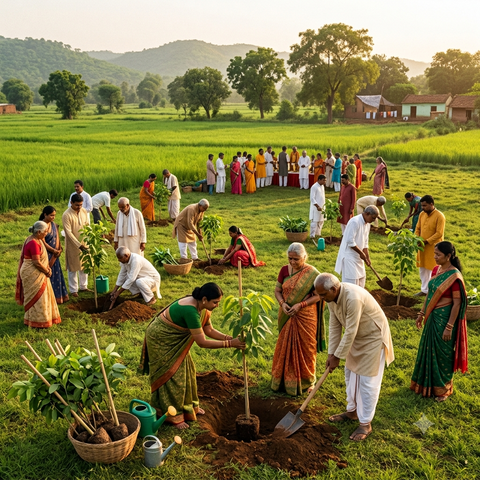
Bamboo Plantation in Bihar is transforming the state's rural landscape, offering a sustainable, proven path to ecological recovery and economic growth. Bihar's fertile Gangetic plains, diverse agro-climatic zones, and large farming workforce make it one of India's most promising regions for large-scale bamboo cultivation. In 2026, this eco-friendly crop is more vital than ever as communities seek natural solutions to deforestation and the climate crisis.
Bamboo is valuable for environmental restoration, rural income, and climate action. It can contribute to greening Bihar and India's goal of planting 100 crore trees.
Why Bamboo Plantation in Bihar Matters in 2026 ✅
Bihar faces environmental pressure. According to the World Wildlife Fund's research on deforestation and forest degradation, land degradation costs the global economy trillions of dollars every year. Bihar is affected by this trend.
Bamboo plantation in Bihar directly addresses this crisis. It thrives across Bihar's plains and the hilly terrains of districts like Rohtas, Kaimur, and Jamui. Moreover, bamboo requires minimal irrigation and no synthetic inputs — making it a truly organic and eco-friendly crop for Bihar's mindful farmers.
Environmental Benefits of Bamboo Plantation in Bihar ✅
The environmental impact of bamboo is remarkable. A single bamboo grove sequesters up to 12 tonnes of CO₂ per hectare per year — nearly five times more than a comparable stand of trees. As a result, large-scale bamboo plantation in Bihar can significantly boost India's climate commitments and help the planet thrive.
Bamboo also prevents soil erosion through its dense root system. This is especially vital for Bihar, where annual flooding along the Kosi and Gandak rivers degrades thousands of acres of farmland. In addition, bamboo improves water retention in soil, creating resilient micro-ecosystems where other plants can grow and flourish.
According to the United Nations Environment Programme's forest conservation guidance, restoring degraded land with fast-growing species like bamboo is among the most cost-effective strategies for ecological recovery. Our team has seen this firsthand at plantation sites across eastern India.
Economic Impact: How Bamboo Empowers Bihar's Farmers 💡
Bamboo plantation in Bihar can provide both environmental and economic benefits for rural communities.
Bihar's farmers have long relied on paddy, wheat, and sugarcane. However, these crops demand high water usage and heavy chemical inputs. Bamboo, by contrast, is a low-maintenance, high-yield perennial crop. Farmers love how bamboo, once established, continues to produce for 25 to 30 years without replanting — saving both time and resources.
The global market for bamboo is growing fast. Industries from construction and furniture to textiles and food products all depend on bamboo as a natural raw material. Bihar's proximity to markets in Patna, Ranchi, and Kolkata makes bamboo plantation in Bihar especially commercially viable. We provide end-to-end agroforestry support to help farmers improve their livelihoods and connect with buyers.
Bamboo and India's Mission to Plant 100 Crore Trees 🌿
India has committed to ambitious reforestation targets. The United Nations Climate Change framework highlights that nations must rapidly expand tree cover to limit global warming to 1.5°C. Bamboo plantation in Bihar is a critical, conscious contribution to this global call for action.
At Grow Billion Trees, our mission is to plant 100 crore trees across India by June 2030. Bamboo is a natural fit for this goal. We ensure each plantation is tracked with GeoTag technology, giving every donor and corporate partner verified, transparent proof of their impact. You can Plant a tree in your Name for just ₹299, inclusive of 2-3ft Tree Planting + 3 Years Care + GeoTag.
Combating Climate Change Through Collective Action drives everything we do. Every bamboo sapling planted in Bihar is one more step toward Net Zero Targets — for individuals, families, corporations, and the nation as a whole.
How Grow Billion Trees Supports Bamboo Plantation in Bihar ⭐
We are glad to share that Grow Billion Trees operates dedicated agroforestry programs across Bihar, integrating bamboo into diverse farm ecosystems. Our partners include local NGOs, state forest departments, and international conservation bodies. Together, we ensure plantation projects are scientifically designed and sustainably managed for long-term impact.
Bamboo plantation models include:
- ✅ Agroforestry Bamboo Strips: Planted along field boundaries to maximise land use and boost farmer income.
- ✅ Degraded Land Restoration: Bamboo on eroded or flood-prone land to restore ecological balance.
- ✅ Community Bamboo Groves: Village-level plantations managed collectively for shared, equitable benefit.
- ✅ Corporate Green Programmes: Certified programmes helping businesses achieve their Net Zero Targets.
Key Facts About Bamboo Plantation in Bihar
Understanding the scale of the opportunity helps stakeholders make mindful, data-backed decisions. Here are verified facts about bamboo cultivation in Bihar:
- • Bihar has approximately 6.84 lakh hectares of degraded wastelands suitable for bamboo.
- • India's National Bamboo Mission promotes bamboo cultivation nationwide.
- • Bamboo can contribute to rural income in states with active bamboo economies.
- • The global bamboo market is projected to exceed $98 billion by 2026, driven by sustainable material demand.
- • According to the United Nations Sustainable Development Goals, responsible land use and reforestation are essential to achieving SDG 15 — Life on Land.
Steps to Start Your Bamboo Plantation Journey →
Starting bamboo plantation in Bihar is easier than most people think. Here is a simple, proven step-by-step process:
- Assess your land: Bamboo thrives in well-drained loamy soil with pH 5.5–7.0, common across Bihar's districts.
- Choose the right variety: Dendrocalamus strictus and Bambusa bambos are ideal for Bihar's climate and commercial demand.
- Prepare the soil: Apply organic compost and ensure proper drainage channels before planting.
- Plant during monsoon: June to August is the optimal planting window for bamboo in Bihar.
- Nurture for three years: Regular watering, weeding, and light organic fertilisation in early years are essential.
- Partner with Grow Billion Trees: Discover our programmes for expert support, GeoTag tracking, and market access.
Frequently Asked Questions
Is bamboo plantation in Bihar profitable?
Yes, bamboo plantation can provide sustainable income. The crop requires minimal maintenance.
Which districts in Bihar are best for bamboo cultivation?
Districts like Rohtas, Kaimur, Jamui, Nawada, and Gaya offer ideal soil and climatic conditions for bamboo. Flood-prone areas along the Kosi and Gandak rivers also benefit greatly from bamboo's natural erosion-control properties.
Which bamboo varieties grow best in Bihar?
Dendrocalamus strictus (Solid Bamboo) and Bambusa bambos are the most suitable species for Bihar. Both are hardy, fast-growing, and have strong commercial demand across construction, furniture, and handicraft sectors.
How does bamboo plantation in Bihar help fight climate change?
Bamboo sequesters up to 12 tonnes of CO₂ per hectare annually. It also improves soil health, conserves water, and restores degraded land. Bamboo plantation in Bihar directly supports India's Net Zero Targets and national reforestation goals.
Can I plant bamboo as a gift or in memory of a loved one?
Absolutely. Grow Billion Trees allows you to Plant a tree in your Name or gift one for birthdays, memorials, or special occasions. Each tree includes a personalised certificate, GeoTag tracking, and 3 years of care for just ₹299.
Does the government support bamboo plantation in Bihar?
Yes. The National Bamboo Mission provides financial assistance and training to farmers for bamboo cultivation. Bihar's state government also offers subsidies and technical support through its Agriculture and Forest Departments.
How quickly does bamboo grow in Bihar?
Bamboo can grow up to 90 centimetres per day under ideal conditions. In Bihar's climate, most commercial bamboo varieties reach harvestable maturity within 3 to 5 years of planting — making it one of the most fast-growing green investments available.
How can corporates use bamboo plantation in Bihar to meet ESG goals?
Corporates can partner with Grow Billion Trees to fund certified bamboo plantation projects in Bihar. These programmes are verified, GeoTagged, and aligned with international ESG standards. They help businesses achieve Net Zero Targets while generating measurable community impact.
What support does Grow Billion Trees offer for bamboo farmers in Bihar?
We provide end-to-end support: sapling supply, land assessment, GeoTag monitoring, hands-on farmer training, and market linkages. Our agroforestry programmes are designed to boost income while restoring Bihar's natural ecosystems sustainably.Bamboo plantation in Bihar represents a great convergence of ecological need, economic opportunity, and collective will. By choosing bamboo, farmers, corporations, and conscious individuals together can heal our earth and grow a future worth inheriting. We welcome you to be part of this green revolution — explore our programmes at Grow Billion Trees and discover how your contribution plants hope for generations to come.
Bamboo plantation with Grow Billion Trees
Companies fund bamboo through CSR as part of agroforestry and restoration programmes, and farmers grow it on their own land and keep the income from the harvest. Every plantation is geo-tagged and tracked on GreenTrack.
- Bamboo plantation for CSR and carbon credits
- Agroforestry programme
- Agroforestry for farmers: register free
- CSR rules for tree plantation
Talk to our team about a programme for your company.