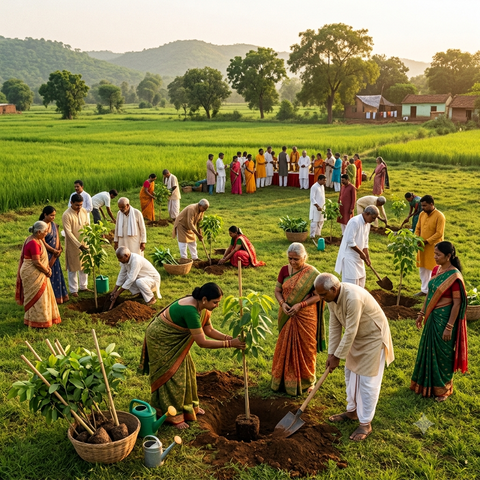
Bamboo plantation in Mizoram is transforming the state's landscape and economy. Mizoram, nestled in India's Northeast, can support large-scale bamboo cultivation.
✅ Why Mizoram is India's Bamboo Heartland
Mizoram's hilly terrain, high rainfall, and fertile soil support bamboo growth. The state is home to native bamboo species including Melocanna baccifera and Dendrocalamus longispathus. Bamboo forests are found across Northeast India, with Mizoram having significant coverage.
The Mizoram state government has long recognized bamboo as a vital, sustainable resource. The Mizoram Bamboo Policy actively promotes eco-friendly cultivation and natural processing practices. As a result, Mizoram has grown into a thriving hub for bamboo-based industries — from handicrafts in Aizawl to construction materials in Lunglei.
🌱 Ecological Benefits of Bamboo Plantation in Mizoram
The ecological impact of bamboo plantation in Mizoram is profound and well-documented. Bamboo grows at an astonishing pace — some species grow up to 91 cm per day. This rapid growth enables bamboo to sequester carbon at rates that rival, and often exceed, traditional forests. Moreover, bamboo's dense canopy supports a rich and diverse ecosystem below it.
Carbon Sequestration and Climate Action
Bamboo sequesters up to 12 tonnes of carbon dioxide per hectare annually. This makes it a proven tool in Combating Climate Change Through Collective Action. The United Nations Climate Change framework officially recognizes bamboo as a key nature-based solution to the global climate crisis — a fact our team proudly champions in every program we run.
Bamboo plantations prevent soil erosion on steep hillsides. Dense root systems bind the soil, reduce landslides, and maintain watershed health.
Biodiversity and Forest Regeneration
Bamboo groves in Mizoram support rich biodiversity. They provide vital habitat for birds, insects, and mammals — including several endangered species. According to the United Nations Environment Programme's forests initiative, bamboo forests play a critical role in ecosystem restoration and long-term biodiversity conservation.
Bamboo plantations also help restore degraded land across Mizoram. Abandoned jhum (shifting cultivation) lands are being transformed into productive green ecosystems through targeted bamboo planting. It is truly wonderful to witness bare hillsides turning lush, vibrant, and alive again.
💡 Water Conservation and Watershed Health
Bamboo's root structure acts as a natural sponge, improving groundwater recharge and reducing surface runoff. Communities near bamboo plantations in Mizoram report improved water availability even during dry seasons. This is a verified ecological benefit that directly boosts community resilience. In addition, healthier watersheds mean better agricultural productivity for surrounding farms.
✅ Economic Benefits of Bamboo Plantation in Mizoram
Bamboo has economic potential in Mizoram. It is versatile, fast-growing, and has value on global markets.
Livelihood Generation for Families
Bamboo-based industries employ thousands of families across Mizoram. From bamboo furniture makers in Aizawl to eco-friendly packaging producers in Champhai, bamboo provides sustainable income at every level of the value chain. Our partners on the ground confirm that bamboo cultivation has helped save many farming families from economic hardship.
The Mizoram government supports bamboo cultivation through subsidies, technical training, and market linkages.
Construction, Industry, and Green Markets
Bamboo is used in construction, textiles, paper, and biodegradable packaging. It is an alternative to timber and plastics.
Agroforestry Integration for Mindful Farming
Combining bamboo with food crops creates powerful agroforestry systems. Farmers grow vegetables, spices, and medicinal plants beneath bamboo canopies. This integrated, mindful approach balances ecological health with economic productivity — a model our team actively promotes. However, success depends on proper training and community support, both of which we provide through our programs.
⭐ Grow Billion Trees: Nurturing Mizoram's Bamboo Future
At Grow Billion Trees, we are deeply committed to expanding bamboo plantation in Mizoram. Our mission to plant 100 crore trees across India includes a strong focus on Northeast India's bamboo-rich landscapes. We ensure every tree — including every bamboo — is planted with care, tracked with GeoTag technology, and nurtured for 3 full years.
Our 2-3ft Tree Planting + 3 Years Care + GeoTag program gives you the ability to Plant a tree in your Name and watch it grow in real time. Whether you are an individual who loves the planet, a corporate seeking Net Zero Targets, or a community organization, we provide certified, transparent, and impactful planting solutions starting at just ₹299.
We are glad to share that our agroforestry programs in Mizoram integrate bamboo with traditional crops, supporting local farmers while building sustainable green corridors. Our hands-on approach ensures bamboo plantations deliver both ecological and economic value for every stakeholder involved.
The World Wildlife Fund's forest conservation initiative highlights the urgent need for large-scale reforestation across Asia. Our bamboo planting efforts in Mizoram align directly with these global conservation priorities — and we are proud to lead this charge on the ground.
How You Can Support Bamboo Plantation in Mizoram
You can make a real, lasting difference today. Plant a tree in your Name for just ₹299 and help grow a healthier planet for future generations. Whether for a birthday, a memorial, a corporate sustainability milestone, or a gift, every tree you plant contributes to Combating Climate Change Through Collective Action.
Corporates can partner with us to achieve certified Net Zero Targets through large-scale bamboo plantation programs across Mizoram and beyond. We provide verified impact reports, GeoTag tracking, and personalized certificates — all backed by our authentic, hands-on implementation. As a result, your sustainability commitment becomes transparent, meaningful, and measurable.
Discover how easy it is to transform your impact. Explore our full range of programs at Grow Billion Trees and join thousands of conscious individuals and organizations who are choosing to protect the earth they love.
The Road Ahead: A Green Future Through Bamboo
With growing government support and international demand, bamboo cultivation can expand in Mizoram. The goal is to plant 100 crore trees by 2030.
According to the WWF's report on deforestation and forest degradation, urgent, large-scale action is needed to restore Asia's forests. Bamboo plantation in Mizoram is a great example of how communities can take charge and create lasting change. Moreover, every bamboo planted today is a gift to the planet that keeps giving for decades.
The United Nations Sustainable Development Goals call for responsible land use and ecosystem restoration at scale. Bamboo plantation in Mizoram directly supports SDG 13 (Climate Action), SDG 15 (Life on Land), and SDG 8 (Decent Work and Economic Growth). Together, we can build a thriving, natural, and sustainable future — one bamboo shoot at a time.
Frequently Asked Questions
What makes Mizoram ideal for bamboo plantation?
Mizoram's hilly terrain, high rainfall, and rich biodiversity support bamboo cultivation. The state hosts native bamboo species, providing ecological and commercial options.
How does bamboo plantation help the environment in Mizoram?
Bamboo plantations in Mizoram prevent soil erosion, sequester up to 12 tonnes of CO2 per hectare annually, support biodiversity, and improve water conservation. They are a natural, proven solution for ecological restoration on degraded and formerly cultivated lands.
What economic opportunities does bamboo create in Mizoram?
Bamboo supports livelihoods in handicrafts, construction, furniture, paper, and textiles.
How does Grow Billion Trees support bamboo plantation in Mizoram?
Grow Billion Trees runs agroforestry and reforestation programs in Mizoram that include bamboo planting. Our 2-3ft Tree Planting + 3 Years Care + GeoTag program ensures every bamboo is geo-tracked, cared for, and verified for maximum ecological and economic impact.
Can I plant a bamboo tree in my name in Mizoram?
Yes! Through Grow Billion Trees, you can Plant a tree in your Name for just ₹299. Your tree is geo-tagged, cared for over 3 full years, and you receive a personalized, certified planting certificate — a wonderful and meaningful gift to yourself or a loved one.
How fast does bamboo grow in Mizoram?
In Mizoram's warm, humid climate, bamboo can grow up to 60–90 cm per day during peak season. Most species reach harvestable size within 3–5 years, making bamboo one of the fastest-growing and most sustainable natural resources on earth.
What role does bamboo play in achieving Net Zero Targets?
Bamboo sequesters significant amounts of carbon dioxide, making it a powerful, certified tool for corporate Net Zero Targets. Its rapid growth and high carbon absorption rate make bamboo plantation an authentic, data-backed climate solution for businesses of all sizes.
Is bamboo plantation profitable for farmers in Mizoram?
Yes. Bamboo farming is highly profitable in Mizoram. With government subsidies, technical training programs, and growing global market demand, bamboo has become a great source of sustainable income for thousands of farming families across the state in 2026.
How does bamboo planting in Mizoram support the UN SDGs?
Bamboo plantation directly supports multiple UN Sustainable Development Goals including SDG 13 (Climate Action), SDG 15 (Life on Land), and SDG 8 (Decent Work and Economic Growth), making it a mindful, high-impact investment for individuals, communities, and corporations alike.
What is the Grow Billion Trees mission in India?
Grow Billion Trees aims to plant 100 crore trees across India by June 2030. The mission focuses on Combating Climate Change Through Collective Action through diverse programs including bamboo plantation, Miyawaki forests, mangrove restoration, and urban forestry across major cities like Mumbai, Bangalore, and Delhi.
Bamboo plantation with Grow Billion Trees
Companies fund bamboo through CSR as part of agroforestry and restoration programmes, and farmers grow it on their own land and keep the income from the harvest. Every plantation is geo-tagged and tracked on GreenTrack.
- Bamboo plantation for CSR and carbon credits
- Agroforestry programme
- Agroforestry for farmers: register free
- CSR rules for tree plantation
Talk to our team about a programme for your company.