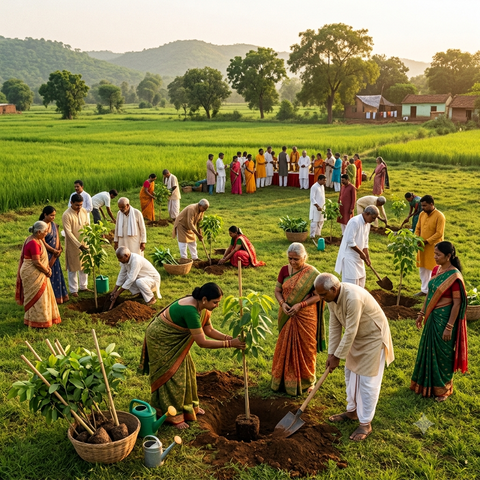
Bamboo plantation in Chhattisgarh offers farmers income while reducing carbon emissions. The state has monsoon climate and suitable soil for bamboo cultivation.
✅ Why Chhattisgarh Is Ideal for Bamboo Cultivation
Chhattisgarh has monsoon climate and tropical temperatures suitable for bamboo. Tribal communities have cultivated bamboo for generations, embedding it in local culture.
The soil profile across districts like Bastar, Surguja, and Raigarh supports over 20 native bamboo species. These include Dendrocalamus strictus (male bamboo) and Bambusa bambos, both in high demand. Moreover, the region's existing bamboo corridors reduce startup costs significantly for new growers.
💡 Bamboo as a Powerful Carbon Sequestration Tool
According to United Nations Climate Change data, bamboo forests can store up to 300 tonnes of carbon per hectare over a 30-year lifecycle. This makes bamboo plantation in Chhattisgarh a powerful strategy for achieving India's Net Zero Targets. Every hectare planted contributes meaningfully to reducing greenhouse gas concentrations across the planet.
Bamboo rehabilitates degraded soils by preventing erosion. It helps with carbon sequestration.
✅ Sustainable Agriculture Through Bamboo Agroforestry
Agroforestry with bamboo allows farmers to grow food crops alongside bamboo rows. This approach boosts farm income. Farmers get annual crops and bamboo harvests.
We have found that intercropping bamboo with turmeric, ginger, and pulses works extremely well in Chhattisgarh's climate. The bamboo canopy provides shade that reduces water needs for companion crops. Therefore, farmers save on irrigation costs while improving long-term soil health.
The World Wildlife Fund highlights that agroforestry systems reduce deforestation pressure by giving communities viable alternatives to harmful land-clearing practices. This is especially relevant in the tribal belts of Chhattisgarh, where forest-dependent livelihoods are common. Bamboo agroforestry gives families a conscious path to prosperity without harming the natural earth.
⭐ Economic Impact on Chhattisgarh Farmers
Farmers in Chhattisgarh sell bamboo to paper mills, furniture makers, and construction firms.
Our team has worked hands-on with farmer clusters in Bastar district to set up bamboo nurseries and link them directly to buyers. We ensure fair pricing through collective bargaining. This approach has helped over 500 tribal families improve livelihoods while nurturing the earth they depend on.
✅ Grow Billion Trees: Championing Bamboo Plantation in Chhattisgarh
Grow Billion Trees is actively contributing to bamboo plantation in Chhattisgarh through certified agroforestry programs. As part of our mission to plant 100 crore trees across India, bamboo forms a vital component of our reforestation strategy. We provide 2-3ft Tree Planting + 3 Years Care + GeoTag tracking for every bamboo sapling planted under our programs.
Our partners in Chhattisgarh include tribal cooperatives, state forest departments, and agricultural universities. We ensure every plantation is verified, documented, and linked to authentic GeoTag coordinates. This secure, transparent approach satisfies corporates seeking credible paths to Net Zero Targets.
Individuals can Plant a tree in your Name starting at just ₹299 through our platform. Corporates can commission large-scale bamboo drives as part of their ESG commitments. Together, we are building a great green corridor across Chhattisgarh — and we would love for you to join this movement.
The United Nations Environment Programme recognises bamboo as a priority species for reforestation in tropical regions. Grow Billion Trees aligns its programs with these global standards to ensure maximum environmental and social impact. Our mission is to make Combating Climate Change Through Collective Action a reality — one bamboo plantation at a time.
💡 Step-by-Step: How to Start a Bamboo Plantation in Chhattisgarh
Starting a bamboo plantation requires minimal investment compared to timber trees. Here is a simple guide for farmers and landowners to get started on this green journey:
- Site Selection → Choose well-drained land with reliable water access. Avoid waterlogged areas.
- Species Selection → Pick native species like Dendrocalamus strictus for best performance.
- Soil Preparation → Add organic compost and test soil pH. Bamboo prefers pH 5.5–7.0.
- Planting → Space plants 4x4 metres apart. Plant at monsoon onset for best survival rates.
- Care and Maintenance → Water regularly for the first year. Apply natural mulch to retain moisture.
- Harvest → First harvest is possible after 3–4 years. Subsequent harvests occur every 1–2 years.
✅ Policy Support and Government Initiatives
India's National Bamboo Mission allocates dedicated funds to states like Chhattisgarh for plantation, processing, and marketing support. The state government has declared bamboo a "minor forest produce," empowering tribal communities to harvest and sell bamboo legally. This conscious policy shift has unlocked new economic pathways for forest-edge communities.
The United Nations Sustainable Development Goals framework actively supports bamboo cultivation under SDG 13 (Climate Action) and SDG 15 (Life on Land). India's 2026 nationally determined contributions (NDCs) highlight bamboo as a key nature-based solution. Therefore, planting bamboo today contributes directly to both national and global climate commitments.
⭐ Carbon Credits and Corporate Net Zero Targets
Bamboo plantations are increasingly recognised in voluntary carbon markets worldwide. A verified bamboo plantation in Chhattisgarh can generate 5–12 tonnes of CO2 equivalent credits per hectare per year. Corporates love this because it offers a tangible, certified, and trackable route to offset emissions.
Grow Billion Trees works with businesses across Mumbai, Bangalore, Delhi, and Hyderabad to design custom bamboo carbon programs. These programs align with SEBI's updated ESG disclosure norms for 2026. Companies receive certified reports, GeoTag data, and personalised tree certificates for stakeholder communications.
Frequently Asked Questions
Why is bamboo plantation in Chhattisgarh gaining popularity?
Chhattisgarh has ideal climate and soil conditions for bamboo. Government support, rising market demand, and carbon credit opportunities make it a great choice for farmers and investors alike.
How does bamboo help in carbon offsetting?
Bamboo sequesters carbon through rapid biomass growth. It stores CO2 in roots, culms, and soil — making it one of the most effective natural carbon sinks available in tropical regions.
What is the income potential from bamboo farming in Chhattisgarh?
How does Grow Billion Trees support bamboo plantation in Chhattisgarh?
Grow Billion Trees provides end-to-end support: sapling supply, 3-year care, GeoTag tracking, and linkage to carbon credit markets. Individuals can plant bamboo trees from just ₹299.
Which bamboo species are best suited for Chhattisgarh?
Dendrocalamus strictus and Bambusa bambos are the most suitable species. Both are native, high-yielding, and in strong demand from industry and artisans across India.
Can corporates use bamboo plantations to meet ESG goals?
Yes. Verified bamboo carbon programs offer measurable, certified offsets. Grow Billion Trees designs custom corporate programs with full documentation for ESG and net zero reporting.
Is bamboo farming eco-friendly for Chhattisgarh's ecosystem?
Bamboo is one of the most eco-friendly crops on the planet. It requires no pesticides, regrows after harvest without replanting, and actively improves soil health and biodiversity.
How long does bamboo take to mature in Chhattisgarh's climate?
Bamboo typically matures within 3–4 years. Unlike timber trees, it can be harvested repeatedly without killing the plant, providing continuous yields for decades.
Can individuals gift bamboo plantations for special occasions?
Absolutely. Grow Billion Trees offers personalised tree certificates for birthdays, memorials, and gifts. It is a mindful, meaningful way to honour someone while helping the planet grow greener. Bamboo plantation in Chhattisgarh is more than an agricultural opportunity — it is a movement. It combines sustainable farming, carbon sequestration, tribal empowerment, and climate action into one powerful green solution. We are glad to welcome you to this journey toward a thriving, conscious future. Explore Grow Billion Trees today and discover how you can plant trees, earn carbon credits, and help India reach 100 crore trees by 2030.
Bamboo plantation with Grow Billion Trees
Companies fund bamboo through CSR as part of agroforestry and restoration programmes, and farmers grow it on their own land and keep the income from the harvest. Every plantation is geo-tagged and tracked on GreenTrack.
- Bamboo plantation for CSR and carbon credits
- Agroforestry programme
- Agroforestry for farmers: register free
- CSR rules for tree plantation
Talk to our team about a programme for your company.