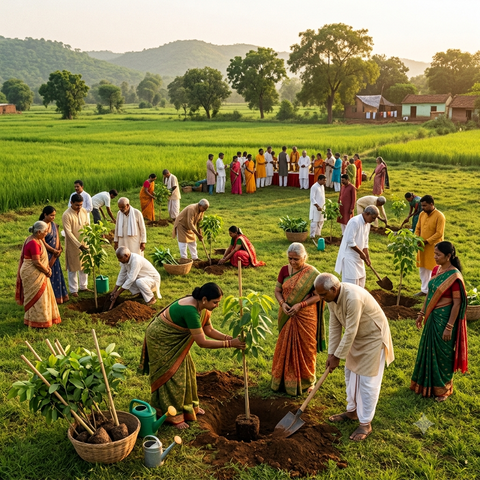
Bamboo cultivation can thrive in Rajasthan's arid conditions, creating sustainable green spaces that benefit both the environment and local economies. With proper planning and care, bamboo plantations can grow into thriving ecosystems that support biodiversity and provide economic opportunities for generations to come.
Why Bamboo Plantation in Rajasthan Makes Perfect Sense
Rajasthan's unique climate and soil conditions make it surprisingly suitable for certain bamboo species. We've discovered that drought-resistant varieties can flourish in the state's challenging environment. The United Nations Sustainable Development Goals emphasize the importance of sustainable land management, and bamboo cultivation perfectly aligns with these objectives.
Bamboo offers benefits for Rajasthan's ecosystem. The plant can prevent soil erosion through its extensive root system, which stabilizes soil and improves water retention capacity.
✅ Rapid growth rate of up to 3 feet per day
✅ Drought tolerance once established
✅ Soil erosion prevention
✅ Carbon sequestration capabilities
✅ Economic value through multiple harvests
Best Bamboo Species for Rajasthan's Climate
Our team has identified several bamboo varieties that perform exceptionally well in Rajasthan's arid conditions. Dendrocalamus strictus, commonly known as male bamboo, shows remarkable resilience in low-rainfall areas. This species requires minimal water once established and can withstand temperatures exceeding 45°C.
Bambusa tulda represents another excellent choice for the region. We ensure our planting programs include this fast-growing variety that adapts well to sandy soils. The species produces high-quality culms suitable for construction and handicrafts, providing economic benefits to local communities.
Bambusa balcooa thrives in Rajasthan's semi-arid zones and has natural pest resistance, making it suitable for sustainable cultivation practices.
⭐ Economic Benefits of Bamboo Cultivation in Rajasthan
Bamboo plantation in Rajasthan creates multiple revenue streams for farmers and communities. The construction industry increasingly demands bamboo products due to their strength and sustainability. Our partners report that established bamboo groves generate consistent income through annual harvesting cycles.
The handicraft sector in Rajasthan welcomes bamboo as a raw material. Artisans create beautiful products including furniture, baskets, and decorative items. This industry supports thousands of families while preserving traditional craftsmanship. According to the United Nations Environment Programme on forests, sustainable forest products like bamboo contribute significantly to rural livelihoods.
Paper and pulp industries source bamboo for eco-friendly production. Bamboo-based products have lower environmental impact compared to wood pulp and can support local economies.
💡 Planting Techniques for Success in Rajasthan
Successful bamboo plantation in Rajasthan requires specific techniques adapted to the local climate. We recommend planting during monsoon season when soil moisture levels are optimal. Pre-monsoon preparation includes soil testing and organic matter incorporation to improve water retention.
Proper spacing ensures healthy growth and maximum yield. Our team maintains 4-meter intervals between plants to prevent competition for nutrients and water. This spacing allows adequate sunlight penetration and air circulation, reducing disease risks.
Irrigation systems play a crucial role in establishment. Drip irrigation proves most effective for bamboo cultivation in arid regions. The system delivers water directly to root zones, minimizing waste and ensuring consistent moisture levels. We provide comprehensive care including 2-3ft Tree Planting + 3 Years Care + GeoTag monitoring for all our bamboo projects.
Environmental Impact and Climate Benefits
Bamboo plantation in Rajasthan contributes significantly to climate change mitigation efforts. Each bamboo clump sequesters approximately 12 tons of CO2 per hectare annually. This capacity exceeds many traditional tree species, making bamboo an excellent choice for achieving net zero targets.
The United Nations climate change initiatives recognize bamboo's potential in carbon sequestration programs. Our projects demonstrate how bamboo plantations create microclimates that support diverse wildlife species. These green spaces attract birds, insects, and small mammals, enhancing biodiversity in desert landscapes.
Water conservation benefits include reduced surface runoff and improved groundwater recharge. Bamboo's dense root system creates natural water harvesting structures.
Government Support and Policies
The Government of Rajasthan actively promotes bamboo cultivation through various schemes and subsidies. The National Bamboo Mission provides financial assistance for plantation establishment and processing units.
State-level initiatives include training programs and technical support for farmers. Our partners work closely with agricultural departments to ensure successful implementation. The government's focus on sustainable agriculture makes bamboo plantation an attractive investment opportunity.
Policy frameworks support bamboo-based industries through tax incentives and infrastructure development. These measures encourage private sector participation in bamboo value chains. The integrated approach ensures long-term sustainability and economic viability of bamboo plantations.
Challenges and Solutions in Rajasthan
Water scarcity represents the primary challenge for bamboo plantation in Rajasthan. However, our team has developed innovative solutions including rainwater harvesting and efficient irrigation systems. Drought-resistant varieties reduce water dependency while maintaining productivity levels.
Soil quality concerns require careful attention to organic matter addition and nutrient management. We recommend incorporating compost and bio-fertilizers to improve soil structure. These amendments enhance water retention and provide essential nutrients for healthy growth.
Market linkages are crucial for economic success. Connections with processing units and end-users can support profitable operations. Value addition through processing increases income potential and creates employment opportunities.
Success Stories from Rajasthan
Several districts in Rajasthan showcase successful bamboo plantation initiatives. Communities can adopt sustainable practices through bamboo cultivation.
Jodhpur region demonstrates bamboo's potential in agroforestry systems. Farmers integrate bamboo with traditional crops, creating diverse income sources. This approach maximizes land utilization while maintaining soil health and biodiversity.
Alwar district's community-based bamboo projects show collective action's power. Villages work together to establish large-scale plantations that benefit entire communities. These initiatives align with our mission to plant a tree in your name while creating lasting environmental impact.
Future Prospects and Opportunities
The future of bamboo plantation in Rajasthan looks incredibly promising with growing market demand and government support. Research institutions develop new varieties suited to local conditions. These innovations will boost productivity and expand cultivation possibilities across the state.
Technology integration including GeoTag monitoring systems helps track plantation progress and health. Digital platforms connect farmers with buyers, streamlining market access. Our comprehensive approach ensures sustainable growth and maximum environmental benefit.
Climate change mitigation goals create additional opportunities for bamboo cultivation. Carbon credit markets provide extra income streams for plantation owners. This financial incentive accelerates adoption and supports long-term sustainability objectives.
Frequently Asked Questions
Which bamboo species grow best in Rajasthan's climate?
Dendrocalamus strictus, Bambusa tulda, and Bambusa balcooa perform exceptionally well in Rajasthan's arid conditions. These drought-resistant varieties require minimal water once established and can withstand high temperatures exceeding 45°C.
How much water does bamboo plantation require in Rajasthan?
Bamboo plants need regular irrigation during their first year. Mature plants become drought-tolerant and can survive on minimal rainfall.
What is the economic return from bamboo cultivation?
Farmers earn income from established bamboo groves. Income varies based on species, market prices, and value-addition activities like processing and handicraft production.
How long does bamboo take to mature in Rajasthan?
Most bamboo species reach harvesting maturity within 3-4 years in Rajasthan's climate. However, some fast-growing varieties can be harvested annually after the third year, providing consistent income streams.
Can bamboo help combat desertification in Rajasthan?
Yes, bamboo's extensive root system prevents soil erosion and improves water retention. The World Wildlife Fund research on forest degradation confirms bamboo's effectiveness in land restoration and combating desertification.
What government support is available for bamboo plantation?
The National Bamboo Mission provides subsidy for plantation establishment. Additional support includes technical training, market linkage assistance, and infrastructure development for processing units.
Is bamboo cultivation profitable in small land holdings?
Yes, bamboo cultivation is highly suitable for small farmers. Even one-acre plantations can generate substantial income through multiple harvests and value-added products like handicrafts and construction materials.
How does bamboo plantation contribute to carbon sequestration?
Bamboo sequesters approximately 12 tons of CO2 per hectare annually, significantly higher than many traditional tree species. This makes it an excellent choice for organizations working toward net zero targets.
Taking Action for Rajasthan's Green Future
Bamboo plantation can create sustainable green spaces and generate economic benefits in Rajasthan. With proper planning, suitable species selection, and adequate care, bamboo cultivation can thrive in the state's challenging climate. Environmental benefits, economic returns, and government support make bamboo cultivation a viable option.
We encourage farmers, communities, and organizations to explore bamboo plantation opportunities in Rajasthan. Together, we can transform desert landscapes into thriving green ecosystems that support biodiversity, combat climate change, and provide sustainable livelihoods. Plant a tree in your name today and become part of the movement to create a greener, more sustainable future for Rajasthan and beyond. Learn more about our bamboo plantation programs and discover how you can contribute to this wonderful environmental initiative.
Bamboo plantation with Grow Billion Trees
Companies fund bamboo through CSR as part of agroforestry and restoration programmes, and farmers grow it on their own land and keep the income from the harvest. Every plantation is geo-tagged and tracked on GreenTrack.
- Bamboo plantation for CSR and carbon credits
- Agroforestry programme
- Agroforestry for farmers: register free
- CSR rules for tree plantation
Talk to our team about a programme for your company.