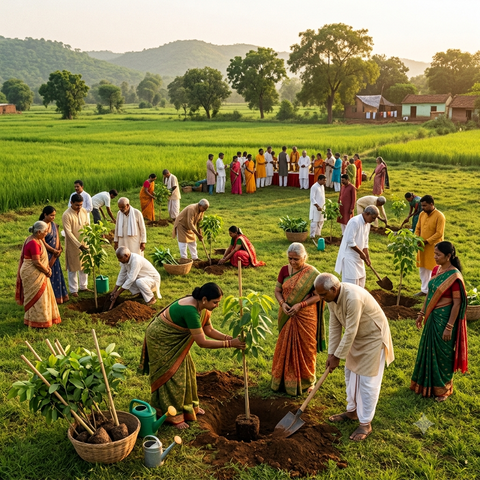
Agroforestry in Andhra Pradesh combines trees with crops, creating sustainable income streams while protecting the environment. This approach can improve farm productivity while reducing soil erosion and improving water retention.
✅ What Makes Agroforestry Perfect for Andhra Pradesh
Andhra Pradesh's diverse climate zones make it ideal for agroforestry systems. The state enjoys both coastal and inland regions, providing varied growing conditions. Farmers can grow everything from coconut palms along the coast to eucalyptus in drier inland areas.
Our team has witnessed remarkable transformations across districts like Guntur, Krishna, and Chittoor. The monsoon patterns support both tree and crop growth effectively. Moreover, the state government actively promotes sustainable farming practices through various schemes.
Temperature variations between 20°C to 35°C throughout the year create perfect conditions for multiple species. This climate diversity allows farmers to select trees that complement their existing crops naturally.
🌱 Popular Agroforestry Models Thriving in Andhra Pradesh
Silvi-Pasture Systems
Farmers integrate trees with grasslands for livestock grazing. Popular tree species include Subabul and Gliricidia which provide both fodder and timber.
These systems work wonderfully in districts like Anantapur and Kurnool. The trees provide shade for animals while grass grows underneath. This creates a win-win situation for both livestock and tree growth.
Alley Cropping
Crops grow between rows of trees in this systematic approach. Farmers typically plant neem, eucalyptus, or teak in rows with vegetables or grains between them. Our partners report that this method optimizes land use efficiently.
The trees act as windbreaks, protecting crops from harsh weather. Additionally, they prevent soil erosion during heavy rains. This model particularly thrives in coastal districts like Visakhapatnam and East Godavari.
Home Gardens
Multi-story farming around homesteads combines fruit trees, vegetables, and medicinal plants. Families grow mango, guava, and coconut trees alongside seasonal crops. This provides year-round food security and additional income.
We love how this model transforms small spaces into productive ecosystems. Even urban areas in cities like Vijayawada and Tirupati adopt this approach successfully.
⭐ Economic Benefits Transforming Farmer Livelihoods
Agroforestry in Andhra Pradesh creates multiple income streams throughout the year. According to the United Nations Sustainable Development Goals, sustainable agriculture practices like agroforestry are essential for ending poverty and ensuring food security.
Agroforestry can increase farm income compared to conventional farming.
Tree products provide long-term financial security. Timber sales, fruit harvests, and non-timber forest products create steady cash flow. Moreover, reduced input costs for fertilizers and pesticides improve profit margins significantly.
Agroforestry can provide more stable income compared to conventional farming. This economic resilience helps families manage market fluctuations.
🌿 Environmental Impact and Climate Benefits
Agroforestry systems actively combat climate change through carbon sequestration. Trees absorb approximately 22 kg of CO2 annually per tree, making farms carbon-positive over time. The United Nations Climate Change initiative recognizes agroforestry as a key solution for reducing greenhouse gas emissions.
Agroforestry can maintain higher soil moisture compared to conventional farms. This reduces irrigation requirements and helps farmers adapt to changing rainfall patterns.
Biodiversity flourishes in these mixed systems. Birds, beneficial insects, and soil microorganisms thrive in agroforestry environments. This natural pest control reduces the need for chemical interventions significantly.
Water table improvements occur within 2-3 years of establishing tree-crop systems. Deep tree roots help recharge groundwater while preventing surface runoff during monsoons.
💡 Government Support and Schemes
Government schemes support agroforestry in Andhra Pradesh through subsidies, training, and microfinance. These help farmers establish tree-crop systems.
The National Agroforestry Policy provides additional support through the Ministry of Agriculture. Technical training programs help farmers select appropriate tree species for their specific conditions. We ensure our partners access these valuable government resources.
Crop insurance schemes now cover agroforestry systems, reducing financial risks for farmers. The Pradhan Mantri Fasal Bima Yojana includes tree-crop combinations in its coverage.
Research institutions like ICRAF and state agricultural universities provide ongoing technical support. This ensures farmers adopt scientifically proven practices for maximum benefits.
🚀 Success Stories from Andhra Pradesh Farmers
Coconut-vegetable agroforestry can provide diverse income streams. Coconut trees offer steady income while vegetables offer quick returns.
Eucalyptus-groundnut agroforestry can improve soil fertility and reduce irrigation needs.
A farmer collective in Chittoor district established a 100-acre mango-millet agroforestry project. They now supply organic products to urban markets, earning premium prices. This community approach demonstrates the scalability of agroforestry systems.
These success stories highlight how agroforestry creates resilient farming communities. Farmers enjoy both immediate crop income and long-term tree benefits.
🌟 Challenges and Practical Solutions
Initial establishment costs can be challenging for small farmers. However, government subsidies and microfinance options help overcome this barrier. Our team assists farmers in accessing these financial resources effectively.
Tree-crop competition for nutrients requires careful species selection. We recommend complementary combinations where trees fix nitrogen or provide other benefits to crops. Proper spacing prevents excessive competition.
Market access for tree products sometimes poses difficulties. Farmer producer organizations help create collective bargaining power. Additionally, direct marketing through digital platforms increases profitability.
Technical knowledge gaps exist among some farmers. Regular training programs and demonstration plots address this challenge. We provide hands-on guidance to ensure successful implementation.
🎯 How Grow Billion Trees Supports Agroforestry
At Grow Billion Trees, we're passionate about helping Andhra Pradesh farmers embrace agroforestry. Our Plant a tree in your Name program includes agroforestry options for just ₹299. This affordable pricing makes sustainable farming accessible to everyone.
We provide comprehensive support including 2-3ft Tree Planting + 3 Years Care + GeoTag tracking. Farmers can monitor their trees' growth through our technology platform. This transparency builds confidence in long-term investments.
Our agroforestry specialists work directly with farming communities. We help select appropriate tree species based on soil type, climate, and market demand. This personalized approach ensures optimal results for each farmer.
Corporate partners seeking Net Zero Targets can sponsor agroforestry projects. This creates additional funding for farmers while helping companies achieve sustainability goals. Together, we're working toward our mission of planting 100 crore trees across India.
📈 Future Prospects and Scaling Opportunities
The World Wildlife Fund's forest conservation initiatives recognize agroforestry as crucial for sustainable development. Andhra Pradesh has tremendous potential to become India's agroforestry leader.
Digital agriculture platforms are revolutionizing farmer support systems. Mobile apps provide real-time advice on tree care, pest management, and market prices. This technology integration makes agroforestry more accessible and profitable.
Export opportunities for organic agroforestry products are expanding rapidly. International markets increasingly demand sustainably produced goods. Andhra Pradesh farmers are well-positioned to capture this growing demand.
Climate change adaptation will drive further agroforestry adoption. As weather patterns become more unpredictable, farmers need resilient systems. Tree-crop combinations provide this essential stability and security.
Frequently Asked Questions
What is the best tree species for agroforestry in Andhra Pradesh?
The optimal tree species depends on your location and soil type. Coastal areas thrive with coconut and cashew, while inland regions suit eucalyptus and teak. We recommend consulting local agricultural experts for personalized advice.
How long does it take to see profits from agroforestry?
Crop income starts immediately, while tree benefits typically begin after 2-3 years. Full economic returns usually occur within 5-7 years, depending on species selection and management practices.
What government support is available for agroforestry in Andhra Pradesh?
Government schemes support farmers adopting agroforestry through subsidies, crop insurance, technical training, and microfinance options.
Can small farmers with 1-2 acres benefit from agroforestry?
Absolutely! Small-scale agroforestry can be highly profitable. Home garden models and boundary planting maximize limited space effectively. Even small investments can generate significant returns over time.
How does agroforestry help with water conservation?
Trees improve water retention through deeper roots and organic matter accumulation. This reduces irrigation needs while preventing soil erosion during heavy rains.
What are the main challenges in starting agroforestry?
Initial costs, species selection, and technical knowledge are primary challenges. However, government support, training programs, and gradual implementation help overcome these barriers effectively.
How can I get GeoTag tracking for my agroforestry trees?
Grow Billion Trees provides GeoTag technology with all tree plantings. This allows you to monitor growth progress and verify care activities through our digital platform.
What crops work best with tree-based farming systems?
Shade-tolerant crops like turmeric, ginger, and leafy vegetables perform excellently. Additionally, legumes and millets complement tree systems by fixing nitrogen and requiring minimal inputs.
🌱 Taking Action for Sustainable Agriculture
Agroforestry in Andhra Pradesh represents a wonderful opportunity to transform farming while protecting our environment. The combination of economic benefits, climate resilience, and ecological restoration makes this approach essential for sustainable agriculture.
We encourage farmers to explore agroforestry options suitable for their specific conditions. Start small with boundary plantings or home gardens, then gradually expand as confidence and experience grow. The long-term benefits far outweigh initial investments.
Join our mission of Combating Climate Change Through Collective Action by embracing tree-crop integration. Together, we can create a greener, more prosperous future for Andhra Pradesh's farming communities. Learn more about our agroforestry programs and discover how you can participate in this sustainable revolution today.
Agroforestry with Grow Billion Trees
Companies fund fruit and timber trees through CSR, and farmers plant them on their own land. The farmer keeps the fruit and timber income: up to 3× farm income compared with conventional two-crop farming. Registration for farmers is free.
- Agroforestry programme for companies
- Agroforestry for farmers: register free
- Agroforestry projects
- Top trees used in agroforestry in India
- CSR rules for tree plantation
Talk to our team about a programme for your company.