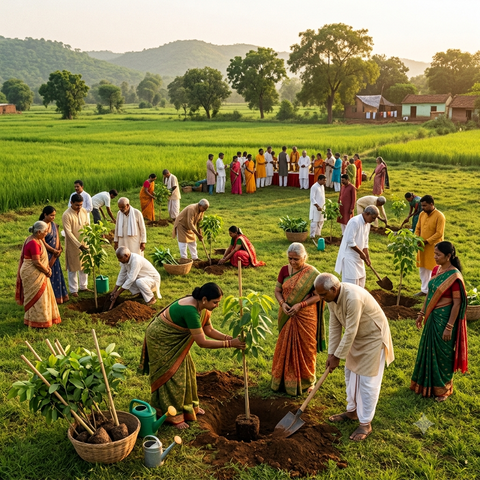
Agroforestry in Punjab is transforming how farmers grow food, manage land, and protect the natural environment. By deliberately integrating trees with crops and livestock, agroforestry creates a sustainable, productive ecosystem that benefits both farmers and the planet. In 2026, this approach is more urgent than ever as Punjab faces soil degradation, falling water tables, and the growing impact of climate change.
Punjab, often called the breadbasket of India, feeds millions across the country. However, decades of intensive monoculture farming have taken a heavy toll on the land and water. Agroforestry offers a proven, natural solution that restores ecological balance while boosting farm income and long-term resilience.
Organisations like Grow Billion Trees are actively partnering with farmers across India to plant trees, restore green cover, and work toward the goal of planting 100 crore trees by June 2030. Their mission supports the vision of Combating Climate Change Through Collective Action — and Punjab stands at the heart of this great transformation.
Why Punjab Urgently Needs Agroforestry ✅
Punjab's agricultural landscape is under severe and growing stress. The state has lost a significant portion of its natural tree cover over the past five decades. According to the World Wildlife Fund on deforestation and forest degradation, rapid land clearing for monoculture farming destroys soil health and accelerates biodiversity loss across vulnerable regions.
The consequences are visible and alarming. Groundwater levels in Punjab have dropped by several metres over the past two decades. Soil organic matter has sharply declined. Crop yields, while still substantial, now require increasing chemical inputs to maintain — weakening the very land that sustains millions of people.
Agroforestry in Punjab provides a conscious, mindful response to these challenges. Trees improve soil structure, reduce erosion, and enhance water retention naturally. They fix nitrogen, support pollinators, and create shade that lowers field temperatures. The result is a healthier, more resilient farm system for generations to come.
What Is Agroforestry? Understanding the Basics 💡
Agroforestry is the deliberate integration of trees and shrubs with field crops or livestock on the same land. It is a natural, sustainable practice rooted in ancient Indian farming traditions. Modern science now confirms what traditional farmers always knew — trees and crops thrive together when managed with care and purpose.
There are several key agroforestry systems well-suited to Punjab's climate and soil:
- Agrisilviculture: Combining trees with field crops like wheat, paddy, or vegetables for year-round productivity.
- Silvopastoral systems: Integrating trees with livestock grazing areas to improve fodder quality and provide natural shade.
- Windbreaks and shelterbelts: Planting rows of trees along farm borders to protect crops from damaging wind and soil loss.
- Alley cropping: Growing crops between rows of trees to maximise land productivity and light use.
- Food forests: Multi-layered tree and crop systems that support biodiversity, food security, and ecological restoration.
Each system is adaptable to Punjab's unique soil types, rainfall patterns, and farming practices. The flexibility of agroforestry makes it an ideal fit for both small-scale family farms and large agricultural operations.
Environmental Benefits of Agroforestry in Punjab ✅
The environmental impact of agroforestry in Punjab is profound and well-documented. Trees act as powerful carbon sinks, absorbing CO₂ and helping India move closer to its ambitious Net Zero Targets. According to United Nations Climate Change, land-based solutions like agroforestry are among the most effective and proven tools for reducing greenhouse gas emissions globally.
In Punjab, agroforestry can help restore the natural water cycle. Tree roots penetrate deep into the soil, improving water infiltration and recharging groundwater. This directly addresses the state's critical water crisis.
Moreover, agroforestry boosts biodiversity in wonderful ways. Trees attract birds, insects, and beneficial soil organisms that naturally control pests and improve pollination. This reduces the need for chemical pesticides, making farms safer and more eco-friendly. The green canopy also reduces local temperatures, creating a cooler microclimate that benefits both crops and surrounding communities.
Economic Benefits for Punjab's Farmers ⭐
Agroforestry in Punjab is not just good for the earth — it is great for farmers' livelihoods. Trees generate additional income streams beyond the main crop. Timber, fruit, medicinal plants, and biomass all provide value throughout the farming year. This income diversification is a proven buffer against crop failure and market volatility.
Agroforestry reduces input costs. Nitrogen-fixing species lower fertiliser needs. Windbreaks reduce crop losses. Shade trees lower irrigation demands by reducing evaporation from the soil.
In addition, agroforestry improves land value over time. Tree-covered farms attract higher prices in land markets. As verified carbon credit markets grow in India, farmers with documented tree cover can also earn additional revenue by selling certified carbon offsets — further boosting both income and environmental impact together.
Grow Billion Trees: Driving Agroforestry in Punjab 🌱
Grow Billion Trees plays a vital and hands-on role in expanding agroforestry in Punjab and across India. The organisation's mission — to enable everyone to Plant a tree in your Name and collectively plant 100 crore trees — directly supports the growth of sustainable agroforestry landscapes. We are glad to welcome farmers, communities, and corporates who share a deep love for our planet.
Our team provides end-to-end support for every agroforestry program. This includes site assessment, species selection based on local soil and climate data, and our signature 2-3ft Tree Planting + 3 Years Care + GeoTag commitment — ensuring every tree planted survives and thrives. The GeoTag technology allows farmers and supporters to track their trees in real time, building genuine trust and accountability into every plantation.
We ensure that our agroforestry programs align with science-based ecological restoration principles. Our partners include local agricultural universities, state forest departments, and community self-help groups. Together, we have established tree cover on thousands of hectares across Punjab's agricultural belts. Our approach is always hands-on — we work directly alongside farmers in the field, not just from offices.
Grow Billion Trees also supports corporate partners in achieving verified Net Zero Targets through large-scale agroforestry plantations in Punjab. Each corporate program is documented, geo-tagged, and monitored to deliver authentic, measurable environmental impact. According to the United Nations Environment Programme on forests, integrating trees into agricultural landscapes is one of the highest-impact actions available to businesses and governments today.
Key Tree Species for Agroforestry in Punjab 💡
Choosing the right species is essential for successful agroforestry in Punjab. Our team works with a carefully curated selection of native and compatible species suited to local conditions:
- Poplar (Populus deltoides): Fast-growing, high-value timber tree widely used in Punjab's agroforestry belts.
- Shisham (Dalbergia sissoo): A native hardwood that enriches soil naturally and provides valuable certified timber.
- Moringa: A multi-purpose nutritional tree that grows rapidly and significantly improves soil fertility.
- Amla (Indian Gooseberry): Excellent for food forests, providing organic fruit and medicinal value for farm households.
- Bamboo: A sustainable, fast-growing resource for construction, fodder, and high carbon sequestration.
- Subabul (Leucaena): A nitrogen-fixing species that boosts soil health and provides valuable fodder for livestock.
Species selection is always tailored to the farmer's goals — whether timber, fruit, fodder, or carbon restoration. The right species mix creates a diverse, resilient agroforestry system that grows in value every single year.
Agroforestry and India's Climate Goals ✅
India has committed to ambitious climate targets, including achieving net zero emissions by 2070. Agroforestry in Punjab can play a significant role in meeting these national goals. Trees sequester carbon, reduce emissions from soil degradation, and contribute to India's nationally determined contributions under the Paris Agreement.
The United Nations Sustainable Development Goals specifically highlight sustainable land use and forest restoration as critical pathways to a resilient future. Agroforestry directly supports SDG 13 (Climate Action), SDG 15 (Life on Land), and SDG 2 (Zero Hunger) — making it one of the most impactful and mindful interventions available today.
However, large-scale transformation requires collective action. Every farmer, corporate, and individual who chooses to support agroforestry in Punjab contributes to a bigger, greener mission. This is the wonderful power of trees — one planted tree creates ripple effects across the soil, water, air, and community around it.
How You Can Support Agroforestry in Punjab
Whether you are a farmer, a corporate leader, or an eco-conscious individual, you can actively contribute to agroforestry in Punjab. Grow Billion Trees makes it easy to plant trees, support restoration programs, and track your environmental impact through our secure GeoTag technology. Every contribution is verified and transparent.
Corporates can partner with us to achieve certified Net Zero Targets through verified agroforestry plantations. Individuals can plant trees in their name or as meaningful gifts for birthdays, memorials, or special occasions. Every tree planted with Grow Billion Trees includes three years of dedicated care — ensuring it grows into a lasting contribution to India's green future.
We warmly welcome farmers across Punjab to join our agroforestry programs. Our team provides free guidance, science-based species recommendations, and ongoing support throughout the planting journey. Together, we can transform Punjab's agricultural landscape into a thriving green ecosystem for future generations. Discover our agroforestry programs and take action today at Grow Billion Trees.
Frequently Asked Questions
What is agroforestry in Punjab?
Agroforestry in Punjab refers to the practice of integrating trees with crops and livestock on the same farmland. It improves soil health, water retention, biodiversity, and farm income while helping combat climate change through natural carbon sequestration.
Why is agroforestry important for Punjab's farmers?
Punjab faces serious challenges including falling groundwater levels, declining soil health, and volatile crop prices. Agroforestry provides additional income from trees, reduces input costs, and makes farms more resilient and sustainable over the long term.
What trees are best for agroforestry in Punjab?
Popular species include Poplar, Shisham, Moringa, Amla, Bamboo, and Subabul. The best species depends on the farmer's goals — timber, fruit, fodder, or carbon sequestration. Grow Billion Trees helps farmers identify and plant the right species for their land.
How does Grow Billion Trees support agroforestry in Punjab?
Grow Billion Trees provides end-to-end agroforestry support including site assessment, species selection, 2-3ft tree planting, and three years of care. GeoTag technology tracks every tree planted, ensuring full transparency and accountability for all stakeholders.
Can corporates use agroforestry in Punjab for carbon offsetting?
Yes. Corporates can partner with Grow Billion Trees to create verified agroforestry plantations in Punjab. These programs deliver measurable, certified carbon sequestration that supports Net Zero Targets and ESG reporting requirements.
How does agroforestry help Punjab's environment?
Agroforestry in Punjab restores soil health, recharges groundwater, increases biodiversity, sequesters carbon, and reduces chemical input use. It also lowers local temperatures and protects crops from wind erosion and soil loss.
What is the goal of Grow Billion Trees in Punjab?
Grow Billion Trees aims to plant 100 crore trees across India by June 2030, with Punjab as a key focus for agroforestry. The organisation partners with farmers, communities, and corporates to create sustainable, geo-tagged, long-term tree cover across agricultural landscapes.
How does GeoTag technology benefit agroforestry programs?
GeoTag technology maps every planted tree in real time, providing full transparency to donors, farmers, and corporate partners. It ensures each tree is verified, actively monitored, and properly cared for throughout the three-year care commitment.
Is agroforestry suitable for small farmers in Punjab?
Absolutely. Agroforestry systems are highly flexible and can be tailored to farms of any size. Even small landholdings benefit from integrating just a few rows of trees — improving soil, providing shade, and generating additional income without reducing crop area significantly.
How does agroforestry in Punjab support India's Net Zero goals?
Trees planted through agroforestry absorb CO₂, restore degraded soils, and reduce the emissions associated with chemical-intensive farming. As a result, agroforestry in Punjab directly contributes to India's nationally determined climate commitments and its path to net zero.
Growing Together Toward a Greener Punjab
Agroforestry in Punjab is more than a farming technique — it is a movement. It brings together farmers, communities, corporates, and environmental organisations to transform the land for a sustainable, thriving future. The results are wonderful: healthier soils, cleaner water, thriving biodiversity, and stronger farm incomes for everyone involved.
Grow Billion Trees is proud to lead this movement, one tree at a time. With our hands-on programs, secure GeoTag technology, and unwavering commitment to 100 crore trees, we are building a greener, more resilient India together. Explore our agroforestry programs and discover how you can make a lasting difference — because every tree planted is a step toward the future we all love and want to nurture.
Agroforestry with Grow Billion Trees
Companies fund fruit and timber trees through CSR, and farmers plant them on their own land. The farmer keeps the fruit and timber income: up to 3× farm income compared with conventional two-crop farming. Registration for farmers is free.
- Agroforestry programme for companies
- Agroforestry for farmers: register free
- Agroforestry projects
- Top trees used in agroforestry in India
- CSR rules for tree plantation
Talk to our team about a programme for your company.