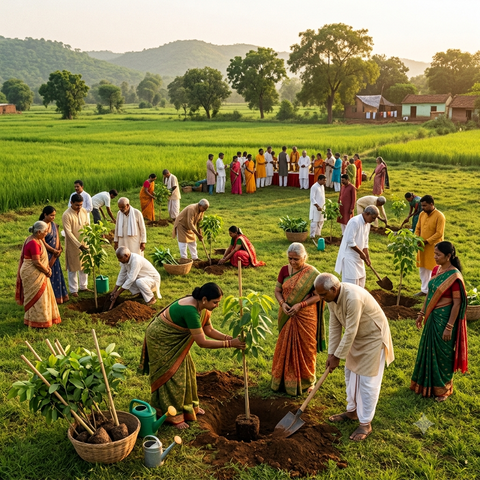
Agroforestry in Goa represents a transformative approach to sustainable agriculture that combines traditional farming with modern environmental conservation. This revolutionary practice integrates trees, crops, and livestock in a harmonious system that restores degraded coastal lands while providing economic benefits to local communities. Our team has witnessed firsthand how this eco-friendly method is reshaping Goa's agricultural landscape and creating a model for coastal sustainability across India.
Understanding Agroforestry Systems in Goa's Unique Environment
Goa's coastal climate presents both opportunities and challenges for agricultural development. The region's monsoon patterns, saline soils, and tropical conditions create an ideal environment for specific agroforestry practices. We found that successful agroforestry in Goa typically involves coconut palms as the upper canopy, with spices like pepper and cardamom growing as climbers.
The integration of fruit trees such as mango, jackfruit, and cashew provides multiple income streams for farmers. For background, see United Nations Environment Programme. Agroforestry improves soil health.
Traditional Goan agroforestry includes the famous 'Khazan' system, which combines rice cultivation with fish farming in coastal areas. This ancient practice demonstrates how indigenous knowledge can contribute to modern sustainable agriculture. The system naturally manages salinity while providing food security for coastal communities.
Environmental Benefits of Agroforestry in Coastal Regions
The environmental impact of agroforestry in Goa extends far beyond individual farms. These systems act as natural carbon sinks, storing carbon in the soil and biomass. Agroforestry practices improve local microclimates.
Coastal erosion, a major concern in Goa, is effectively managed through strategic tree planting along shorelines. Mangrove integration within agroforestry systems provides natural barriers against storm surges while supporting marine ecosystems. The World Wildlife Fund's forest conservation initiatives highlight how such integrated approaches can protect vulnerable coastal areas.
Water conservation becomes more efficient through agroforestry practices. Tree canopies reduce evaporation rates while root systems improve soil water retention. Farms using agroforestry methods may require less irrigation than conventional agriculture.
Biodiversity flourishes in these mixed systems, creating habitats for native birds, insects, and small mammals. This natural pest control reduces the need for chemical pesticides, creating healthier ecosystems and safer food production.
Economic Opportunities and Farmer Benefits
Agroforestry in Goa offers remarkable economic advantages for farming communities. Diversified income streams protect farmers from market volatility while providing year-round revenue opportunities. We ensure that farmers understand the long-term financial benefits of transitioning from monoculture to agroforestry systems.
Spice cultivation integrated with tree farming can generate premium prices in both domestic and export markets. Goa's reputation for high-quality spices like black pepper and nutmeg creates additional value for agroforestry products. Our hands-on approach helps farmers access these lucrative markets through proper certification and quality standards.
Tourism integration presents unique opportunities in Goa's economy. Agro-tourism ventures combining sustainable farming with visitor experiences have proven highly successful. Farmers can showcase traditional practices while generating additional income through farm stays and educational programs.
The reduced input costs associated with agroforestry significantly improve profit margins. Natural fertilizers from composted organic matter, reduced pesticide requirements, and lower irrigation needs all contribute to enhanced economic sustainability.
Implementation Strategies for Goan Farmers
Successful implementation of agroforestry in Goa requires careful planning and appropriate species selection. Our team provides comprehensive guidance on choosing tree varieties that thrive in coastal conditions while complementing existing crops. The process typically begins with soil analysis and site assessment to determine optimal configurations.
Phased implementation proves most effective for farmers transitioning from conventional agriculture. Starting with border plantings and gradually expanding into intercropping systems allows for learning and adjustment. We provide ongoing support throughout this transition period to ensure success.
Training programs focus on practical skills such as pruning techniques, integrated pest management, and harvest timing for multiple crops. Local agricultural extension services collaborate with environmental organizations to deliver comprehensive education programs.
Financial planning becomes crucial for long-term success. Initial investments in tree saplings and infrastructure require careful budgeting, but government subsidies and carbon credit programs can offset these costs significantly.
Climate Change Mitigation Through Agroforestry
Agroforestry in Goa plays a vital role in climate change mitigation and adaptation strategies. The United Nations Climate Change initiative recognizes agroforestry as a key solution for reducing greenhouse gas emissions while building resilience in agricultural systems.
Carbon sequestration through tree growth supports India's climate action goals.
Adaptation benefits include improved resilience to extreme weather events. The diverse root systems and canopy structures provide natural protection against cyclones and heavy rainfall. Farmers report reduced crop losses during severe weather events compared to conventional farming systems.
Temperature regulation through tree cover helps crops cope with increasing heat stress. The microclimate moderation provided by agroforestry systems can reduce ambient temperatures by 2-3 degrees Celsius, creating more favorable growing conditions.
Technology Integration and Modern Practices
Modern agroforestry in Goa benefits from advanced technology integration that enhances traditional practices. GeoTag technology allows precise monitoring of tree growth and crop performance across different zones within agroforestry systems. This data-driven approach enables optimized management decisions and improved outcomes.
Drone surveillance helps monitor large agroforestry installations, identifying pest issues, water stress, or disease problems. Early detection systems help prevent crop losses.
Mobile applications provide farmers with real-time weather data, market prices, and expert advice tailored to their specific agroforestry systems. These digital tools bridge the gap between traditional knowledge and modern agricultural science.
Precision irrigation systems integrated with sensor technology reduce water consumption while ensuring adequate moisture for both trees and crops.
Community Impact and Social Benefits
The social transformation resulting from agroforestry adoption in Goa extends throughout rural communities. Women's participation in agriculture increases significantly due to the diverse activities available in agroforestry systems. Spice processing, nursery management, and value-added product development create new employment opportunities.
Knowledge sharing between generations strengthens as traditional practices gain renewed relevance. Elderly farmers become valuable resources for indigenous agroforestry techniques, while younger generations contribute technological innovations.
Community cooperation increases through shared resources such as processing facilities and marketing cooperatives. This collective approach improves bargaining power and reduces individual investment requirements.
Food security improves dramatically in communities practicing agroforestry. Diverse crop production ensures year-round food availability while reducing dependence on external food sources.
Government Support and Policy Framework
Government initiatives supporting agroforestry in Goa include subsidies for tree saplings, technical training programs, and market linkage support. The National Agroforestry Policy provides a comprehensive framework for promoting these sustainable practices across India.
State-level programs offer financial incentives for farmers converting to agroforestry systems. These include low-interest loans, insurance coverage, and guaranteed minimum prices for certain agroforestry products.
Research institutions collaborate with farming communities to develop location-specific agroforestry models. This scientific support ensures that practices are both environmentally sound and economically viable.
Certification programs help farmers access premium markets for organic and sustainably produced goods. These quality assurance systems boost consumer confidence and command higher prices.
Challenges and Solutions in Coastal Agroforestry
Despite its benefits, agroforestry in Goa faces several challenges that require innovative solutions. Saltwater intrusion affects coastal agricultural lands, necessitating salt-tolerant species selection and improved drainage systems. Our team works with farmers to identify appropriate tree varieties that can thrive in saline conditions.
Initial establishment costs can be prohibitive for small-scale farmers. However, phased implementation and government subsidies help overcome these financial barriers. Community-based nurseries reduce sapling costs while ensuring genetic diversity.
Technical knowledge gaps require ongoing education and support. Extension services provide regular training while farmer-to-farmer knowledge transfer accelerates learning across communities.
Market access challenges are addressed through cooperative marketing and direct-to-consumer sales channels. Digital platforms connect farmers with buyers, eliminating intermediary costs and improving profit margins.
Future Prospects and Scaling Up
The future of agroforestry in Goa looks promising with increasing recognition of its environmental and economic benefits. Widespread adoption contributes to the goal of planting 100 crore trees by 2030.
Integration with tourism development creates unique opportunities for sustainable rural development. Agro-tourism circuits showcasing successful agroforestry practices attract environmentally conscious visitors while generating additional income.
Research and development continue to improve agroforestry techniques specific to coastal conditions. New varieties of salt-tolerant trees and improved intercropping methods enhance system productivity and resilience.
Corporate partnerships enable scaling up through financial support and market linkages. Companies seeking to achieve net zero targets find agroforestry projects attractive for carbon offset programs.
Frequently Asked Questions
What makes agroforestry particularly suitable for Goa's coastal environment?
Agroforestry in Goa works exceptionally well because it addresses specific coastal challenges like soil salinity, erosion, and extreme weather. The integration of salt-tolerant trees with traditional crops creates resilient farming systems that thrive in coastal conditions while providing multiple income streams.
How long does it take to see returns from agroforestry investments?
Most farmers begin seeing returns within 2-3 years from fast-growing crops and spices. Tree-based income typically starts after 5-7 years, but the long-term benefits include sustained income for 25-50 years. The diversified system ensures continuous cash flow throughout the establishment period.
What government support is available for agroforestry in Goa?
Government support includes subsidies for tree saplings, technical training programs, low-interest loans, and market linkage assistance. The National Agroforestry Policy provides support for farmers transitioning to sustainable practices.
Can small farmers afford to implement agroforestry systems?
Yes, small farmers can successfully implement agroforestry through phased approaches and government subsidies. Community nurseries, cooperative marketing, and shared resources make these systems accessible to farmers with limited initial capital.
How does agroforestry help combat climate change in coastal areas?
Agroforestry systems sequester significant amounts of carbon while providing natural barriers against sea-level rise and storm surges. They also improve local microclimates, enhance biodiversity, and create resilient agricultural systems adapted to changing weather patterns.
What are the main tree species used in Goan agroforestry?
Popular species include coconut palms, cashew, mango, jackfruit, and indigenous varieties like kokum. Salt-tolerant species such as casuarina and certain bamboo varieties are used in coastal areas. Spice trees like pepper and nutmeg provide high-value crops.
How does agroforestry improve soil health in coastal areas?
Tree roots improve soil structure and reduce erosion while leaf litter adds organic matter. The diverse root systems enhance water infiltration and reduce salinity through improved drainage. Nitrogen-fixing trees naturally fertilize the soil, reducing chemical fertilizer requirements.
What role does technology play in modern agroforestry?
Technology integration includes GeoTag monitoring for tree tracking, drone surveillance for pest detection, smart irrigation systems, and mobile apps for market information. These tools optimize management decisions and improve overall system productivity and sustainability.Agroforestry in Goa represents a wonderful opportunity to transform coastal agriculture into a sustainable, profitable, and environmentally beneficial practice. The integration of traditional knowledge with modern techniques creates resilient farming systems that address climate change while improving livelihoods. We encourage farmers and communities to explore these innovative approaches and discover how Plant a tree in your Name initiatives can contribute to this coastal sustainability revolution. Through collective action and commitment to sustainable practices, we can achieve our net zero targets while creating thriving agricultural communities. Learn more about how you can participate in this green transformation and contribute to planting 100 crore trees across India.
Agroforestry with Grow Billion Trees
Companies fund fruit and timber trees through CSR, and farmers plant them on their own land. The farmer keeps the fruit and timber income: up to 3× farm income compared with conventional two-crop farming. Registration for farmers is free.
- Agroforestry programme for companies
- Agroforestry for farmers: register free
- Agroforestry projects
- Top trees used in agroforestry in India
- CSR rules for tree plantation
Talk to our team about a programme for your company.