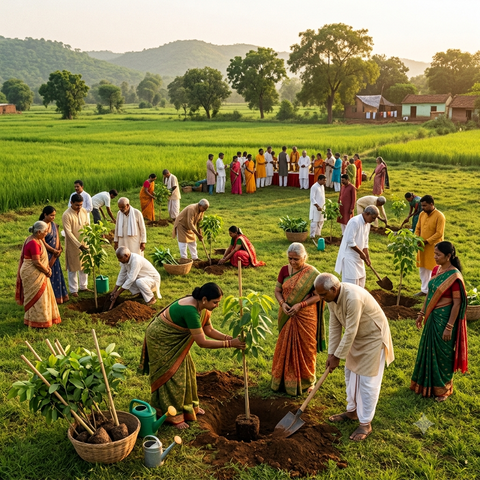
Silvipasture in Rajasthan is a sustainable land-use system that integrates tree cultivation with livestock grazing on the same land. This approach can boost farmer income, restore degraded soil, and build climate resilience in a state facing significant land degradation.
Rajasthan has low forest cover. Livestock depend on sparse, overused grazing lands called gochar. These lands are degrading rapidly. However, silvipasture is changing that reality — tree by tree, farm by farm, family by family.
What Is Silvipasture? ✅
Silvipasture is an agroforestry practice integrating trees, forage crops, and livestock on the same land. It is one of the most land-efficient approaches to sustainable farming available today. Trees provide shade, fodder, timber, and carbon sequestration. Livestock, in turn, manage undergrowth and cycle nutrients back into the soil.
According to the United Nations Sustainable Development Goals, land restoration practices like silvipasture directly support SDG 15 (Life on Land) and SDG 13 (Climate Action). This makes it a globally recognised tool in the fight against climate change and land degradation. In India, silvipasture is gaining strong momentum, especially in semi-arid regions like Rajasthan.
Why Rajasthan Needs Silvipasture Urgently ⚠️
Rajasthan is home to the Thar Desert, India's largest hot desert. Much of the state is degraded or wasteland with low rainfall. Livestock rearing is a primary livelihood for rural families across the state.
Traditional grazing systems are under severe stress. Overgrazing, deforestation, and erratic monsoons have stripped the land of natural vegetation. The World Wildlife Fund's research on deforestation and forest degradation highlights how such land-use changes destroy biodiversity and accelerate soil erosion. Rajasthan is experiencing all of these threats simultaneously and urgently.
Moreover, the state loses approximately 1.2 lakh hectares of productive land to desertification every decade. Silvipasture stabilises soil, increases biomass, and provides year-round fodder. It creates a natural buffer against drought and extreme heat — both worsening due to climate change in 2026 and beyond.
Key Benefits of Silvipasture in Rajasthan 💡
The impact of silvipasture is measurable and wide-ranging. Our team has documented transformative results across pilot zones in Barmer, Jaisalmer, Jodhpur, and Nagaur districts. These benefits touch every dimension of rural life.
- ✅ Increased Fodder Availability: Tree species like Khejri, Acacia senegal, and Ber provide nutritious leaf fodder even in the driest months.
- ✅ Improved Soil Health: Tree roots break up compacted soil, improve water infiltration, and add organic matter through leaf litter.
- ✅ Carbon Sequestration: A well-managed silvipasture system can sequester 2–5 tonnes of CO₂ per hectare annually — a verified, measurable climate win.
- ✅ Higher Farmer Income: Farmers earn from timber, fruit, gum, and livestock products — multiple income streams from one plot of land.
- ✅ Reduced Heat Stress for Livestock: Tree canopies provide natural shade, reducing heat stress and potentially improving livestock productivity.
- ✅ Biodiversity Support: Trees attract birds and insects, restoring local ecological balance and pollinator populations.
Silvipasture systems can improve farm household income compared to conventional grazing. Income comes from timber, fruit, fodder, and improved livestock productivity. These benefits make silvipasture worth considering across Rajasthan.
Native Tree Species That Power Silvipasture ⭐
Rajasthan has a range of native, drought-resistant tree species suited for silvipasture. Once established, native species can thrive in low-rainfall zones with minimal maintenance.
- Khejri (Prosopis cineraria): The sacred state tree of Rajasthan. Resilient, nitrogen-fixing, and invaluable for fodder and soil health.
- Rohida (Tecomella undulata): A hardy timber species with beautiful flowers that attract pollinators and support biodiversity.
- Ber (Ziziphus mauritiana): Produces nutritious fruits for humans and animals alike. Easy to grow and highly productive.
- Acacia senegal: An important gum-producing species that fixes nitrogen and provides excellent fodder during lean months.
- Neem (Azadirachta indica): A fast-growing, multi-purpose tree offering shade, natural pest control, and medicinal value.
- Dhok (Anogeissus pendula): A naturally dominant species in Rajasthan's hill forests, excellent for soil binding and fodder.
How Silvipasture Transforms Grazing Systems Step by Step →
Setting up a silvipasture system requires planning and community involvement. Farmer participation is important for long-term success. Here is how a typical silvipasture setup works on the ground.
- Land Assessment: Evaluate soil type, water availability, and existing vegetation. Identify the most degraded patches needing urgent intervention first.
- Species Selection: Choose native, drought-tolerant trees suited to local soil and rainfall patterns. Community elders often provide invaluable traditional knowledge.
- Planting Layout: Trees are planted in rows with 5–10 metre spacing. This allows enough sunlight for forage crops and free movement of livestock.
- Forage Integration: Plant grass species like Cenchrus ciliaris (buffel grass) or Stylosanthes between tree rows for ground cover and fodder production.
- Fencing and Protection: Young trees need protection from grazing animals during the first 2–3 years. Simple fencing or community agreements accomplish this effectively.
- Monitored Rotational Grazing: Once trees are established, livestock graze in a managed rotational system. This prevents overgrazing and allows pasture recovery between cycles.
Grow Billion Trees: Nurturing Silvipasture Across Rajasthan ✅
Grow Billion Trees is glad and proud to support silvipasture transformation across Rajasthan as part of its mission to plant 100 crore trees in India by June 2030. We deeply believe that trees and livelihoods must grow together — that is the heart of everything we do.
We provide 2-3ft Tree Planting + 3 Years Care + GeoTag tracking for every tree planted through our platform. This means you can watch your tree grow, verified and geo-tagged on a live digital map. It is a wonderful way to stay connected to your environmental impact long after planting day.
Through our hands-on programs in Rajasthan, we work directly with farmers to establish silvipasture plots on degraded gochar and private agricultural land. We love seeing farmers' livelihoods flourish alongside their trees. Our partners report that silvipasture adoption improves not just income, but also farmer confidence and deep community pride in their restored landscape.
You can Plant a tree in your Name for just ₹299 and contribute directly to silvipasture and reforestation programs in Rajasthan. Each tree planted is a living vote for a greener, more sustainable future — for people, for livestock, and for the planet we all share.
As part of our commitment to Combating Climate Change Through Collective Action, we also support corporate clients in achieving their Net Zero Targets through verified, transparent tree-planting on silvipasture lands. Companies across Mumbai, Bangalore, Delhi, Chennai, and Hyderabad are choosing this authentic, impact-driven approach. We provide certified, secure, and guaranteed environmental outcomes that meet international ESG reporting standards.
Silvipasture and Climate Resilience: The Bigger Picture 💡
Climate change is making Rajasthan's arid conditions more extreme each year. The United Nations Climate Change portal confirms that semi-arid regions like Rajasthan face increased drought frequency and intensity in the decades ahead. Silvipasture is one of the most effective, proven, nature-based solutions to build community resilience against these growing threats.
Trees in a silvipasture system act as windbreaks, reducing soil erosion from the hot, dry Loo winds sweeping Rajasthan each summer. They increase local humidity through transpiration and help recharge groundwater tables. Furthermore, the United Nations Environment Programme's forest conservation research confirms that integrating trees into agricultural landscapes can measurably improve local rainfall patterns over time.
For a state where water scarcity is a daily challenge for millions, silvipasture is transforming lives in the most fundamental way. It is restoring the land's own capacity to nurture, sustain, and thrive — season after season, generation after generation.
Challenges and Practical Solutions
Silvipasture adoption faces real challenges in Rajasthan. Land tenure issues, lack of initial capital, and limited awareness are common barriers among farming communities. These challenges can be addressed with appropriate support structures.
Government schemes like the National Agroforestry Policy and PM Krishi Sinchayee Yojana provide subsidies for tree planting and drip irrigation. Organisations like Grow Billion Trees supply certified, native saplings along with technical support and long-term GeoTag monitoring. Together, these partners are helping farmers move beyond subsistence grazing toward thriving, sustainable agro-pastoral systems that are green, resilient, and profitable.
In 2026, Rajasthan's state government has also committed to restoring 25 lakh hectares of degraded land under the Bonn Challenge pledge. Silvipasture is a cornerstone strategy in achieving this ambitious and necessary goal. The momentum is real, and it is building fast.
Frequently Asked Questions
What is silvipasture in Rajasthan?
Silvipasture in Rajasthan is an integrated land-use system combining trees, pasture grasses, and livestock on the same land. It is especially suited to Rajasthan's semi-arid conditions and improves soil health, fodder availability, and farmer income simultaneously.
Which tree species are best for silvipasture in Rajasthan?
The best native species include Khejri (Prosopis cineraria), Neem, Ber, Rohida, Dhok, and Acacia senegal. These are drought-resistant and provide fodder, timber, gum, and ecological benefits perfectly suited to Rajasthan's natural climate.
How does silvipasture help combat climate change?
Silvipasture sequesters carbon in tree biomass and soil, reduces desertification, protects against wind and water erosion, and improves local water cycles. A well-managed system can sequester 2–5 tonnes of CO₂ per hectare every year — a meaningful, certified climate contribution.
Can farmers genuinely earn more from silvipasture?
Yes. Silvipasture farmers can earn income from multiple sources: timber, fruit, gum, improved livestock productivity, and fodder sales throughout the year.
How does Grow Billion Trees support silvipasture in Rajasthan?
Grow Billion Trees plants native trees on degraded and farmland across Rajasthan as part of its mission to plant 100 crore trees in India. Every tree receives 2-3ft Tree Planting + 3 Years Care + GeoTag tracking, ensuring verified and transparent long-term impact for every contributor.
What is the minimum investment to start silvipasture?
With government subsidies and support from organisations like Grow Billion Trees, farmers can start silvipasture on as little as 0.5 hectares of land. Initial costs are offset by diverse income generated within 3–5 years as trees begin to mature and produce.
Is silvipasture suitable for small-scale farmers?
Absolutely. Silvipasture is highly scalable and works well on small plots. Small-scale farmers benefit greatly because it diversifies income, reduces dependence on single crops, and builds long-term resilience against climate shocks and market fluctuations.
How can I personally support silvipasture efforts in Rajasthan?
You can support by choosing to Plant a tree in your Name through Grow Billion Trees for just ₹299. Your contribution directly funds tree planting, three years of professional care, and live GeoTag monitoring in silvipasture zones across Rajasthan and across India.
A Greener Rajasthan: The Future We Are Building Together
Silvipasture in Rajasthan is not just an agricultural technique — it is a movement rooted in hope. It is farmers choosing to work with nature rather than against it. It is communities reclaiming degraded land and building a future worth passing on. It is India's conscious, ground-level step toward its Net Zero Targets and a truly sustainable tomorrow.
At Grow Billion Trees, we are happy and glad to walk this journey alongside farmers, communities, and conscious individuals who care deeply about this planet. We ensure every tree planted contributes to verified, lasting impact — tracked, cared for, and growing. Together, through Combating Climate Change Through Collective Action, we can transform Rajasthan's grazing landscapes into thriving green ecosystems that sustain people, livestock, and wildlife alike for generations to come.
Explore our programs today and Plant a tree in your Name for just ₹299. Discover how your single, mindful act of planting helps build the great green future of 100 crore trees — one wonderful tree at a time. Get started at Grow Billion Trees and be part of the change Rajasthan needs.
Agroforestry with Grow Billion Trees
Companies fund fruit and timber trees through CSR, and farmers plant them on their own land. The farmer keeps the fruit and timber income: up to 3× farm income compared with conventional two-crop farming. Registration for farmers is free.
- Agroforestry programme for companies
- Agroforestry for farmers: register free
- Agroforestry projects
- Top trees used in agroforestry in India
- CSR rules for tree plantation
Talk to our team about a programme for your company.