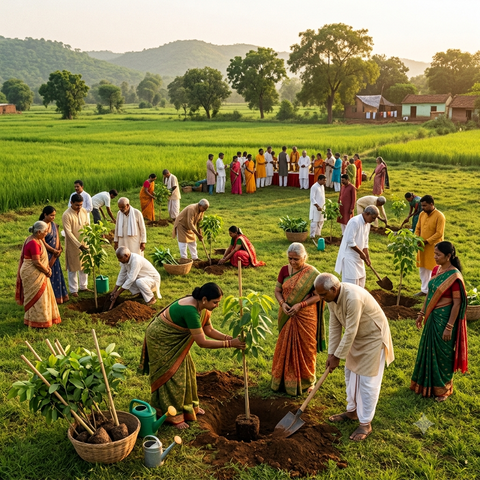
Agroforestry in Uttar Pradesh: Transforming Agriculture Through Sustainable Tree Integration
Agroforestry in Uttar Pradesh combines traditional farming with strategic tree planting, creating sustainable ecosystems that benefit both farmers and the environment. This practice can help boost agricultural productivity.
Uttar Pradesh, home to over 200 million people, faces significant environmental challenges. However, agroforestry offers a green solution that addresses climate change, soil degradation, and farmer income simultaneously. We're glad to share how this practice is creating positive impact across the heartland of India.
Understanding Agroforestry Systems in Uttar Pradesh
Agroforestry integrates trees, crops, and livestock in the same agricultural space. This sustainable approach creates multiple income streams for farmers while nurturing the planet. Our team has witnessed farmers in districts like Meerut and Lucknow successfully implementing these systems.
The practice involves planting trees alongside crops in carefully planned arrangements. Trees provide shade, prevent soil erosion, and improve water retention. Meanwhile, crops continue to grow between tree rows, maximizing land use efficiency.
According to the United Nations Sustainable Development Goals, agroforestry directly contributes to multiple objectives including zero hunger, climate action, and life on land. This makes it a powerful tool for sustainable development in Uttar Pradesh.
Environmental Benefits of Tree Integration ✅
Agroforestry in Uttar Pradesh delivers remarkable environmental advantages. Trees naturally sequester carbon dioxide, helping combat climate change through collective action. A single mature tree can absorb up to 48 pounds of CO2 annually, making every planted tree a climate warrior.
Soil health improves with tree integration. Tree roots prevent erosion while leaf litter enriches soil with organic matter. Soil fertility improves over time with implementation.
Water conservation becomes more effective through agroforestry systems. Trees reduce water evaporation and improve groundwater recharge. The United Nations Environment Programme emphasizes how forests and trees play crucial roles in maintaining water cycles and preventing desertification.
Economic Impact on Uttar Pradesh Farmers 💡
Farmers practicing agroforestry enjoy multiple revenue streams throughout the year. While crops provide seasonal income, trees offer long-term financial security through timber, fruit, and other forest products. We ensure farmers understand these economic benefits before starting their journey.
Initial investment in agroforestry can pay off over time. Farmers can increase their income through agroforestry. This economic benefit can help rural communities.
Market demand for agroforestry products continues growing in 2026. Consumers increasingly prefer organic and sustainably produced goods, creating premium markets for agroforestry farmers. This trend supports the goal of planting 100 crore trees while generating economic value.
Popular Agroforestry Models in the State
Silvo-pastoral systems combine trees, crops, and livestock grazing. This model works wonderfully in western Uttar Pradesh where farmers raise cattle alongside wheat and sugarcane cultivation. Trees provide fodder and shade for animals while crops generate primary income.
Alley cropping involves planting trees in rows with crops grown between them. This system maximizes land use efficiency and can be effective for small landholders and vegetable cultivation.
Home gardens represent another successful model where families plant fruit trees around their houses. These systems provide nutrition security and additional income from surplus produce. The practice of Plant a tree in your Name becomes meaningful when families create these productive spaces.
Government Initiatives and Support Programs ⭐
The Uttar Pradesh government actively promotes agroforestry through various schemes. The National Agroforestry Policy provides financial incentives and technical support to farmers adopting these practices. We're happy to help farmers navigate these programs and access available benefits.
Government programs support agroforestry through subsidies, free saplings, and technical training. These make agroforestry more accessible to farmers across different backgrounds.
Research institutions develop climate-appropriate tree species and farming techniques. Species selection suited to Uttar Pradesh conditions improves agroforestry outcomes.
Climate Change Mitigation Through Trees
Agroforestry systems create natural climate solutions that help achieve India's carbon neutrality goals. Trees absorb atmospheric carbon while providing ecosystem services that enhance agricultural resilience. The United Nations Climate Change initiative recognizes agroforestry as a key strategy for climate adaptation and mitigation.
Temperature regulation becomes possible through strategic tree placement. Trees create microclimates that protect crops from extreme weather events. Our partners report 2-3°C temperature reduction in agroforestry fields during hot summers.
Biodiversity conservation improves significantly with tree integration. Agroforestry systems support various bird species, beneficial insects, and soil microorganisms. This ecological diversity strengthens the overall resilience of agricultural systems against pests and diseases.
Technology Integration in Modern Agroforestry
GeoTag technology helps monitor tree growth and health in agroforestry systems. Farmers can track their trees' progress and receive care recommendations through mobile applications. This 2-3ft Tree Planting + 3 Years Care + GeoTag approach ensures higher survival rates.
Drone technology assists in planning optimal tree placement and monitoring large agroforestry areas. Satellite imagery helps assess vegetation health and identify areas needing attention. These technological tools make agroforestry more efficient and manageable.
Digital platforms connect agroforestry farmers with markets and buyers. Online marketplaces help farmers sell their produce directly to consumers, improving profit margins. This technological integration supports the economic sustainability of agroforestry systems.
Success Stories from Uttar Pradesh Farmers
Farmers can integrate trees such as eucalyptus with wheat cultivation through agroforestry. This approach can improve farm income.
Sunita Devi from Varanasi created a successful agroforestry system combining mango trees with vegetable cultivation. Her integrated approach provides year-round income and has made her farm a model for women farmers across the district.
The village of Khurja implemented community agroforestry covering 200 acres. This collective effort improved groundwater levels and created employment opportunities for local youth. Their success demonstrates the power of community-driven environmental action.
Challenges and Solutions in Implementation
Initial establishment costs can be challenging for small farmers. However, government subsidies and microfinance options help overcome this barrier. We provide guidance on accessing financial support and planning cost-effective implementations.
Technical knowledge gaps sometimes limit adoption rates. Training programs and farmer-to-farmer learning networks address this challenge effectively. Our team conducts regular workshops to share best practices and troubleshoot common problems.
Market access for agroforestry products requires development. Creating farmer producer organizations and connecting with processing units helps solve this issue. These solutions ensure farmers can profitably sell their diverse produce.
Future Prospects and Expansion Plans
Agroforestry in Uttar Pradesh is expanding rapidly with government support and farmer enthusiasm. The state aims to cover 2 million hectares under agroforestry by 2030, contributing significantly to the national goal of 100 crore trees.
Research and development continue improving agroforestry techniques. New tree varieties and farming methods promise even better results for future implementations. Climate-resilient species development ensures long-term sustainability of these systems.
Corporate partnerships are emerging to support large-scale agroforestry projects. Companies seeking to achieve Net Zero Targets find agroforestry an effective carbon offset solution. These partnerships provide additional funding and technical expertise for expansion.
Frequently Asked Questions
What is the best time to start agroforestry in Uttar Pradesh?
The monsoon season (June-September) is ideal for establishing agroforestry systems. Trees planted during this period have better survival rates due to adequate moisture. However, with proper irrigation, planting can be done year-round.
Which tree species work best for agroforestry in Uttar Pradesh?
Popular choices include eucalyptus, poplar, mango, guava, and neem trees. The selection depends on soil type, climate conditions, and intended use. We recommend consulting local agricultural experts for species-specific guidance.
How much land is required for agroforestry implementation?
Agroforestry can be implemented on any farm size, from small home gardens to large commercial farms. Even a 0.5-acre plot can benefit from strategic tree integration. The key is proper planning and appropriate tree spacing.
What government support is available for agroforestry farmers?
Government programs provide subsidies, free saplings, and technical training for agroforestry. Farmers can access these through local agricultural departments.
How long does it take to see economic benefits from agroforestry?
Initial benefits like improved crop yields appear within 2-3 years. Significant tree-based income typically starts after 5-7 years depending on tree species. However, the long-term economic gains make the investment worthwhile.
Can agroforestry help achieve carbon neutrality goals?
Yes, agroforestry systems are excellent carbon sinks that help achieve Net Zero Targets. A well-managed agroforestry system can sequester 3-10 tons of CO2 per hectare annually, contributing significantly to climate change mitigation.
What are the main challenges in agroforestry adoption?
Common challenges include initial investment costs, technical knowledge gaps, and market access issues. However, government support programs and farmer training initiatives effectively address these obstacles.
How does agroforestry improve soil health?
Trees prevent soil erosion, add organic matter through leaf litter, and improve soil structure. Root systems enhance water infiltration and nutrient cycling. These benefits result in healthier, more productive soils over time.
Taking Action for a Greener Future
Agroforestry in Uttar Pradesh can support sustainable agriculture and environmental restoration. This practice can offer farmers economic benefits while contributing to ecosystem health. Successful implementation requires proper planning, technical support, and community engagement.
The journey toward a greener Uttar Pradesh begins with individual farmers making conscious choices to integrate trees into their agricultural systems. With government support, technological tools, and proven success stories, agroforestry offers a wonderful path forward for the state's agricultural future.
Ready to transform your farm through agroforestry? Explore our comprehensive tree planting programs and discover how you can Plant a tree in your Name while building a sustainable agricultural legacy. Together, we can achieve the goal of 100 crore trees and create lasting positive impact for generations to come.
Agroforestry with Grow Billion Trees
Companies fund fruit and timber trees through CSR, and farmers plant them on their own land. The farmer keeps the fruit and timber income: up to 3× farm income compared with conventional two-crop farming. Registration for farmers is free.
- Agroforestry programme for companies
- Agroforestry for farmers: register free
- Agroforestry projects
- Top trees used in agroforestry in India
- CSR rules for tree plantation
Talk to our team about a programme for your company.