
Anil Agarwal: Transforming Environmental Leadership for India

Anil Agarwal (1947–2002) was an Indian environmental journalist and founder of the Centre for Science and Environment (CSE) who transformed India's environmental movement by making ecological issues central to public discourse. Born in Kanpur and trained as a mechanical engineer, he used rigorous scientific research and popular writing to shift how India understood sustainability and resource conservation.
Anil Agarwal stands as one of India's most transforming environmental leaders — a visionary journalist who became the conscience of India's green movement. He founded the Centre for Science and Environment (CSE) in New Delhi in 1980 and forever changed how India understands sustainability, natural resource conservation, and community-driven climate action. His eco-conscious legacy continues to inspire organizations like Grow Billion Trees, whose mission of Combating Climate Change Through Collective Action reflects everything Anil Agarwal stood for.
We find his philosophy deeply resonant in our own work every day. His belief that people — not just policies — drive environmental change is something our team embraces wholeheartedly. By making it easy for anyone to Plant a tree in your Name for just ₹299, we honour his vision of a mindful, sustainable, and green India.
Who Was Anil Agarwal? ✅
Anil Agarwal (1947–2002) was a pioneering Indian environmentalist, science journalist, and social activist. Born in Kanpur, he trained as a mechanical engineer before turning to environmental journalism. His early writing for the Hindustan Times brought ecological issues to millions of Indian readers for the very first time.
He founded CSE in 1980 with a mission to combine rigorous scientific research with public communication. His landmark publications — The State of India's Environment and Dying Wisdom — became foundational texts for Indian environmental policy. According to the United Nations Sustainable Development Goals, comprehensive environmental reporting like Agarwal's plays a vital role in driving global sustainability targets.
Moreover, Anil Agarwal was among the first Indian voices to frame environmental degradation as a social justice issue. He argued that the poor — who depend most directly on natural resources — suffer most from ecological destruction. This perspective gave India's environmental movement a powerful and enduring moral foundation.
Anil Agarwal's Most Transforming Contributions ⭐
Agarwal's impact on Indian environmentalism is vast and proven. He didn't just write about problems — he delivered practical, community-rooted solutions. Here are some of his most wonderful and lasting contributions to India's green future:
- ✅ Founding CSE (1980): Created India's most respected environmental think tank, combining science with grassroots advocacy.
- ✅ State of India's Environment Reports: These landmark reports gave policymakers hard data on air, water, and forest health.
- ✅ Rainwater Harvesting Revival: His advocacy for traditional water conservation systems transformed rural water policy nationwide.
- ✅ Climate Equity Framework: He championed India's right to development while holding industrialized nations accountable for historical emissions.
- ✅ Anil Agarwal Award: Established posthumously by CSE, this award recognizes outstanding grassroots environmental work across India.
- ✅ Green Rating Project: A verified, authenticated system that rates industries on their environmental performance — still active today.
His contributions were not theoretical — they were deeply practical and rooted in lived experience. Our partners in reforestation programs across Mumbai, Bangalore, and Chennai tell us they were inspired by Agarwal's community-first philosophy when they first began planting native trees in their regions.
Why Trees Were Central to Anil Agarwal's Vision 🌱
Anil Agarwal recognized that trees are far more than green cover — they are the foundation of a thriving, sustainable planet. He championed afforestation as a proven solution to water scarcity, soil erosion, biodiversity loss, and rural poverty. His holistic vision aligns perfectly with modern initiatives offering 2-3ft Tree Planting + 3 Years Care + GeoTag technology so individuals can track their environmental impact in real time.
According to the United Nations Environment Programme on Forests, forests cover around 31% of the world's land surface and are home to more than 80% of terrestrial species. However, deforestation continues at an alarming rate globally. Agarwal understood this threat decades before it reached today's crisis level — and he acted.
He strongly advocated for planting native tree species such as Neem, Banyan, Peepal, Sal, and Jamun — trees naturally adapted to Indian ecosystems. These species improve soil health, nurture local biodiversity, and support water cycles. As a result, they offer far greater long-term ecological value than commercial monoculture plantations ever could.
Native Trees That Honour Agarwal's Green Legacy
- • Neem — Purifies air and possesses certified medicinal properties
- • Banyan — Nurtures bird species and provides vital ecological shelter
- • Peepal — Boosts oxygen levels and supports healthy soil biology
- • Sal — Strengthens forest cover and prevents destructive erosion
- • Jamun — Grows naturally in Indian soils and attracts key pollinators
Water Conservation: Agarwal's Most Enduring Legacy 💧
Perhaps Anil Agarwal's most transforming contribution was in water conservation. His book Dying Wisdom, co-authored with Sunita Narain, documented over 200 traditional water harvesting systems across India. It was a powerful wake-up call — and it worked. His advocacy helped revive policies around stepwells, village tanks, and community rainwater harvesting.
Agarwal demonstrated that deforestation and water scarcity are inseparable problems. When forests thrive, they regulate rainfall, recharge groundwater, and prevent floods. For example, tribal communities in Rajasthan restored their traditional johads (earthen check dams) after CSE published its landmark research, bringing water back to hundreds of villages.
In 2026, India still faces a severe water crisis. Current 2026 data indicates that over 600 million people across the subcontinent experience high to extreme water stress annually. Agarwal's community-led solutions remain as relevant and urgent as ever. This is why our team ensures every tree we plant is selected partly for its proven role in water cycle restoration and groundwater recharge.
Anil Agarwal's International Impact and Recognition
Anil Agarwal's ideas transcended India's borders with great impact. He represented India at numerous international environmental forums and was a leading voice at the 1992 Earth Summit in Rio de Janeiro. His concept of carbon equity directly influenced the United Nations Framework Convention on Climate Change (UNFCCC) negotiations.
He received the UNEP Global 500 Roll of Honour in 1987 — a verified mark of international recognition for environmental excellence. In addition, the Government of India awarded him the Padma Shri in 1986. These honours reflect the depth and reach of his transforming work across the globe.
According to the World Wildlife Fund on deforestation, forests around the world are disappearing at roughly 10 million hectares per year. Agarwal's early advocacy for community-led conservation is now recognised globally as one of the most proven approaches to boosting long-term ecological restoration. His model of combining journalism, science, and grassroots action set a great example that environmental leaders worldwide continue to follow.
Climate Equity: A Vision Ahead of Its Time
Anil Agarwal was one of the first environmentalists to articulate the concept of climate equity with clarity and conviction. He argued that developing nations like India had contributed little to global warming but bore disproportionate consequences. His 1991 report, Global Warming in an Unequal World, co-authored with Sunita Narain, challenged the dominant Western narrative on climate change.
The report proposed a new framework for measuring national carbon footprints — one that accounted for historical emissions and per capita equity. According to the United Nations Climate Change portal, the principle of "common but differentiated responsibilities" — central to all major global climate agreements — echoes Anil Agarwal's early and courageous advocacy.
Therefore, every tree planted under India's Net Zero Targets agenda carries a trace of Agarwal's transforming ideas. His intellectual courage gave India a moral and scientific framework for environmental negotiations that continues to serve the nation today.
How Grow Billion Trees Carries Forward Agarwal's Mission ✅
At Grow Billion Trees, we are happy and proud to carry forward the transforming vision of Anil Agarwal. Our goal to plant 100 crore trees by June 2030 is rooted in the same principles he championed — community engagement, native species planting, ecological restoration, and transparent, measurable impact across India.
We love the idea that every individual can make a meaningful difference. With our Plant a tree in your Name program, you can contribute to reforestation for just ₹299. Every tree comes with 2-3ft Tree Planting + 3 Years Care + GeoTag tracking technology, so you can watch your tree grow and thrive on Indian soil. Our programs span Miyawaki forests, Agroforestry, Mangrove Restoration, and Urban Forestry — a holistic approach Agarwal would have embraced wholeheartedly.
We provide corporations with verified, certified green solutions to meet their Net Zero Targets. Our approach is transparent and authentic — you receive a personalized tree certificate, GeoTag coordinates, and regular growth updates. It is wonderful to see how many conscious individuals and businesses are now embracing this mindful path to environmental action across cities like Delhi, Hyderabad, and Chennai.
💡 Pro tip: Gifting a tree for birthdays, memorials, or Women's Day is a great way to combine celebration with conscious, eco-friendly impact. It is a meaningful gesture that lasts for generations — and helps save our shared earth.
Further reading: Pamela and Anil Malhotra: Forest Restoration Pioneers · Amla Ruia: Revolutionary Green Initiative Transforming Lives
Frequently Asked Questions
Who was Anil Agarwal and why is he important?
Anil Agarwal (1947–2002) was an Indian environmentalist and journalist who founded the Centre for Science and Environment (CSE) in 1980. He is important because he transformed Indian environmental policy, championed water conservation, and advocated for climate equity at a global level. His work continues to inspire sustainable forestry and reforestation efforts across India.
What is the Centre for Science and Environment (CSE)?
CSE is a leading Indian research and advocacy organization founded by Anil Agarwal in New Delhi in 1980. It conducts research on environment, development, and science policy, publishing influential reports that shape Indian environmental governance. CSE also runs the Down to Earth magazine and certified sustainability training programs.
What was Anil Agarwal's contribution to water conservation?
Agarwal co-authored Dying Wisdom, a landmark study documenting over 200 traditional water harvesting systems across India. His advocacy helped revive rainwater harvesting policies and traditional structures like stepwells, johads, and village tanks. He demonstrated that forest conservation and water security are deeply linked — a proven insight that guides reforestation work today.
What is climate equity, as defined by Anil Agarwal?
Climate equity is the principle that all people have an equal right to the atmosphere's natural carbon-absorbing capacity. Agarwal argued that industrialized nations had consumed far more than their fair share of this shared resource. His 1991 report proposed per capita equity as the basis for measuring carbon responsibility — influencing global climate negotiations for decades.
How can I honour Anil Agarwal's legacy today?
You can honour his legacy by planting a native tree in your name through Grow Billion Trees. For just ₹299, you receive a certified tree with 3 years of care and GeoTag tracking. Planting trees directly supports the goals Agarwal championed — reforestation, biodiversity, water conservation, and Combating Climate Change Through Collective Action.
What native trees should I plant in India?
For maximum ecological impact, plant species like Neem, Banyan, Peepal, Sal, and Jamun. These trees are naturally adapted to Indian conditions, nurture local biodiversity, improve soil health, and boost water cycles. Grow Billion Trees offers guided planting programs that match eco-friendly tree species to your local climate and soil type.
How does GeoTag technology help track planted trees?
GeoTag technology assigns GPS coordinates to each planted tree, allowing you to monitor its exact location and growth progress online. This verified, transparent tracking system ensures your tree is genuinely planted and cared for — providing authentic proof of your environmental contribution and building secure trust in the reforestation process.
What are the key differences between Miyawaki and agroforestry planting?
Miyawaki forests are dense, rapid-growth urban plantations that can transform small land areas into thriving native ecosystems within a few years. Agroforestry, however, integrates trees into farmland to improve soil fertility, boost crop yields, and provide farmers with additional sustainable income. Both approaches honour Agarwal's vision of trees serving both people and the natural planet.
Conclusion: Grow with Agarwal's Green Vision
Anil Agarwal's transforming environmental leadership remains as relevant as ever in 2026. His great vision — of a sustainable, equitable, and green India — is a mission every one of us can embrace today. From water conservation to native reforestation, from climate equity to community empowerment, his ideas continue to shape India's environmental future with enduring impact.
We are glad to carry this mission forward at Grow Billion Trees. Together, we can plant trees, restore ecosystems, and build a future our children will be proud to inherit on this shared earth. Discover how you can Plant a tree in your Name, contribute to Net Zero Targets, and join the movement to plant 100 crore trees across India. Explore our tree planting programs today and become part of something truly wonderful.
Keep reading
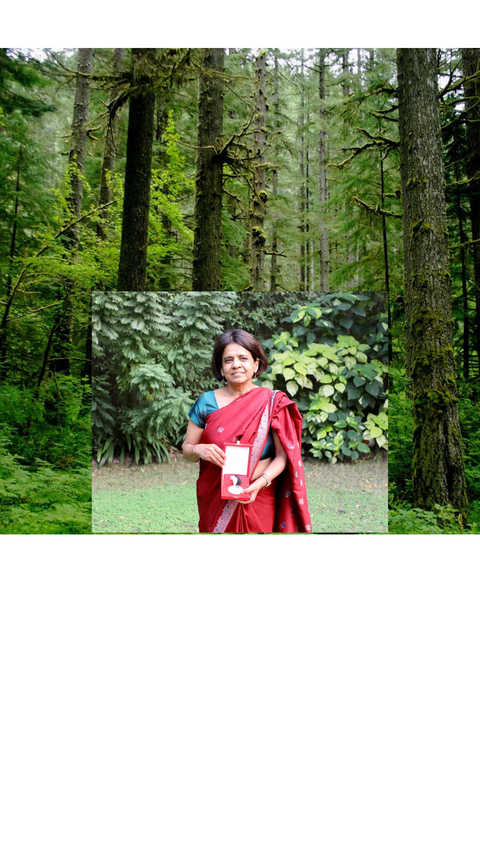 Sunita Narain: Environmental Champion Leading India's Green Revolution
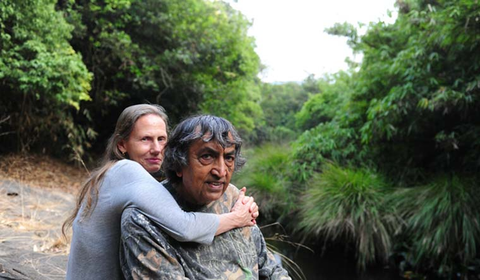 Pamela and Anil Malhotra: Forest Restoration Pioneers
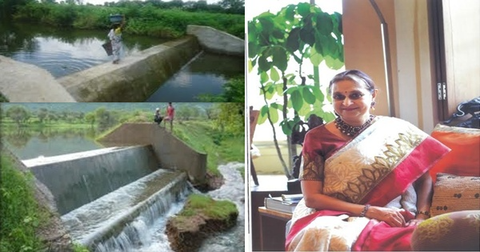 Amla Ruia: Revolutionary Green Initiative Transforming Lives
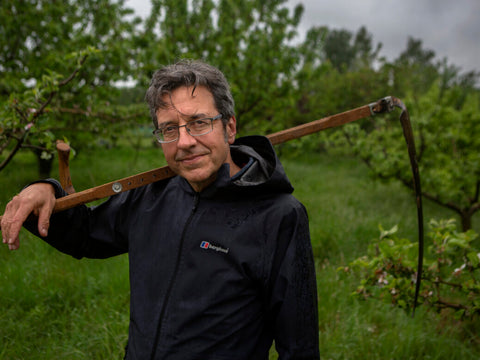 George Monbiot: Environmental Journalist Fighting Climate Crisis
 Christiana Figueres: Architect of the Paris Climate Agreement


Leave a comment