
Jane Goodall: Trailblazing Primate Advocate Who Redefined Conservation

Jane Goodall is a primatologist whose 1960 research at Gombe Stream National Park in Tanzania fundamentally changed how science understands chimpanzees. She proved these animals use tools, form emotional bonds, and display complex social behaviours—discoveries that shattered the belief that such traits belonged only to humans, forcing science to reconsider humanity's place in the natural world.
Jane Goodall is the most celebrated primatologist and conservationist in history. In 1960, she entered Gombe Stream National Park in Tanzania with a notebook and binoculars. Her research would forever change how we understand chimpanzees — and what it truly means to be human.
Her groundbreaking discoveries proved that chimpanzees use tools, form emotional bonds, and display complex social behaviours. These findings shattered the long-held belief that such traits were exclusive to humans. As a result, science was forced to rethink our place in the natural world.
Today, Jane Goodall's mission lives on through global conservation efforts. Organisations like Grow Billion Trees draw deep inspiration from her lifelong dedication to the earth. We are proud to carry this torch — working toward planting 100 crore trees across India to restore natural ecosystems for future generations.
✅ A Young Woman Who Changed Science Forever
Jane Goodall was born on April 3, 1934, in London, England. From an early age, she showed a wonderful passion for animals and the natural world. Her mother nurtured this curiosity, encouraging her to observe, question, and nurture her love for nature.
Without a formal university degree, Goodall secured a position working under renowned anthropologist Louis Leakey. He believed that fresh, unbiased eyes could bring new insights to primate research. That intuition proved correct in remarkable ways that still echo through science today.
In 1960, she began her hands-on field study at Gombe Stream in Tanzania. She was just 26 years old. Her patient, respectful approach to observation yielded discoveries that transformed the scientific world and inspired millions to think differently about our relationship with nature.
⭐ The Discovery That Redefined Humanity
The most celebrated moment of Goodall's early research came when she observed a chimpanzee named David Greybeard. He was using a grass stem to extract termites from a mound — a clear, verified example of tool use. This observation stunned the global scientific community.
Renowned anthropologist Louis Leakey responded with his famous quote: "We must now redefine 'tool,' redefine 'man,' or accept chimpanzees as humans." This single discovery forced a complete rethinking of human uniqueness. It remains one of the most important findings in the history of primatology.
According to the United Nations Environment Programme's forests research, habitat loss remains the greatest threat to primate species worldwide. Goodall's early work laid the foundation for understanding why protecting forest ecosystems is critical. Her research continues to guide global conservation policy in 2026.
💡 Revolutionary Research Methods That Transformed Primatology
Jane Goodall pioneered a radically different approach to field research. She immersed herself in the chimpanzee community rather than observing from a safe distance. This hands-on method revealed behaviours that traditional science had never documented before.
Her patient presence over months and years built authentic trust with the chimpanzees. Over time, she could observe natural behaviours without disturbing the group. This approach has since become the gold standard for primate field research worldwide.
Her key findings transformed multiple scientific disciplines:
- ✅ Tool use and modification: Chimpanzees craft and adapt tools for specific tasks
- ✅ Complex social bonds: They form lasting friendships, show empathy, and grieve losses
- ✅ Individual personalities: Each chimpanzee displays distinct character traits and preferences
- ✅ Cultural transmission: Behaviours and knowledge pass between generations naturally
- ✅ Emotional intelligence: Chimpanzees experience joy, fear, sadness, and compassion
These discoveries fundamentally shifted our understanding of primate intelligence. Moreover, they revealed the deep evolutionary ties between humans and our closest living relatives on this planet.
✅ From Researcher to Global Conservation Icon
Jane Goodall's transformation from scientist to activist was driven by what she witnessed firsthand in the forests. Deforestation, poaching, and habitat destruction were devastating chimpanzee populations across Africa. She knew that research alone could not save them.
In 1977, she founded the Jane Goodall Institute (JGI) to drive meaningful, measurable change. The institute focuses on research, advocacy, and community-centred conservation programmes. It now operates in over 30 countries worldwide, delivering certified impact on the ground every day.
The World Wildlife Fund's research on deforestation confirms we lose approximately 10 million hectares of forest each year globally. This staggering rate makes organisations like JGI and Grow Billion Trees more essential than ever. Together, we can reverse this devastating trend through conscious, collective action.
⭐ The Roots & Shoots Programme: Empowering the Next Generation
In 1991, Jane Goodall launched the Roots & Shoots programme to mobilise young people for the planet's future. The initiative now spans over 65 countries and has inspired millions of young conservationists. It is a wonderful example of how education can transform environmental action at scale.
Roots & Shoots teaches young people to identify problems in their communities and take meaningful, hands-on action. Students engage in projects ranging from tree planting to wildlife protection and beach restoration. The programme powerfully proves that every individual — no matter their age — can make a positive impact.
According to 2026 data from the Jane Goodall Institute, the programme has directly engaged over 150,000 young people across its active chapters. However, its ripple effect reaches far beyond those numbers. Each young conservationist goes on to influence their families, schools, and communities in ways that are impossible to fully measure.
This philosophy aligns perfectly with Grow Billion Trees's mission. We provide individuals with the opportunity to Plant a tree in your Name for just ₹299 — with 2-3ft Tree Planting + 3 Years Care + GeoTag tracking included. Our team is glad to make genuine environmental action this accessible and transparent for everyone in India.
💡 Jane Goodall's Influence on Modern Conservation Science
Jane Goodall's integrated approach to conservation has inspired programmes worldwide. She demonstrated that protecting wildlife requires addressing the needs of local communities simultaneously. This community-centred model is now considered best practice in conservation biology globally.
Her work directly aligns with the United Nations' global climate change initiatives, which emphasise ecosystem restoration as a key strategy for survival. Forests are critical carbon sinks that absorb billions of tonnes of CO2 annually. Protecting and restoring them is therefore essential for achieving global Net Zero Targets by 2050.
In 2026, conservation science increasingly recognises that tree planting at scale is one of the most effective climate tools available. However, planting trees is only effective when paired with long-term care and transparent monitoring. That is why our GeoTag technology ensures every tree planted through Grow Billion Trees is tracked, verified, and nurtured to maturity.
✅ Scientific Contributions and Awards That Prove Her Legacy
Jane Goodall's publications have had a profound effect on multiple scientific disciplines. Her books, including In the Shadow of Man and The Ten Trusts, are considered essential, certified reading in conservation and primatology. They remain influential texts in universities across the world today.
She has received over 100 awards and honorary degrees throughout her remarkable career. These include the prestigious UN Messenger of Peace title and the Kyoto Prize. Her legacy as a scientist and activist is authentic, verified, and utterly unparalleled in the history of conservation.
The WWF's forest conservation initiatives echo many of the principles Goodall championed decades ago. Both emphasise community involvement, ecosystem restoration, and long-term commitment to measurable outcomes. These are values that our partners at Grow Billion Trees share deeply and build upon every day.
⭐ Combating Climate Change Through Collective Action
Jane Goodall has often said that every individual has the power to make a real difference. This belief is at the heart of Combating Climate Change Through Collective Action across the globe. Small acts, multiplied by millions of mindful people, can genuinely transform our planet.
Our experience at Grow Billion Trees confirms this truth every day. We have seen how communities grow stronger and ecosystems thrive when individuals take personal ownership of environmental restoration. In addition, our GeoTag technology allows every tree planter to track their impact in real time — a proven way to boost ongoing engagement and commitment.
We ensure that every tree in our programme receives professional care for three full years. Our team works with certified agronomists, forest experts, and local community partners across India. Together, we are building a sustainable movement that will outlast any single season or campaign.
Jane Goodall's Philosophy: Nature and Humanity Are Inseparable
At the core of Jane Goodall's worldview is a simple, powerful truth: humans are part of nature, not separate from it. This mindful perspective shapes every programme the Jane Goodall Institute runs. It is a philosophy that resonates deeply with all who love the natural world.
She has spoken candidly about the spiritual dimension of spending time in forests. "You cannot share your life with a dog or a cat and not know that animals have personalities, minds, and feelings," she has said. For example, her relationship with David Greybeard — the chimpanzee who first trusted her — was one she described as genuinely transformative.
This connection between humans and the natural world is something we nurture at Grow Billion Trees. We believe that when you plant a tree, you are not just helping the planet — you are growing a deeper relationship with the earth itself. That is a great reason to start today.
Further reading: David Suzuki: The Scientist Who Became an Environmental Icon · David Orr: The Sustainability Educator Redefining Green Thinking
Frequently Asked Questions
Who is Jane Goodall and why is she important?
Jane Goodall is a British primatologist and conservationist, famous for her groundbreaking research on wild chimpanzees in Tanzania. She discovered that chimpanzees use tools — a finding that redefined our understanding of human uniqueness. Her work transformed primatology, anthropology, and global conservation science.
What was Jane Goodall's most important discovery?
Her most important discovery was observing a chimpanzee named David Greybeard using a grass stem as a tool to extract termites. This proved for the first time that non-human animals use and modify tools. Anthropologist Louis Leakey said it forced humanity to redefine what it means to be human.
What is the Jane Goodall Institute?
The Jane Goodall Institute (JGI) is a global conservation organisation founded in 1977. It protects chimpanzees and habitats through research, advocacy, and community-based programmes. It operates in over 30 countries and is a certified leader in wildlife and environmental conservation.
What is the Roots & Shoots programme?
Roots & Shoots is a global youth programme founded by Jane Goodall in 1991. It empowers young people to take hands-on action on environmental, animal welfare, and community issues. The programme now operates in over 65 countries and has engaged over 150,000 active participants as of 2026.
How does Jane Goodall's work relate to climate change?
Jane Goodall's work highlights the critical link between forest preservation and climate stability. Forests are vital carbon sinks, and protecting them is essential for achieving Net Zero Targets globally. Her advocacy has shaped international climate policy and continues to inspire millions to take action.
How can I honour Jane Goodall's conservation legacy?
You can honour her legacy by planting trees through eco-friendly organisations like Grow Billion Trees. For just ₹299, you can Plant a tree in your Name with 2-3ft Tree Planting + 3 Years Care + GeoTag tracking included. It is a meaningful, sustainable contribution to global reforestation efforts.
What awards has Jane Goodall received for her work?
Jane Goodall has received over 100 awards, including the UN Messenger of Peace title, the Kyoto Prize, and the French Legion of Honour. Her contributions to science and conservation have been recognised by governments, universities, and environmental organisations across the world.
Is Jane Goodall still active in conservation in 2026?
Yes, Jane Goodall remains deeply active in conservation and environmental advocacy in 2026. She continues to travel, speak, and inspire action through the Jane Goodall Institute and the Roots & Shoots programme. Her energy and unwavering commitment remain a great source of hope globally.
Why is forest conservation so important for wildlife like chimpanzees?
Forests provide food, shelter, and social space for chimpanzees and thousands of other species. Deforestation destroys these habitats and pushes wildlife toward extinction. According to the UN Environment Programme, forest loss is the single greatest threat to primate populations worldwide today.
A Future Worth Growing: Join the Jane Goodall Legacy
Jane Goodall's life is a testament to what one person can achieve with purpose, passion, and perseverance. She transformed science, sparked a global conservation movement, and continues to inspire collective action decades later. Her story reminds us that the natural world is worth every effort to protect.
At Grow Billion Trees, we are happy to carry this spirit forward every single day. Our team works to make tree planting accessible, impactful, and fully transparent for everyone across India. We would love for you to join our mission to plant 100 crore trees and help restore the country's forests for the next generation.
Take your first step today. Explore our programmes at Grow Billion Trees and discover how your contribution can grow into a greener, more sustainable future — for India, for wildlife, and for the planet we all share.
Keep reading
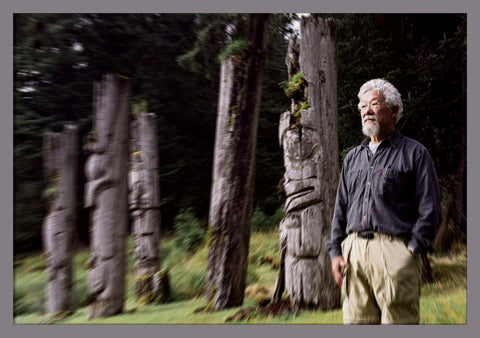 David Suzuki: The Scientist Who Became an Environmental Icon
 David Orr: The Sustainability Educator Redefining Green Thinking
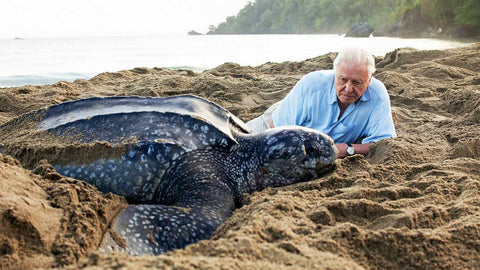 David Attenborough: The Voice of Nature Inspiring Generations
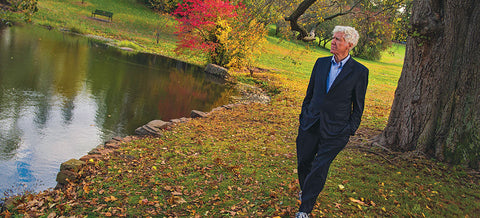 Lester Brown: Environmental Visionary Who Predicted the Sustainability Crisis
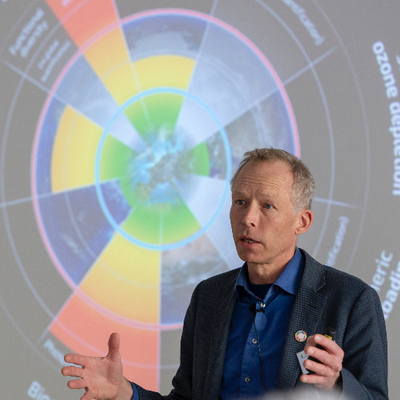 Johan Rockström: Earth's Climate Tipping Points Pioneer


Leave a comment