

It is March in India, and a chartered aircraft lifts off from Mumbai. On board: 25 cricketers, coaches, physiotherapists, analysts, and logistics staff — the invisible engine behind every boundary and wicket. They are headed to Chennai for Match Day 3. In two days they fly again. In ten days, three more cities. For the next two months, this is life. And every one of those flights, hotel nights, and convoy rides writes a line in a carbon ledger that almost nobody talks about.
The Indian Premier League is the second-most valuable sports league in the world by per-match revenue. Its spectacle draws all the attention. The environmental cost of running it does not. At Grow Billion Trees, we decided to change that — building a bottom-up emissions model for a single franchise across one full season, from the first charter out of the home city to the final hotel checkout after the playoffs.
"The most significant contributor to cricket's carbon footprint is air travel. The IPL still requires extensive domestic travel and generates enormous logistical operations."
— The Crown Wings, Cricket and Sustainability Report, 2025What we counted — and what we didn't
This analysis covers only the travelling party: players, coaches, physiotherapists, analysts, and logistics staff. It deliberately excludes spectator travel, stadium energy, broadcasting infrastructure, and digital streaming. Those categories are far larger — the IPL's full-season footprint is estimated at 750,000–900,000 tonnes CO₂e — with data centres and streaming accounting for over three-quarters of that total.
We wanted to answer a more personal question: what does the team itself leave behind?
The full emissions breakdown
Here is what the carbon ledger looks like, source by source. All figures use DEFRA 2024 emission factors, the ICCT aviation database, and the Cornell Hotel Sustainability Benchmarking Index — the same standards used by corporate sustainability teams worldwide.
| Source | Basis | Share | Visual | Estimated CO₂e |
|---|---|---|---|---|
| ✈ Air travel (charter) | 18 legs × 900 km × 50 people × 0.70 kg CO₂e/km | 54% | ~95 tonnes | |
| 🏨 Hotel stays | 42 nights × 50 people ÷ 2 occupancy × 60 kg/room | 36% | ~63 tonnes | |
| 🚗 Ground transport | Luxury SUVs + coaches across 7 away cities | 6% | ~10 tonnes | |
| 🥩 Food (travel days) | High-protein diet × 50 people × 35 travel days | 4% | ~7 tonnes | |
| Total (central estimate) | ~175 tonnes CO₂e | |||
Why charter flights hit so hard
A commercial economy seat emits roughly 0.13 kg CO₂e per km. A chartered aircraft — carrying 50 people instead of 180 — dramatically amplifies emissions per seat. Add radiative forcing: aviation emissions at altitude trap roughly twice as much heat as the same CO₂ released at ground level. Apply that multiplier and a single Mumbai–Kolkata return charter generates over 1.1 tonnes CO₂e per person. Multiply by 18 such legs across a season and 50 people, and flights alone account for more than half the entire franchise footprint.
Hotels: the silent second emitter
India ranks near the top globally for hotel emissions — almost 60 kg CO₂e per room per night on average, per the Cornell Hotel Sustainability Benchmarking Index. For the 5-star properties standard for IPL teams, the figure is likely 70–100 kg. Over seven away trips with multiple pre- and post-match nights, hotel stays pile up to over 60 tonnes — the annual footprint of 35 average Indian families.
Conservative to finalist: the full range
Not every team has the same season. A team that exits in the league stage plays fewer games. A finalist stretches across more cities over nearly 80 days.
How many trees does it take?
A mature tropical tree absorbs approximately 20 kg of CO₂ per year. Native Indian species — Neem, Teak, Pongamia — reach this rate within 7–10 years of planting.
The bigger picture — and what the IPL can do
The team footprint may look modest against the IPL's total. But teams are visible. Players are icons. The choices franchises make on travel, accommodation, and diet are watched by hundreds of millions of fans. When a team takes environmental accountability seriously, the ripple effect on public behaviour is enormous.
Royal Challengers Bengaluru became the world's first carbon-neutral cricket team, playing an annual Green Game with jerseys from recycled plastic. Rajasthan Royals partnered with Schneider Electric on climate action. Chennai Super Kings partnered with IIT Madras on sustainability research. The BCCI's Green Dot Ball campaign has surpassed 500,000 trees planted since 2023.
"If any sporting event has the influence, resources, and fan base to lead a sustainability movement, it's the IPL."
— Sigma Earth, Environmental Impacts of the IPL, 2025Practically, the biggest single gain would come from rescheduling matches geographically — grouping games by region to minimise long inter-city hops. Estimates suggest this alone could cut air travel emissions by 30–40%. Transitioning hotel partnerships to verified sustainable properties, switching ground fleets to EVs, and introducing a franchise carbon budget with public disclosure would complete the picture.
What each franchise could do right now
1. Measure and publish. No franchise currently discloses its operational carbon footprint. Measurement is the first act of accountability.
2. Plant and invest. 875 trees — the offset equivalent of one franchise's season — costs roughly ₹1.5–2 lakh. A rounding error against a ₹100+ crore season budget.
3. Partner with a reforestation partner. Grow Billion Trees plants native species across degraded land in India with verified sequestration tracking. One partnership. One season. Thousands of trees.
Final word: cricket's climate innings has barely begun
One franchise, one season, 175 tonnes. Ten franchises: 1,750 tonnes — just for the travelling parties. Add back stadiums, spectators, and data centres and you reach a number that requires serious, sustained action.
Cricket belongs to India, and India is already living the consequences of a changing climate — in heat waves, disrupted monsoons, and the flood-prone homes of millions of fans who watch this game on their phones. The sport that loves them owes them more than a Green Match once a year.
It is time for the IPL to step to the crease on climate. The ball is right there.
Help offset the IPL's footprint
Plant native trees in India. Track their growth. Every tree counts towards a cooler planet.
Plant Trees @ ₹299 Corporate Enquiry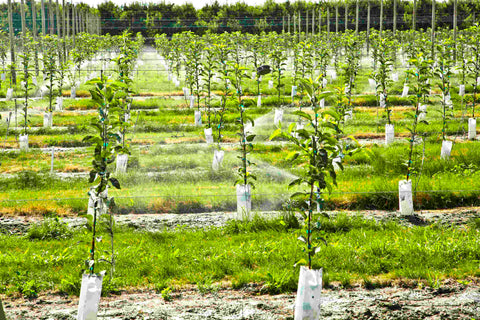


Leave a comment